

 EN
EN

 English
 русский
 Français
 Español
 عربى
عربى


Reinforcing Steel-Aluminum Strand: Design, Performance, Manufacturing, and Power-System Applications
Content
- 1 1. What Is Reinforcing Steel-Aluminum Strand?
- 2 2. Standardized Product Range and Technical Parameters
- 3 3. Electrical Performance and Current-Carrying Function
- 4 4. Mechanical Design and Environmental Reliability
- 5 5. Manufacturing Process and Quality-Control Strengths
- 6 6. Applications in Power Transmission and Hardware Systems
- 7 7. Installation, Handling, and Maintenance
- 8 8. Why Choose This Product Over Competing Conductor Designs?
- 9 9. Engineering Selection Guide
- 10 10. Frequently Asked Questions
- 10.1 Q1: What is the main purpose of the steel core?
- 10.2 Q2: Is reinforcing steel-aluminum strand the same as an all-aluminum conductor?
- 10.3 Q3: What standard does this product follow?
- 10.4 Q4: What specifications are available?
- 10.5 Q5: What is the conductivity of the aluminum component?
- 10.6 Q6: Can the product be used in coastal environments?
- 10.7 Q7: Can the strand be used for long-span overhead lines?
- 10.8 Q8: Can it be used as a ground wire or shield wire?
- 10.9 Q9: What type of connector should be used?
- 10.10 Q10: How should the product be maintained?
- 10.11 Q11: What makes the manufacturing process reliable?
- 10.12 Q12: Can the product be supplied together with busbar systems?
- 11 11. Conclusion
- 12 References
- 13 Product: Reinforcing Steel Aluminum Strand
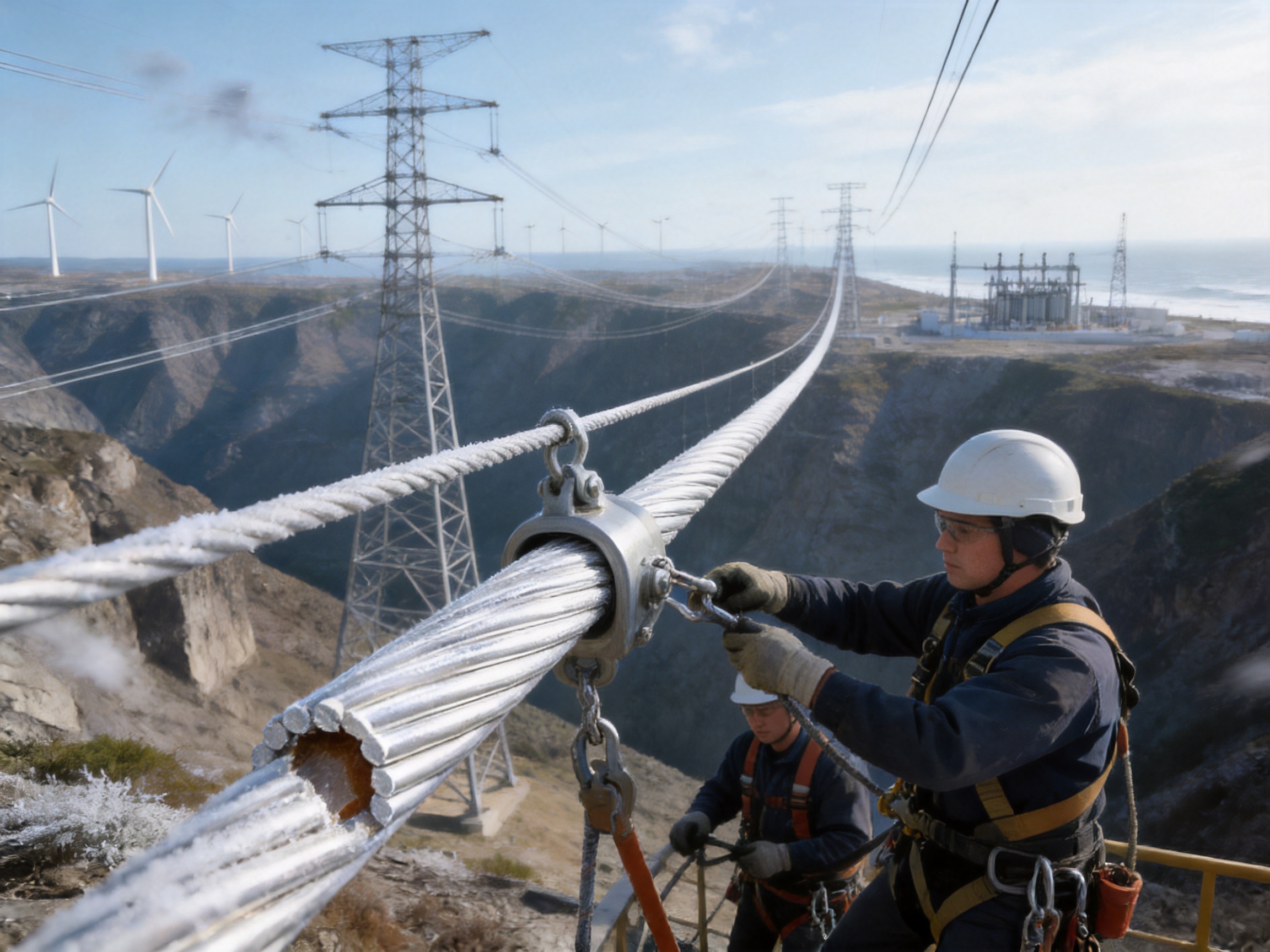
Reinforcing steel-aluminum strand is a composite electrical conductor designed to combine the conductivity of aluminum with the mechanical strength of steel. This construction enables the strand to carry electrical current while resisting the tensile loads, wind forces, ice loads, vibration, and long-span stresses encountered in overhead power systems and hardware connection assemblies.
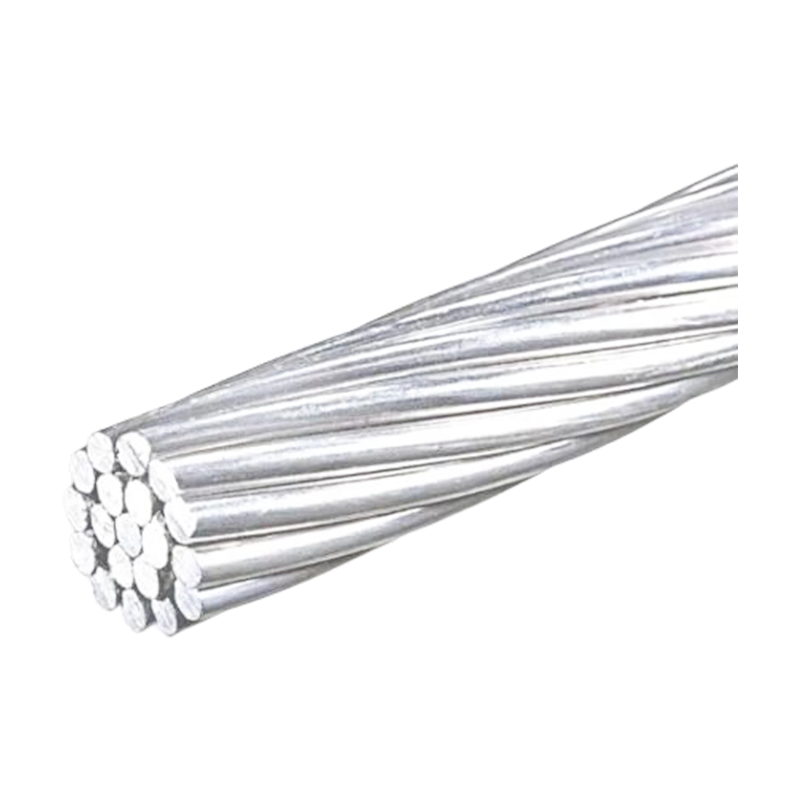
The product is manufactured in accordance with the GB1179-83 standard and is available in nominal cross-sectional configurations ranging from 10/2 mm² to 240/30 mm². Its structure consists of aluminum strands wrapped around a galvanized steel core. Depending on the selected specification, the construction may include 6 to 30 aluminum strands and 1 to 7 steel-core strands. Aluminum strands have nominal single-wire diameters from 1.50 mm to 4.72 mm, while steel-core strands range from 1.50 mm to 3.60 mm.
This combination creates a conductor with a balanced electrical and mechanical profile. Aluminum supplies the primary current-carrying path, while the steel core contributes tensile strength, dimensional stability, and resistance to sag. As a result, reinforcing steel-aluminum strand can be used in demanding power transmission applications where a conventional all-aluminum conductor may not provide sufficient mechanical performance.
The product is also suitable for specialized hardware connection applications, including use as a damping wire in damping-type end caps. Its standardized dimensions, clearly defined performance parameters, and broad specification range make it suitable for engineering selection, electrical design calculations, and consistent procurement.
For projects that require dependable current transmission together with high mechanical reliability, this conductor offers a practical alternative to single-material products. Its layered construction, controlled stranding process, and compatibility with modern busbar and power-equipment manufacturing capabilities further support its use in power generation, substations, industrial facilities, wind-energy installations, rail transit, and other infrastructure projects.
Reinforcing Steel Aluminum Strand
1. What Is Reinforcing Steel-Aluminum Strand?
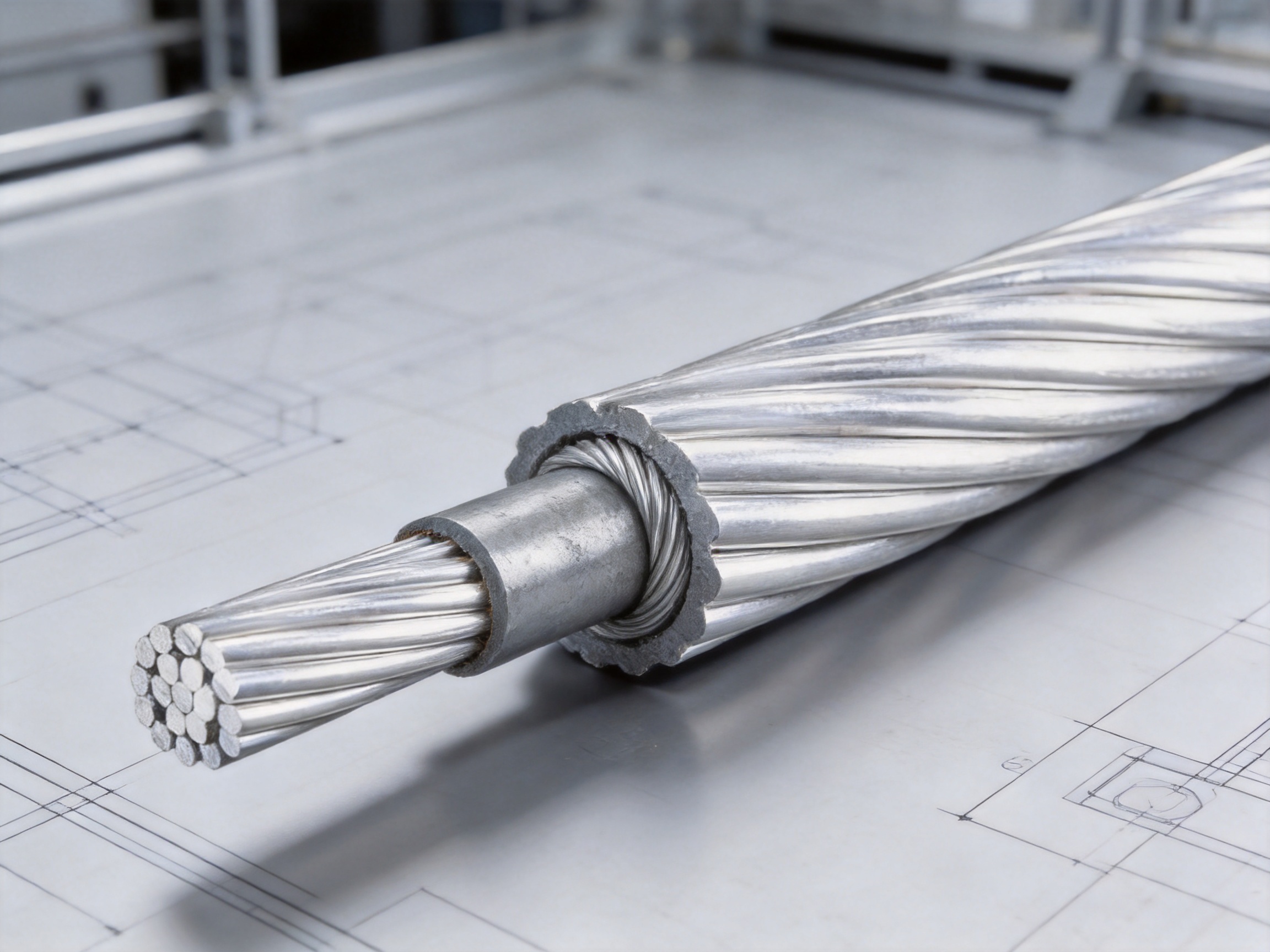
Reinforcing steel-aluminum strand is a stranded composite conductor formed from two functional materials. The outer aluminum wires provide electrical conductivity, while the inner steel wires form a reinforcing core that carries much of the mechanical load. The materials work together rather than performing identical functions.
Aluminum is selected because it provides a favorable combination of conductivity, low density, corrosion resistance, and formability. It is substantially lighter than copper and can be produced into wires suitable for concentric stranding. The steel core is selected for its higher tensile strength and greater resistance to mechanical deformation. By placing the steel in the center and the aluminum around it, the conductor uses each material where it is most effective.
The resulting structure is commonly associated with steel-reinforced aluminum conductors used in overhead lines. It can withstand higher installation tension than a comparable all-aluminum product and can maintain a more stable geometry over extended spans. This is especially important where conductors must cross valleys, rivers, roadways, railways, industrial areas, or other locations where reducing the number of support structures is beneficial.
The conductor is not simply a bundle of loose wires. Each layer is arranged according to a specified stranding direction and pitch. During manufacturing, the wires are formed into a controlled helical configuration around the steel core. Proper pitch control helps distribute mechanical stress across the layers and supports dimensional consistency throughout the finished length.
For the product described here, the nominal cross-sectional range extends from 10/2 mm² to 240/30 mm². The first value generally identifies the aluminum component, while the second represents the steel component. This designation allows engineers to identify the electrical and mechanical proportions of the conductor during system design.
Calculated total cross-sectional areas range from approximately 12.37 mm² to 275.96 mm². Outer diameters range from approximately 4.50 mm to 21.60 mm. The broad range allows the strand to be selected for different current levels, span lengths, environmental conditions, and mechanical requirements.
Functional Roles of the Two Materials
The aluminum component is responsible for most of the electrical conduction. High-purity electrical-grade aluminum is used to obtain stable conductivity and reliable processing performance. The material information for this product specifies aluminum purity of at least 99.7 percent and conductivity exceeding 61 percent IACS after controlled annealing.
The steel core provides the structural reinforcement. It improves the conductor’s tensile performance, reduces the tendency toward excessive sag, and helps the product withstand installation and service loads. The steel core is galvanized to improve resistance against corrosion. The specified zinc coating weight is at least 300 g/m², subject to the applicable production and inspection requirements.
The aluminum and steel components must be manufactured and assembled with close dimensional control. Poorly matched wire diameters, excessive variation in stranding pitch, insufficient pre-twisting, or surface defects can reduce the quality of the finished conductor. For this reason, the production process requires material inspection, wire drawing, annealing, galvanizing, stranding, dimensional verification, and electrical and mechanical testing.
2. Standardized Product Range and Technical Parameters
Standardization is one of the main advantages of reinforcing steel-aluminum strand. A standardized conductor allows engineers, contractors, and equipment manufacturers to select products using recognized cross-sectional designations and established electrical and mechanical parameters.
The product follows the GB1179-83 standard. Compliance with a recognized national standard supports consistency between design documents, manufacturing specifications, inspection records, and field installation procedures. It also helps reduce uncertainty when the conductor is integrated with connectors, end caps, clamps, grounding assemblies, and other line hardware.
The following table summarizes the principal range and performance information supplied for the product.
| Parameter | Specified Range or Requirement | Engineering Significance |
| Applicable standard | GB1179-83 | Provides a standardized basis for design, manufacture, and inspection |
| Nominal cross-sectional designation | 10/2 mm² to 240/30 mm² | Identifies the aluminum and steel component sizes |
| Number of aluminum strands | 6 to 30 | Determines the outer conductive layer and overall conductor geometry |
| Number of steel-core strands | 1 to 7 | Influences tensile strength and core construction |
| Aluminum single-wire diameter | 1.50 mm to 4.72 mm | Supports specification selection and dimensional control |
| Steel single-wire diameter | 1.50 mm to 3.60 mm | Determines part of the reinforcing core structure |
| Calculated cross-sectional area | 12.37 mm² to 275.96 mm² | Supports current-carrying and system-design calculations |
| Outer diameter | 4.50 mm to 21.60 mm | Important for fittings, clearances, and installation equipment |
| DC resistance | Not exceeding approximately 2.706 Ω/km to 0.1410 Ω/km, depending on size | Used to calculate voltage drop and power losses |
| Calculated tensile strength | Approximately 4,012 N to 91,120 N | Supports mechanical design and span evaluation |
| Calculated mass | Approximately 42.9 kg/km to 964.2 kg/km | Used for tower loading, sag calculations, and logistics planning |
| Typical delivery length | Generally less than 2,000 m | Facilitates handling, transportation, and project scheduling |
The values in the table should be interpreted according to the selected conductor size and the applicable inspection documentation. Electrical resistance, tensile strength, mass, and diameter are not identical across the entire product family. Larger sizes generally provide greater current-carrying capacity and mechanical strength but also increase weight and installation requirements.
For engineering projects, the conductor should be selected after considering operating current, ambient temperature, span length, wind pressure, ice loading, short-circuit conditions, support structure strength, connector compatibility, and required safety clearances. A complete technical data sheet should be reviewed before final procurement.
3. Electrical Performance and Current-Carrying Function
The principal electrical function of reinforcing steel-aluminum strand is performed by the aluminum layers. The steel core contributes comparatively little to current conduction, but it enables the conductor to maintain mechanical integrity. This division of roles is central to the product’s design.
The specified aluminum purity is at least 99.7 percent. Through controlled annealing, the aluminum wires can achieve conductivity above 61 percent IACS. This level provides an efficient current path while retaining the flexibility required for stranding and installation.
DC resistance is one of the most important design parameters. The supplied product range identifies maximum resistance values from approximately 2.706 Ω/km for smaller configurations to approximately 0.1410 Ω/km for larger configurations. Lower resistance reduces I²R losses, helps control voltage drop, and improves the efficiency of long-distance power transmission.
Actual operating performance depends on conductor size, operating temperature, installation condition, surface exposure, connection quality, and system current. Engineers should not evaluate the conductor solely by nominal area. The aluminum area, permissible temperature, installation tension, and thermal environment must all be considered.
The supplied technical information also identifies a measured skin-effect coefficient below 1.05 under high-frequency conditions and states that the increase in AC resistance is controlled within 8 percent. These characteristics can be relevant in systems where current waveform, harmonic content, or transient operating conditions require additional analysis.
Short-circuit performance is another consideration. The product information specifies a short-circuit thermal capacity of 150 kA²·s. This parameter indicates the conductor’s ability to withstand the thermal stress associated with a short-duration fault current. System designers should compare the actual fault level and clearing time with the applicable conductor rating before approval.
After 100 thermal cycles, the stated degradation in conductivity does not exceed 2 percent. Repeated heating and cooling can create expansion and contraction in a conductor, particularly at interfaces between different materials. Controlled material selection and stranding quality help maintain electrical continuity during such cycles.
Advantages Compared with All-Aluminum Conductors
An all-aluminum conductor may be lighter and may offer a high proportion of conductive material, but it does not provide the same level of mechanical reinforcement as a steel-cored product of comparable application. The steel core allows reinforcing steel-aluminum strand to sustain higher tensile loads and maintain better dimensional stability over long spans.
Compared with standard all-aluminum conductors, the reinforced design provides several practical advantages:
First, it offers higher tensile strength. This can reduce excessive sag and improve clearance retention under changing environmental loads.
Second, it supports longer spans. When the conductor can carry greater mechanical loads, the line designer may be able to increase the distance between towers or support points, subject to complete structural and electrical calculations.
Third, it provides improved resistance to wind and ice effects. The reinforced core helps the conductor withstand additional loading caused by wind pressure, ice accumulation, and combined weather conditions.
Fourth, it provides a favorable strength-to-weight balance. Although the steel core adds mass, the overall conductor remains lighter than an equivalent copper solution in many applications.
Finally, the aluminum exterior provides a corrosion-resistant conductive surface, while the galvanized steel core is protected by its zinc coating. This combination is useful in outdoor environments where moisture, industrial pollutants, salt spray, and temperature changes may affect exposed electrical components.
4. Mechanical Design and Environmental Reliability
Mechanical performance is the defining reason for using a steel-reinforced aluminum construction. Electrical conductors installed outdoors are exposed to continuous static tension as well as dynamic forces. These forces may result from conductor weight, wind, ice, installation tension, vibration, thermal expansion, and short-circuit events.
The steel core carries a significant portion of the tensile load. A properly manufactured core also helps maintain the geometry of the outer aluminum layers. This is important because irregular deformation can affect electrical resistance, connector fit, surface condition, and long-term reliability.
The product uses scientifically designed stranding pitch ratios to promote uniform stress distribution. A controlled pre-twisting process helps prevent loosening of the strands during handling and service. The supplied technical information states that creep deformation is limited to within 0.05 percent under long-term operating loads.
Wind-induced vibration is a common concern for overhead conductors. Repeated small-amplitude oscillations can cause fatigue damage near clamps, suspension points, and termination hardware. The product information identifies validation through a two-million-cycle wind-induced vibration fatigue test. Such testing supports confidence in the conductor’s resistance to repeated mechanical movement, although final system performance also depends on span design, clamp selection, vibration dampers, and installation quality.
Temperature Range
The product has been evaluated for operation between -40°C and +80°C. Within this range, the coefficient of thermal expansion is described as stable. Stable thermal behavior helps engineers evaluate sag, clearance, and connection performance across seasonal and daily temperature changes.
When a conductor heats up, it expands and may experience increased sag. When it cools, it contracts and may experience higher mechanical tension. These effects must be considered together with the initial installation tension and the allowable limits of the supporting structures.
Ice and Wind Conditions
The supplied environmental data states that the conductor can withstand an ice coating load of 30 mm. Ice loading increases both the weight and the projected area of the conductor. The additional weight increases sag and tension, while the increased area can amplify wind forces. The steel reinforcement provides additional mechanical capacity for these conditions.
Actual design values depend on local climate, span length, conductor height, support spacing, wind speed, and national or project-specific design codes. The stated environmental performance should therefore be used as a reference for product evaluation rather than as a substitute for project calculations.
Salt Spray and Ultraviolet Exposure
Aluminum naturally develops a protective oxide layer that contributes to atmospheric corrosion resistance. The galvanized steel core adds another layer of protection through its zinc coating. The product information states that more than 95 percent of tensile strength is retained after 5,000 hours of salt-spray testing.
Resistance to ultraviolet aging is also important for outdoor line accessories and exposed components. The product has reportedly shown no significant surface degradation after 5,000 hours of UV aging. Periodic inspection is still advisable in coastal, industrial, and heavily polluted environments, particularly near connectors and areas where mechanical damage may expose the underlying material.
5. Manufacturing Process and Quality-Control Strengths
The quality of reinforcing steel-aluminum strand depends heavily on the stability of its manufacturing process. A conductor may meet its nominal area while still performing poorly if the wires have inconsistent diameters, the steel coating is inadequate, the stranding pitch is unstable, or the finished product contains surface damage.
A reliable manufacturing program therefore begins with controlled raw-material selection. Aluminum wire rod should be suitable for electrical applications and should meet the required purity and conductivity targets. Steel wire for the core must provide the required tensile strength and dimensional consistency. The galvanizing process must create a uniform zinc coating that protects the core during storage, installation, and service.
Aluminum Wire Preparation
Aluminum is processed through drawing operations that reduce the material to the specified single-wire diameter. Drawing must be carefully controlled because excessive deformation can affect ductility, conductivity, and surface condition. Intermediate heat treatment or annealing can restore suitable mechanical properties and improve conductivity.
The stated production approach uses controlled annealing to achieve aluminum conductivity above 61 percent IACS. Temperature, dwell time, cooling conditions, and furnace uniformity must be monitored to ensure that all sections of the wire receive consistent treatment.
Steel-Core Preparation
The steel core is manufactured from steel wires drawn to the required diameter and strength level. The wires are then galvanized to protect against corrosion. A zinc coating weight of at least 300 g/m² is identified in the technical information.
Galvanizing quality must be evaluated by checking coating continuity, adhesion, appearance, and mass. Poor adhesion or local coating defects can create corrosion initiation points. The steel wires must also be free from excessive surface defects because the core is subjected to both static and dynamic stresses.
Layered Stranding
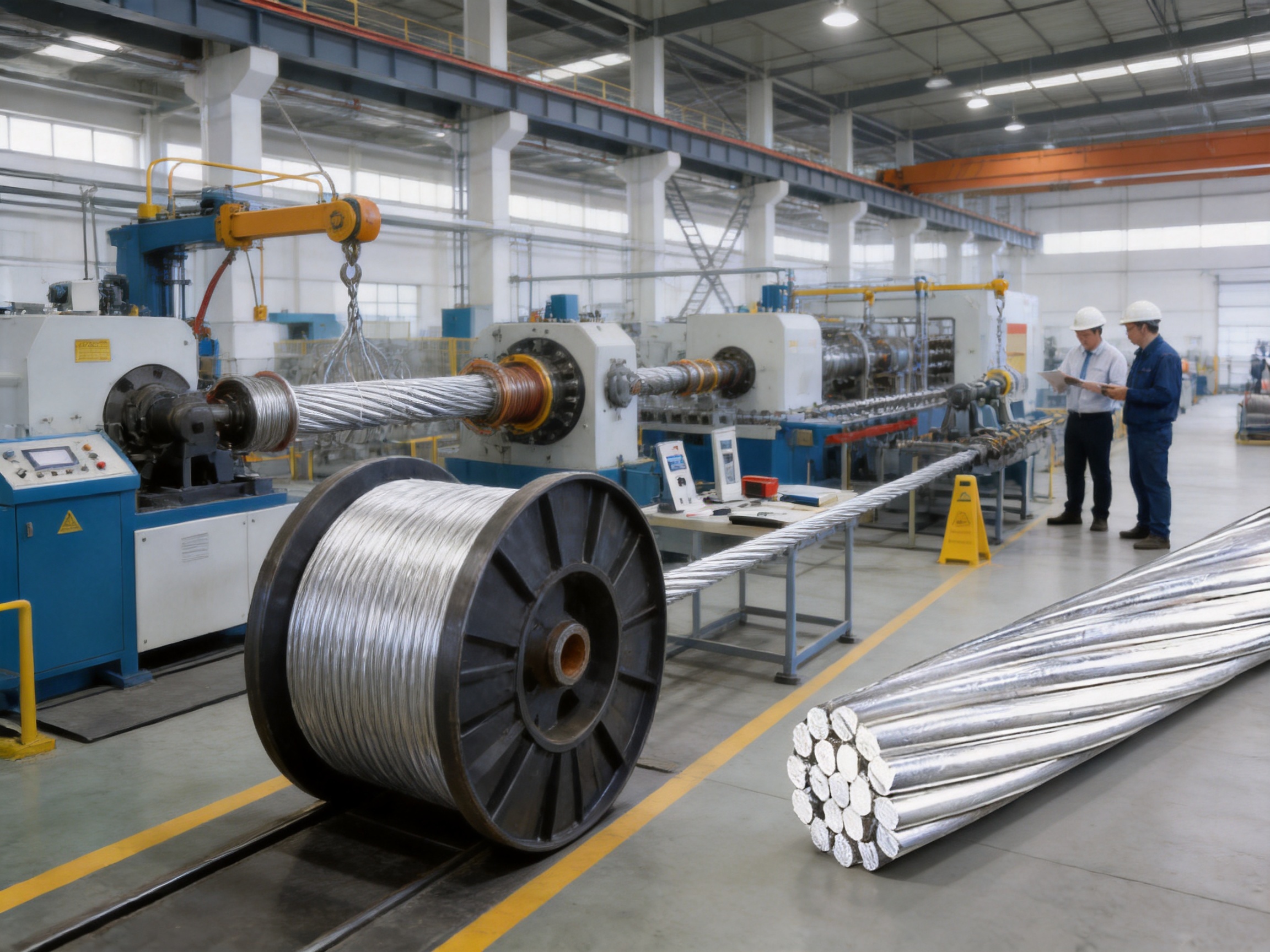
Stranding is the process that brings the aluminum wires and steel-core wires together into the finished conductor. The core is positioned and supported as the outer aluminum layers are applied. Each layer follows a prescribed helical path, and the stranding pitch must remain within the specified tolerance.
Advanced stranding equipment helps maintain stable tension on individual wires. Uniform tension is essential because a loose wire may shift during installation, while an over-tensioned wire may carry an excessive share of the mechanical load. Both conditions can reduce service reliability.
Pre-twisting is controlled to minimize strand loosening. The finished conductor must retain its shape when cut, coiled, transported, and installed. Proper compaction and layer alignment also support predictable outer diameter and connector compatibility.
Dimensional and Electrical Inspection
Inspection procedures should include measurement of aluminum and steel wire diameters, total outer diameter, lay length, mass, and finished delivery length. Electrical inspection includes resistance verification and conductivity evaluation. Mechanical inspection includes tensile testing and, where applicable, fatigue or vibration testing.
Routine quality checks help identify process variation before the conductor reaches the customer. Records can be maintained for raw materials, production batches, heat-treatment cycles, galvanizing, stranding parameters, and final inspection results.
The manufacturer’s broader production capabilities include vacuum casting systems, CNC machining equipment, and automated assembly technologies. These capabilities are especially relevant to the company’s wider portfolio of epoxy-resin cast busbars, tubular busbars, compact busbar systems, and sliding contact line systems. They also demonstrate an engineering environment capable of handling precision electrical equipment, mechanical components, insulation systems, and standardized inspection procedures.
Testing and Verification
The company’s quality system includes high-voltage tests, insulation tests, mechanical verification, and routine product inspections for its power-equipment products. Third-party testing collaboration provides an additional source of independent validation for safety and performance.
Although reinforcing steel-aluminum strand is primarily a conductive and mechanical product rather than an insulated busbar, the same disciplined approach to material traceability, dimensional control, electrical testing, and production documentation is valuable in its manufacture and supply.
6. Applications in Power Transmission and Hardware Systems
Overhead Transmission Lines
The most familiar application is overhead power transmission. Conductors in these systems must carry current across long spans while maintaining clearances from the ground, buildings, vegetation, roads, and other conductors.
The steel core allows the conductor to withstand higher tensile loads than a similar all-aluminum product. This can reduce sag and support longer spans, although tower and foundation calculations must be completed for each project. The conductor’s weight, diameter, tensile strength, thermal rating, and environmental loading all affect the final line design.
High-Tension Distribution Networks
Distribution networks often pass through areas with changing terrain and variable weather exposure. Reinforcing steel-aluminum strand can help maintain stable line geometry where poles or towers are separated by relatively long distances or where wind and ice conditions are significant.
Its standardized dimensions also make it easier to select compatible clamps, compression fittings, suspension assemblies, and termination hardware. Correct connector selection remains essential because the aluminum and steel components have different material properties and must be joined without damaging the conductive or reinforcing layers.
Ground Wires and Shield Wires
The product can also be used for ground-wire or shield-wire functions in overhead transmission structures. In this role, the conductor is installed above or near the phase conductors and helps intercept lightning strikes. The resulting surge current is directed through the grounding system toward earth.
Mechanical strength is particularly important for shield-wire applications because the wire must remain properly positioned at the top of the structure and withstand weather loads. Electrical performance, grounding continuity, corrosion resistance, and connection integrity must all be considered.
Damping Wires and Damping-Type End Caps
One specific use identified for this product is as a damping wire in hardware connection applications such as damping-type end caps. In these applications, the strand may contribute to the mechanical stability of the assembly and help manage vibration or movement at a connection point.
The selected strand must match the dimensions and mechanical requirements of the end cap or associated fitting. The installation method should prevent strand damage, preserve the required contact area, and maintain adequate resistance to loosening under repeated vibration.
Wind-Energy and Industrial Infrastructure
Wind-energy facilities use extensive electrical collection and transmission equipment. Depending on the system architecture, steel-reinforced aluminum conductors may be relevant to outdoor connections, overhead sections, grounding arrangements, or equipment interfaces. Wind farms also create demanding environmental conditions because of continuous wind exposure and remote installation locations.
Industrial facilities, substations, rail-transit systems, and large commercial projects may require conductors and busbar systems with reliable high-current performance. The broader product range of the manufacturer includes copper and aluminum tubular busbars, epoxy-resin cast busbars, compact busbar systems, and sliding contact line systems, allowing project teams to obtain related power-transmission equipment from one experienced technical source.
7. Installation, Handling, and Maintenance
Correct installation is necessary to obtain the expected performance from a reinforcing steel-aluminum strand. The conductor should be protected from abrasion, impact, uncontrolled bending, contamination, and contact with unsuitable tools during transportation and construction.
Transportation and Storage
The supplied delivery length is generally less than 2,000 meters. This length can simplify handling and project scheduling, but the conductor should still be shipped on suitable reels or in an approved package that prevents crushing and excessive bending.
Storage areas should be dry, stable, and protected from standing water. Reels should be placed so that they cannot roll or contact sharp objects. If the conductor is stored for an extended period, the outer aluminum surface and exposed steel-related components should be inspected before installation.
Tension Stringing
Because of the steel core, the conductor can withstand relatively high installation tension. However, the elastic limit must not be exceeded. Excessive tension may create permanent deformation, damage the strands, or place unacceptable loads on poles, towers, insulators, and hardware.
Stringing equipment should be selected for the conductor diameter and mass. Rollers, pulleys, pulling grips, and tensioners must be compatible with the product. The conductor should not drag across the ground or pass over rough surfaces that could damage the aluminum wires.
Connector Compatibility
Connections between the conductor and other electrical equipment should use fittings specifically designed for aluminum-to-steel or reinforced aluminum conductors. Compression connectors must be installed with the correct dies, sequence, pressure, and preparation procedures.
Improper connections can increase contact resistance, create local heating, damage the aluminum strands, or fail to transfer mechanical loads correctly. Connection areas should be clean and free from contamination. Installation personnel should follow the fitting manufacturer’s instructions and use verified tools.
Inspection and Maintenance
Maintenance programs should include visual inspection of conductor surfaces, support points, clamps, end caps, grounding connections, and areas exposed to vibration. Particular attention should be given to locations near road crossings, coastal environments, industrial emissions, and high-wind corridors.
Signs requiring investigation may include broken outer wires, abnormal strand displacement, corrosion deposits, damaged galvanizing, unusual sag, loose fittings, localized heating, or evidence of vibration fatigue. Infrared inspection can help identify abnormal temperature at electrical connections, while mechanical inspection can identify damage near clamps and terminations.
8. Why Choose This Product Over Competing Conductor Designs?
The primary competitive advantage of reinforcing steel-aluminum strand is its balance between electrical and mechanical performance. A conductor designed only for conductivity may not provide sufficient tensile capacity, while a mechanically strong conductor with inadequate conductive area may create excessive losses. The steel-aluminum structure addresses both requirements in a single product.
Compared with all-aluminum conductors, the reinforced design provides greater tensile strength, better resistance to sag, and improved suitability for long spans. Compared with copper conductors, it can offer a lower-density solution with a favorable balance of conductivity, weight, and cost, depending on the project conditions and material prices.
Compared with poorly controlled composite conductors, a product manufactured under standardized specifications offers more predictable diameter, mass, resistance, and tensile performance. This predictability supports engineering calculations and reduces the risk of compatibility problems during installation.
The product also benefits from a broad specification range. Sizes from 10/2 mm² to 240/30 mm² allow engineers to select a conductor according to current, mechanical load, span, and installation requirements rather than relying on a single general-purpose design.
Environmental adaptability is another advantage. The product is specified for temperatures from -40°C to +80°C, a 30 mm ice coating load, extended salt-spray exposure, and prolonged UV aging. These performance indicators make it suitable for outdoor applications in varied climates, subject to project-specific verification.
The manufacturing organization behind the product adds further value. Jiangsu Wopeng Power Technology Co., Ltd. has developed a product portfolio covering high- and low-voltage busbar systems, tubular busbars, epoxy-resin cast systems, wind-power busbars, compact busbar systems, and sliding contact line systems. Its experience across these product categories supports coordinated engineering, manufacturing, inspection, and technical service.
The company was founded in 2018 and operates modern production lines supported by vacuum casting systems, CNC machining equipment, and automated assembly technologies. Its products are used in more than 17 provinces and in sectors including power generation, substations, wind energy, industrial manufacturing, rail transit, and large commercial facilities.
This breadth is useful for customers whose projects require more than a single conductor. A project may combine reinforcing strands with tubular busbars, cast-resin busways, high-voltage connections, grounding systems, or compact power-distribution equipment. A manufacturer with experience across these systems can better understand interface requirements and application conditions.
9. Engineering Selection Guide
Before selecting a reinforcing steel-aluminum strand, the project team should define the electrical, mechanical, environmental, and installation requirements. The following factors are particularly important.
Operating current determines the required conductive area and thermal rating. The calculation should consider normal current, emergency loading, ambient temperature, solar heating, wind cooling, and allowable conductor temperature.
Span length influences sag, tension, support loading, and clearance. Longer spans may require a higher tensile-strength configuration or additional mechanical analysis.
Wind and ice conditions determine external mechanical loading. Local design criteria should be used to calculate combined wind and ice effects rather than relying only on nominal product data.
Short-circuit current and clearing time determine thermal stress. The conductor’s short-circuit capability must be compared with the system fault level and protective-device operating time.
Connector design must match the conductor’s aluminum and steel components. The fitting must provide both electrical continuity and mechanical strength without damaging the strands.
Environmental exposure affects material selection and maintenance planning. Coastal salt, industrial pollution, high humidity, ultraviolet radiation, temperature extremes, and vibration should all be considered.
Delivery length and logistics affect project scheduling. Since typical delivery lengths are generally below 2,000 meters, the purchaser should coordinate reel quantity, route length, installation sequence, and storage conditions.
10. Frequently Asked Questions
Q1: What is the main purpose of the steel core?
The steel core provides mechanical reinforcement. It increases tensile strength, improves resistance to sag, and helps the conductor withstand wind, ice, installation tension, and long-span loading. The aluminum layers remain the primary current-carrying component.
Q2: Is reinforcing steel-aluminum strand the same as an all-aluminum conductor?
No. An all-aluminum conductor does not contain a steel reinforcing core. Reinforcing steel-aluminum strand is a composite conductor that combines aluminum conductivity with steel mechanical strength. This makes it more suitable for many long-span and high-mechanical-load applications.
Q3: What standard does this product follow?
The product is manufactured in accordance with GB1179-83. Customers should review the applicable technical documentation and inspection certificate for the exact specification, performance values, and acceptance requirements.
Q4: What specifications are available?
The nominal cross-sectional range extends from 10/2 mm² to 240/30 mm². The product may contain 6 to 30 aluminum strands and 1 to 7 steel-core strands, depending on the selected configuration.
Q5: What is the conductivity of the aluminum component?
The supplied technical information identifies electrical-grade aluminum with purity of at least 99.7 percent and conductivity above 61 percent IACS after controlled annealing. The complete conductor resistance depends on the aluminum area, steel-core proportion, temperature, and specification.
Q6: Can the product be used in coastal environments?
Yes, the aluminum exterior and galvanized steel core provide corrosion protection suitable for many outdoor environments. The product information includes salt-spray validation and states that more than 95 percent of tensile strength is retained after 5,000 hours of testing. Coastal installations should still receive appropriate inspection and maintenance.
Q7: Can the strand be used for long-span overhead lines?
Yes. Its reinforced construction is intended to improve tensile performance and reduce sag compared with many all-aluminum alternatives. The actual suitability depends on span length, current, wind, ice, support structure, clearance requirements, and the applicable design code.
Q8: Can it be used as a ground wire or shield wire?
It can be used for ground-wire or shield-wire applications when the selected size and mechanical and electrical properties meet the project requirements. Grounding continuity, lightning-current performance, corrosion resistance, and connection design must be verified.
Q9: What type of connector should be used?
Compression connectors and other fittings designed for reinforced aluminum conductors or aluminum-to-steel transitions should be used. The correct connector must match the conductor diameter, material construction, mechanical load, and electrical rating.
Q10: How should the product be maintained?
Maintenance should include visual inspection of the conductor, clamps, end caps, grounding connections, and support points. Inspectors should look for broken wires, corrosion, strand displacement, abnormal sag, loose fittings, and signs of vibration fatigue. Thermal inspection may be useful for identifying high-resistance connections.
Q11: What makes the manufacturing process reliable?
Reliability is supported by controlled raw-material selection, aluminum drawing and annealing, galvanized steel-core production, precise layered stranding, pre-twisting, dimensional inspection, electrical testing, mechanical verification, and documented quality control. The manufacturer also operates advanced equipment for broader busbar and power-equipment production.
Q12: Can the product be supplied together with busbar systems?
The manufacturer’s product portfolio includes low-voltage and medium-voltage busbar systems, tubular busbars, epoxy-resin cast busbars, wind-power busbars, compact busbar systems, and sliding contact line systems. Project teams can discuss combined requirements for conductors, busbars, fittings, and related power-transmission equipment.
11. Conclusion
Reinforcing steel-aluminum strand is a practical composite conductor for applications that require both electrical conductivity and mechanical strength. Its aluminum outer layers provide the main current path, while the steel core improves tensile performance, long-span capability, resistance to sag, and environmental durability.
Manufactured according to GB1179-83, the product is available in a broad range of nominal sizes from 10/2 mm² to 240/30 mm². Standardized cross-sectional areas, outer diameters, resistance values, tensile strengths, and weights support reliable engineering selection and project planning.
Its performance advantages include high tensile strength, stable stranding, controlled conductivity, corrosion resistance, resistance to vibration, and suitability for demanding outdoor conditions. Applications include overhead transmission lines, high-tension distribution, ground wires, shield wires, wind-energy infrastructure, and damping wires used in hardware connection assemblies.
The product is supported by manufacturing capabilities that include controlled aluminum annealing, galvanized steel-core production, precision stranding, automated assembly, CNC machining, vacuum casting, and standardized inspection. These capabilities form part of a broader power-equipment manufacturing platform serving low-voltage to 35 kV applications.
For customers seeking a dependable conductor for long-span, high-load, or environmentally demanding power systems, reinforcing steel-aluminum strand provides a strong balance of performance, standardization, and application flexibility. Final selection should always be based on complete project calculations, the applicable standards, and the detailed technical documentation for the chosen specification.
References
GB1179-83, Standard Specification for Stranded Aluminum Conductors and Steel-Reinforced Aluminum Conductors.
International Annealed Copper Standard, reference requirements for electrical conductivity comparison.
IEC 61089, Round Wire Concentric Lay Overhead Electrical Stranded Conductors.
ASTM B399, Standard Specification for Concentric-Lay-Stranded Aluminum-Alloy Conductors, Steel Reinforced.
Technical product information for reinforcing steel-aluminum strand, including dimensional, electrical, mechanical, and environmental performance data.
Manufacturer information for high- and low-voltage busbar systems, tubular busbars, epoxy-resin cast busbars, compact busbar systems, and sliding contact line systems.
Product: Reinforcing Steel Aluminum Strand




-
 +86-180 3625 3000
-
 admin@wpbusbar.com
-
 No. 8, Yanjin Road, Chengxi Industrial Park, Shanyang Town, Baoying County, Yangzhou City, Jiangsu Province, China
Copyright © Jiangsu Wopeng Power Technology Co., Ltd.
All Rights Reserved.
 Custom Insulated Bus Bar Manufacturer
Tubular Busbar System Factory
Custom Insulated Bus Bar Manufacturer
Tubular Busbar System Factory