

 EN
EN

 English
 русский
 Français
 Español
 عربى
عربى


High-Density Compact Busway for Reliable Low-Voltage Power Distribution
Content
- 1 1. Product Overview: What Is a High-Density Compact Busway?
- 2 2. Core Technical Specifications
- 3 3. Dense Structural Design and Space Utilization
- 4 4. Epoxy Resin Casting and Full Insulation Protection
- 5 5. Copper Conductors and Electrical Efficiency
- 6 6. Aluminum Alloy Enclosure and Mechanical Strength
- 7 7. Heat Dissipation and Temperature Rise Control
- 8 8. Installation Efficiency and Modular Construction
- 9 9. Safety Performance in Low-Voltage Distribution
- 10 10. Advantages Over Traditional Cable Systems
- 11 11. Advantages Over Ordinary Bus Duct Competitors
- 12 12. Manufacturing Strength: From Materials to Finished Product
- 13 13. Quality Control and Testing
- 14 14. Applications in Data Centers
- 15 15. Applications in Industrial Manufacturing
- 16 16. Applications in Commercial Buildings and Infrastructure
- 17 17. Engineering Design Considerations
- 18 18. Lifecycle Cost and Long-Term Value
- 19 19. Customization and OEM Solution Capability
- 20 20. Why Manufacturing Experience Matters
- 21 21. Q&A Section
- 21.1 Q1: What is the main purpose of a high-density compact busway?
- 21.2 Q2: What voltage system is this product suitable for?
- 21.3 Q3: What current range does the product cover?
- 21.4 Q4: Why is epoxy resin casting important?
- 21.5 Q5: How does compact busway save space compared with cables?
- 21.6 Q6: Is the system suitable for data centers?
- 21.7 Q7: What are the advantages over ordinary air-insulated bus duct?
- 21.8 Q8: What manufacturing strengths support product reliability?
- 21.9 Q9: Can the product be customized?
- 21.10 Q10: What is the expected service life?
- 22 22. Conclusion
- 23 References
- 24 Product: High-density Compact Busway
High-density compact busway is an advanced low-voltage power distribution solution designed for projects that demand high current capacity, limited installation space, strong insulation performance, and long-term electrical reliability. In modern buildings, industrial plants, data centers, substations, rail facilities, and large commercial complexes, conventional cable systems often create challenges related to space consumption, heat dissipation, maintenance workload, voltage drop, and future expansion. A compact busway system provides a more integrated and modular approach by using densely arranged conductors, high-performance insulation, sealed protection, and efficient connection structures.
The product discussed in this article belongs to the medium and low voltage bus bar product category and is positioned as a low-voltage cast-resin busway solution. It is suitable for 0.4 kV low-voltage distribution systems and is designed with a rated voltage of AC 400 V/690 V, a rated current range from 400 A to 5000 A, Class F insulation, and protection up to IP65. With copper conductors, tin-plated busbars, aluminum alloy enclosure profiles, epoxy resin casting technology, and a compact dense-arrangement structure, it is engineered to deliver safe, efficient, and stable power distribution in demanding operating conditions.
Compared with traditional cable distribution, large air-insulated bus duct, and ordinary low-voltage busbar trunking, high-density compact busway offers major advantages in space utilization, mechanical strength, insulation safety, installation speed, system expansion, heat dissipation, and lifecycle cost. It also reflects the broader technical capability of a manufacturer that understands both high-voltage insulated bus bar systems and low-voltage distribution equipment. Jiangsu Wopeng Power Technology Co., Ltd. applies its experience in epoxy resin vacuum casting, copper and aluminum busbar processing, tubular busbar systems, and automated assembly to create products that are practical for real-world engineering conditions.
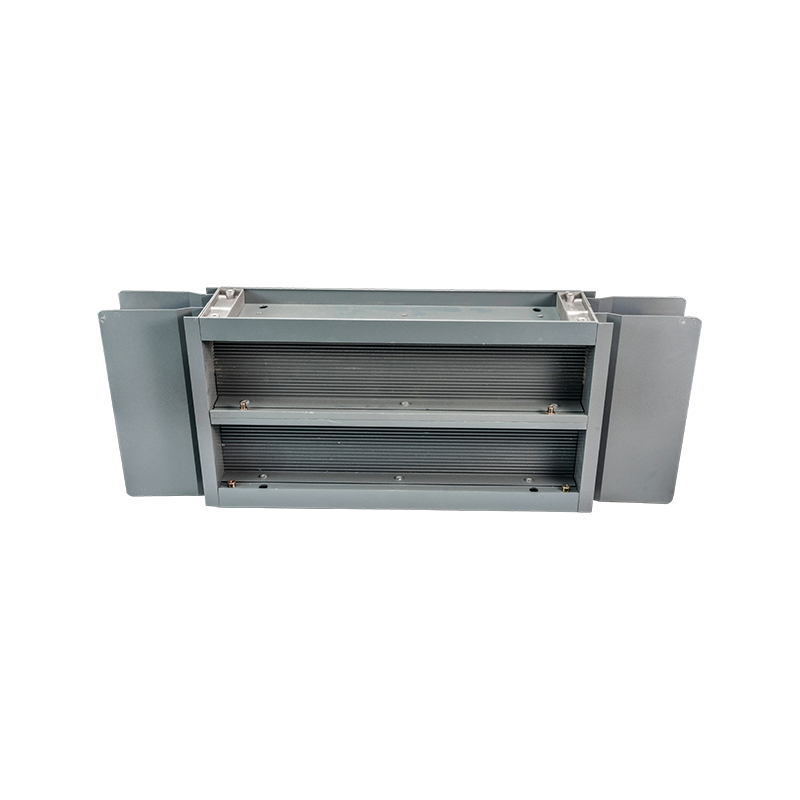
High-density Compact Busway
1. Product Overview: What Is a High-Density Compact Busway?
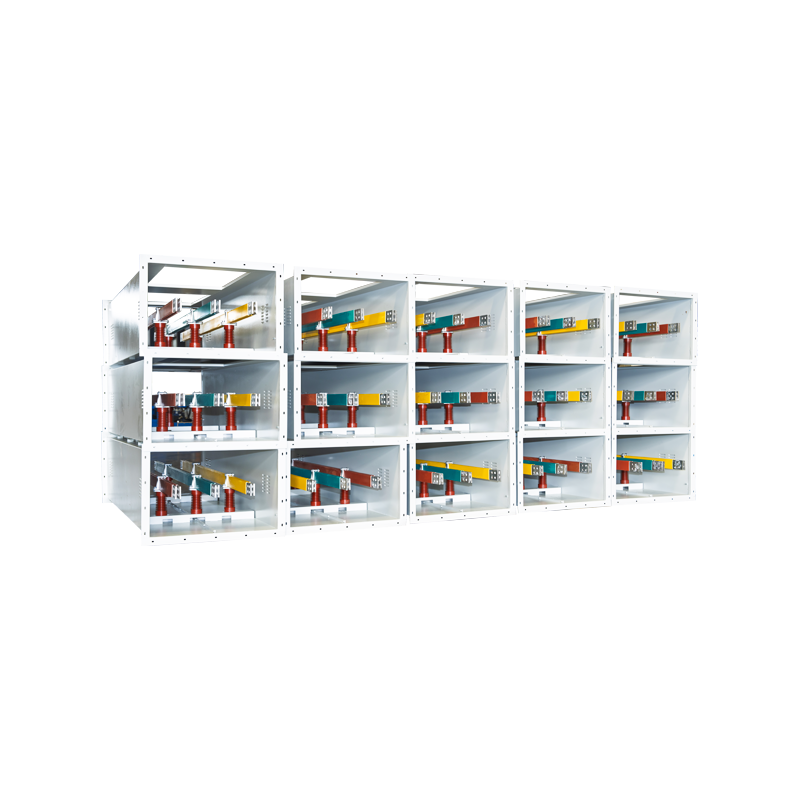
A high-density compact busway is a busbar trunking system in which conductors are arranged closely together and protected by insulation and an enclosure. Instead of using multiple large cables laid on trays, the system transmits electrical energy through rigid copper busbars arranged in a compact structure. The conductors are insulated and supported to form a stable power transmission channel that can carry high current with reduced space requirements.
The term “high-density” refers to the tight structural arrangement of the conductors. In traditional air-insulated bus duct systems, larger internal air gaps are often required to maintain insulation distance and reduce the risk of electrical faults. By contrast, a compact busway uses high-performance insulation material and precise conductor positioning to reduce the overall size of the product while preserving electrical safety. This dense arrangement also improves mechanical integrity and creates a neater, more controlled power distribution path.
The product is also classified as a low-voltage cast-resin busway. Epoxy resin casting technology allows the insulation system to form a solid, integrated protective layer around the conductors. When properly manufactured under vacuum casting conditions, the resin insulation can reduce internal voids, enhance dielectric strength, and improve resistance to moisture, dust, vibration, and environmental stress. This makes the system especially suitable for installations where long-term reliability and low maintenance are essential.
In a 0.4 kV low-voltage distribution system, the high-density compact busway acts as a critical connection device between upstream power supply equipment and downstream load centers, switchboards, tap-off units, or end-use electrical equipment. It is commonly used in vertical risers, horizontal distribution lines, machine rooms, production workshops, data center halls, commercial towers, and infrastructure projects that require stable high-current distribution.
2. Core Technical Specifications
The technical specifications of a compact busway determine whether it can meet the safety and performance requirements of a given project. The high-density compact busway described here is designed around a practical low-voltage distribution platform with strong current-carrying capability and dependable insulation performance.
| Technical Item | Typical Product Data | Engineering Significance |
|---|---|---|
| Product Type | Low-voltage cast-resin compact busway | Suitable for modern low-voltage power distribution systems |
| Rated Voltage | AC 400 V/690 V | Compatible with common industrial and commercial distribution networks |
| Rated Current | 400 A to 5000 A | Covers medium and high-current low-voltage applications |
| Insulation Class | Class F | Provides high thermal endurance for stable operation |
| Protection Rating | Up to IP65 | Enhances protection against dust and water ingress |
| Conductor Material | High-purity copper busbars with tin plating | Improves conductivity, contact reliability, and oxidation resistance |
| Short-Time Withstand Current | 50 kA for 1 second | Supports fault tolerance in demanding distribution systems |
| Power-Frequency Withstand Voltage | 3500 V/min | Confirms insulation reliability under electrical stress |
| Temperature Rise Limit | Below 70 K | Helps maintain safe operation and extend service life |
| Fire Resistance | UL94 V-0 level insulation performance | Supports flame-retardant safety requirements |
These parameters make the system suitable for many practical scenarios where conventional cables would require multiple parallel runs, complex cable tray arrangements, and significant installation space. The current range from 400 A to 5000 A allows designers to select a busway capacity that matches the actual load, while the AC 400 V/690 V rating aligns with the requirements of low-voltage power networks in commercial and industrial projects.
The high short-time withstand current capability is especially important because low-voltage distribution systems may experience short-circuit events caused by equipment failure, insulation breakdown, or operational faults. A busway that can withstand 50 kA for 1 second provides a stronger safety margin and helps maintain structural and electrical stability until protective devices isolate the fault.
3. Dense Structural Design and Space Utilization
One of the strongest advantages of the high-density compact busway is its space-saving design. In large buildings and industrial facilities, electrical distribution equipment often competes for space with HVAC ducts, fire protection pipes, communication cables, structural beams, and other building services. Traditional cable systems can occupy wide cable trays and require considerable bending radius, separation space, and support structures. This can complicate layout design and increase construction coordination difficulty.
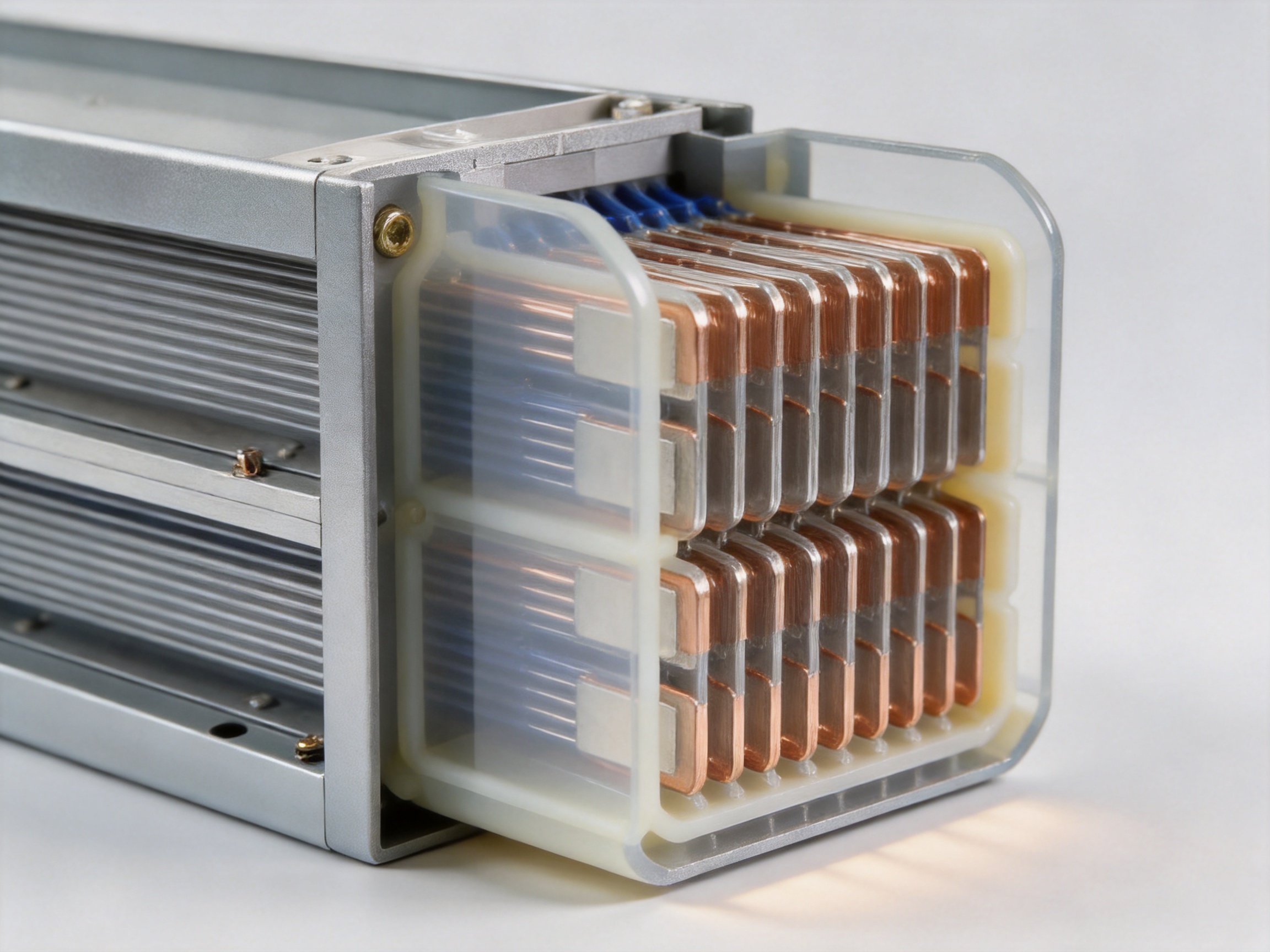
A compact busway reduces these problems by using a slim and rigid form. The conductors are arranged in a multilayer dense configuration, making the external dimensions much smaller than equivalent cable arrangements. This allows engineers to design narrower electrical shafts, cleaner ceiling routes, and more organized distribution systems. For projects with limited mechanical and electrical space, the reduction in installation footprint can be decisive.
Competitor products based on older air-insulated bus duct designs often require larger housings because the insulation system relies partly on internal air clearance. While air insulation can be effective in some environments, it can also allow dust, humidity, condensation, or foreign objects to influence insulation performance. The high-density compact busway, by using integral insulation and sealed structure, can reduce dependence on air gaps and create a more stable internal environment.
Another important space advantage is modularity. Compact busway sections are manufactured in standardized lengths and joined on site. Plug-in units can be arranged according to the project’s power distribution plan, allowing load points to be added or adjusted more conveniently than with fixed cable systems. In dynamic facilities such as data centers, workshops, and commercial buildings, this modularity provides flexibility for future equipment changes.
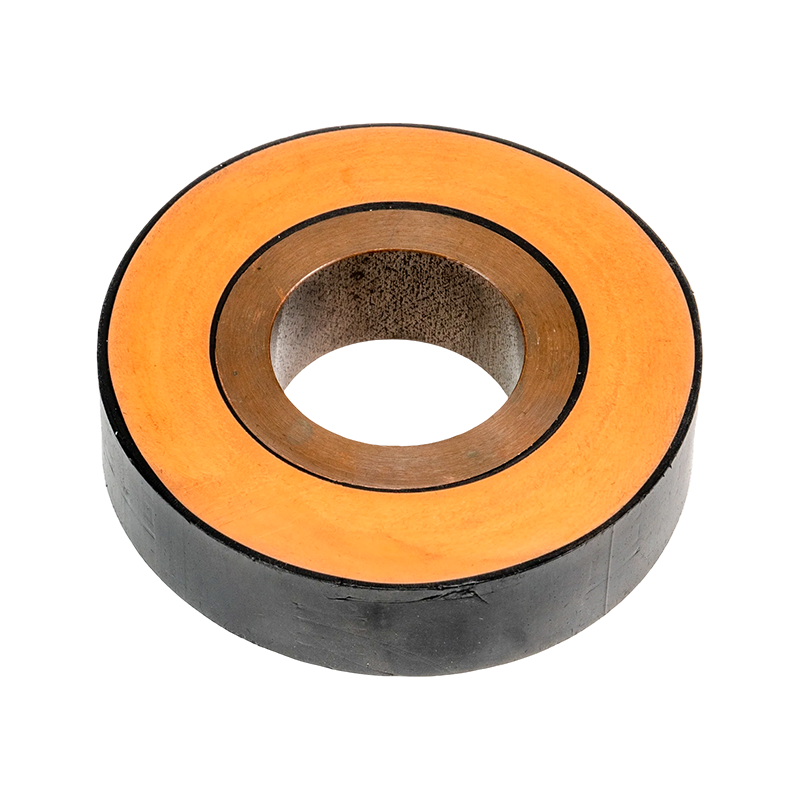
4. Epoxy Resin Casting and Full Insulation Protection
The use of epoxy resin casting technology is central to the product’s performance. Epoxy resin is widely used in electrical insulation because it has good dielectric strength, mechanical bonding, moisture resistance, chemical stability, and thermal endurance. When applied through controlled casting processes, it can form a solid insulation system around the conductors and help eliminate weak points that may exist in wrapped or layered insulation methods.
Vacuum casting is particularly valuable because trapped air bubbles or voids inside insulation can become partial discharge points under electrical stress. These microscopic voids may gradually damage insulation and reduce service life. By using vacuum casting equipment, the manufacturer can reduce internal air pockets and improve insulation consistency. A void-free or low-void insulation system contributes directly to long-term operational reliability.
Full insulation protection also improves safety during installation and operation. Traditional systems may have exposed metal parts, joints, or contact areas that require careful protection. In a compact cast-resin busway, the insulated structure reduces the possibility of accidental contact and helps protect against phase-to-phase short circuits. Flame-retardant insulation performance, including UL94 V-0 level characteristics, further supports safety in buildings where fire protection is a key concern.
Compared with competitors that rely primarily on conventional wrapped insulation or less controlled production methods, an integrated epoxy casting process offers better dimensional stability and environmental resistance. The insulation layer is not merely an accessory; it becomes part of the structural body of the busway. This improves resistance to vibration, impact, humidity, and long-term aging.
5. Copper Conductors and Electrical Efficiency
The conductor is the heart of any busway system. This high-density compact busway uses high-purity copper busbars with tin plating. Copper provides excellent electrical conductivity, enabling the system to transmit large currents with relatively low resistance. Lower resistance means reduced power loss, lower heat generation, and improved voltage stability along the distribution line.
Tin plating offers several benefits. It helps protect copper surfaces against oxidation, improves the reliability of electrical contact points, and supports stable performance at joints and plug-in interfaces. In low-voltage high-current systems, contact resistance is a major factor that can influence heat generation. A well-processed tin-plated contact surface helps maintain lower contact resistance and contributes to safer long-term operation.
Compared with ordinary cable installations, busway conductors are more orderly and predictable. Cables may experience uneven current distribution when multiple parallel runs are used, especially if installation lengths, bending conditions, and termination quality differ. A busway system provides a controlled conductor geometry, which supports more consistent impedance and better electrical balance.
Some competing products may use less precise conductor processing or inadequate surface treatment, leading to higher joint resistance or greater temperature rise during operation. Jiangsu Wopeng Power Technology Co., Ltd. supports conductor quality through CNC machining, accurate forming, standardized tin plating, assembly control, and routine electrical testing. This manufacturing discipline helps ensure that the product’s theoretical performance is realized in actual installations.
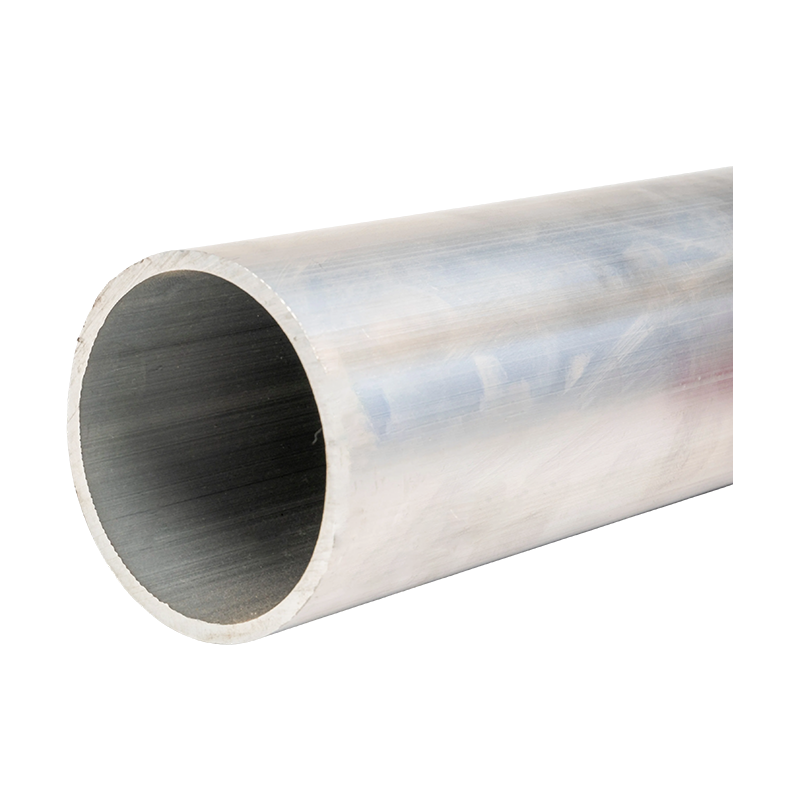
6. Aluminum Alloy Enclosure and Mechanical Strength
The enclosure of a compact busway must provide mechanical protection, support heat dissipation, and maintain structural alignment. This product uses high-strength aluminum alloy profiles, which provide a balanced combination of low weight, corrosion resistance, and mechanical rigidity. Aluminum alloy is also effective for heat transfer, helping the system release heat generated during current transmission.
A strong enclosure protects internal conductors and insulation from mechanical damage during transportation, installation, and operation. In industrial and commercial projects, busway runs may pass through crowded equipment rooms, ceiling spaces, vertical shafts, and areas where other trades are working. A durable enclosure reduces the risk of damage caused by accidental impact or improper handling.
Compared with ordinary steel enclosures, aluminum alloy can reduce overall weight, making installation easier and reducing load on supports. Reduced weight is especially useful in high-rise buildings and long horizontal runs where support design matters. At the same time, the enclosure contributes to a clean, professional installation appearance, which is valued in data centers, commercial spaces, and modern factory environments.
Competitors may offer busways with basic enclosure structures that meet minimum requirements but provide limited corrosion resistance, weaker heat dissipation, or less convenient assembly. A high-strength aluminum alloy profile system, combined with precision manufacturing, supports better alignment, more reliable joints, and longer service life.
7. Heat Dissipation and Temperature Rise Control
Heat management is a critical factor in busway reliability. Excessive temperature rise can accelerate insulation aging, increase conductor resistance, reduce current-carrying capacity, and create safety risks. The high-density compact busway is designed to maintain a temperature rise limit below 70 K, supporting stable performance under rated load conditions.
The compact structure improves heat transfer between conductors, insulation, and enclosure. Copper conductors generate less heat due to high conductivity, while aluminum alloy profiles help dissipate heat into the surrounding environment. The dense arrangement must be carefully designed because improper compacting could trap heat. In this product, conductor spacing, insulation selection, enclosure design, and current rating are coordinated to achieve both compact size and safe thermal behavior.
Compared with cable systems, busway thermal performance can be easier to predict. Multiple cables in a tray may be affected by grouping factors, ventilation conditions, uneven load sharing, and insulation aging. Busway systems are tested as integrated products, so the thermal characteristics are more controlled. This gives engineers greater confidence when designing high-current distribution paths.
Competitor products with insufficient conductor cross-section, poor joint design, or inadequate surface treatment may experience higher temperature rise at connection points. The use of tin-plated copper conductors, standardized joint pressure, and factory-controlled assembly helps reduce this risk. Routine inspection and testing further confirm that the busway can meet the intended performance requirements before delivery.
8. Installation Efficiency and Modular Construction
Installation speed is one of the most practical advantages of high-density compact busway. Laying large quantities of power cables requires cable pulling, tray installation, bending management, termination, labeling, insulation testing, and significant labor coordination. For high-current circuits, multiple parallel cables may be needed, making installation even more time-consuming.
A compact busway is delivered in modular sections that can be lifted, aligned, connected, and fixed according to the layout drawing. Plug-in connections and standardized joints reduce on-site assembly complexity. In many projects, installation efficiency can be improved significantly compared with conventional cabling. Faster installation reduces labor cost, shortens project schedules, and lowers the risk of workmanship variation.
Modularity also supports future expansion. When load requirements change, additional tap-off units or distribution points may be added with less disruption than cable replacement. This is especially important in data centers, manufacturing facilities, and commercial buildings where equipment layouts change over time. A modular busway helps avoid the waste and downtime associated with major rewiring work.
Competitors that supply only basic products without engineering support may leave customers facing coordination difficulties on site. A strong manufacturer provides not only busway hardware but also system design assistance, layout planning, production customization, technical drawings, installation guidance, and after-sales support. Jiangsu Wopeng Power Technology Co., Ltd. emphasizes comprehensive solutions that align manufacturing capability with project requirements.
9. Safety Performance in Low-Voltage Distribution
Safety in low-voltage distribution is not limited to avoiding electric shock. It includes short-circuit withstand capability, insulation strength, fire resistance, protection against dust and moisture, reliable joints, temperature control, and mechanical integrity. The high-density compact busway addresses these safety factors through its integrated design.
The full insulation system reduces exposure of live conductors and minimizes internal air gaps that could contribute to phase-to-phase faults. Internal flame-retardant phase barriers maintain safe inter-phase spacing, while the enclosure provides external protection. The IP65 protection rating helps prevent dust ingress and water jets from affecting internal components, making the system more suitable for challenging industrial or infrastructure environments.
The power-frequency withstand voltage of 3500 V/min verifies insulation resistance under elevated voltage stress. This test is important because low-voltage systems can still experience transient overvoltages, switching disturbances, and fault conditions. A busway that maintains insulation integrity under testing conditions is more likely to perform reliably throughout its service life.
Fire safety is another key concern. Flame-retardant insulation helps slow flame spread and reduce fire risk in building electrical systems. Compared with large cable bundles, which may require additional fireproofing treatment depending on installation conditions, a compact busway with integrated flame-retardant materials can simplify fire protection planning. However, proper installation, fire stopping at wall and floor penetrations, and coordination with local codes remain essential.
10. Advantages Over Traditional Cable Systems
Traditional power cables remain useful in many applications, but for high-current low-voltage distribution, compact busway offers several clear advantages. The first is space. Multiple large cables require significant tray width and bending space, while a compact busway offers a slim, organized route. This can reduce the size of electrical shafts and improve building space utilization.
The second advantage is installation speed. Cable pulling can be labor-intensive and physically demanding, especially for large cross-section cables. Busway sections are more standardized and can be installed in a more predictable sequence. This reduces installation time and improves schedule control.
The third advantage is expandability. Adding new loads to a cable system often requires new cable routes, new trays, or shutdowns for rewiring. A plug-in busway system can accommodate changes more conveniently through tap-off units and modular sections. This flexibility is valuable in facilities where production lines, server racks, or commercial tenants may change.
The fourth advantage is electrical performance. Busway conductor geometry is controlled, helping reduce impedance and voltage drop. Lower losses can improve energy efficiency, and the product may reduce overall energy consumption compared with conventional cable arrangements in suitable applications. The supplied product information indicates that overall energy consumption may be reduced by approximately 25% compared with conventional cabling under appropriate conditions.
The fifth advantage is maintenance. Cable systems may involve many terminations, concealed routes, and complex bundles. A sealed compact busway is easier to inspect visually, and its modular joints and tap-off units are more accessible. With proper design and installation, the system can support long-term maintenance-free or low-maintenance operation.
11. Advantages Over Ordinary Bus Duct Competitors
Not all busway systems are equal. Older air-insulated bus ducts and ordinary busbar trunking products may meet basic distribution needs but can fall short in compactness, environmental protection, insulation uniformity, and long-term reliability. The high-density compact busway improves on these weaknesses by integrating dense conductor arrangement, epoxy resin insulation, high-strength enclosure profiles, and controlled manufacturing processes.
Air-insulated bus duct often requires larger clearances and may be more sensitive to dust, humidity, and condensation. In environments such as basements, industrial workshops, coastal regions, or facilities with variable temperature, moisture and contamination can reduce insulation safety. A cast-resin compact busway provides stronger environmental resistance because the insulation is solid and integrated.
Ordinary bus duct products may also have more complicated maintenance requirements if internal parts are exposed or if joints are difficult to access. A modern compact system is designed with plug-in connectors, standardized joints, and modular sections. This makes installation and maintenance more efficient while reducing the possibility of errors.
Some competitors compete mainly on initial price by reducing conductor material, simplifying insulation, or limiting testing. Such products may appear cost-effective at purchase but can create higher lifecycle risk through temperature rise, joint failures, insulation aging, or maintenance downtime. A high-quality compact busway should be evaluated not only by price but by safety margin, current capacity, manufacturing control, test records, project support, and expected service life.
12. Manufacturing Strength: From Materials to Finished Product
Advanced manufacturing is essential for a reliable busway. A product that carries thousands of amperes cannot depend on rough assembly or inconsistent workmanship. Jiangsu Wopeng Power Technology Co., Ltd. was founded in 2018 and has developed as a specialized high-tech enterprise focused on high and low voltage busbar systems. Its product portfolio covers 35 kV epoxy resin vacuum-cast tubular busbars, low-voltage epoxy-cast busbar trunking, copper and aluminum tubular busbars, wind power tubular busbars, compact busbar systems, and sliding contact line systems.
This broad product background matters because the principles of insulation, conductor processing, thermal management, and mechanical design are shared across many busbar applications. Experience with high-voltage epoxy resin vacuum-cast tube busbars strengthens the company’s understanding of insulation reliability. Experience with copper and aluminum tubular busbar systems supports accurate metal processing and current-carrying design. Experience with low-voltage cast-resin busway helps translate those capabilities into compact distribution products.
The manufacturing process begins with engineering design and material selection. Conductors must be selected according to current rating, temperature rise requirements, short-circuit forces, and installation conditions. Copper busbars are processed through cutting, punching, forming, surface treatment, and inspection. Dimensional accuracy is essential because busbar alignment affects joint pressure, electrical contact quality, and insulation thickness.
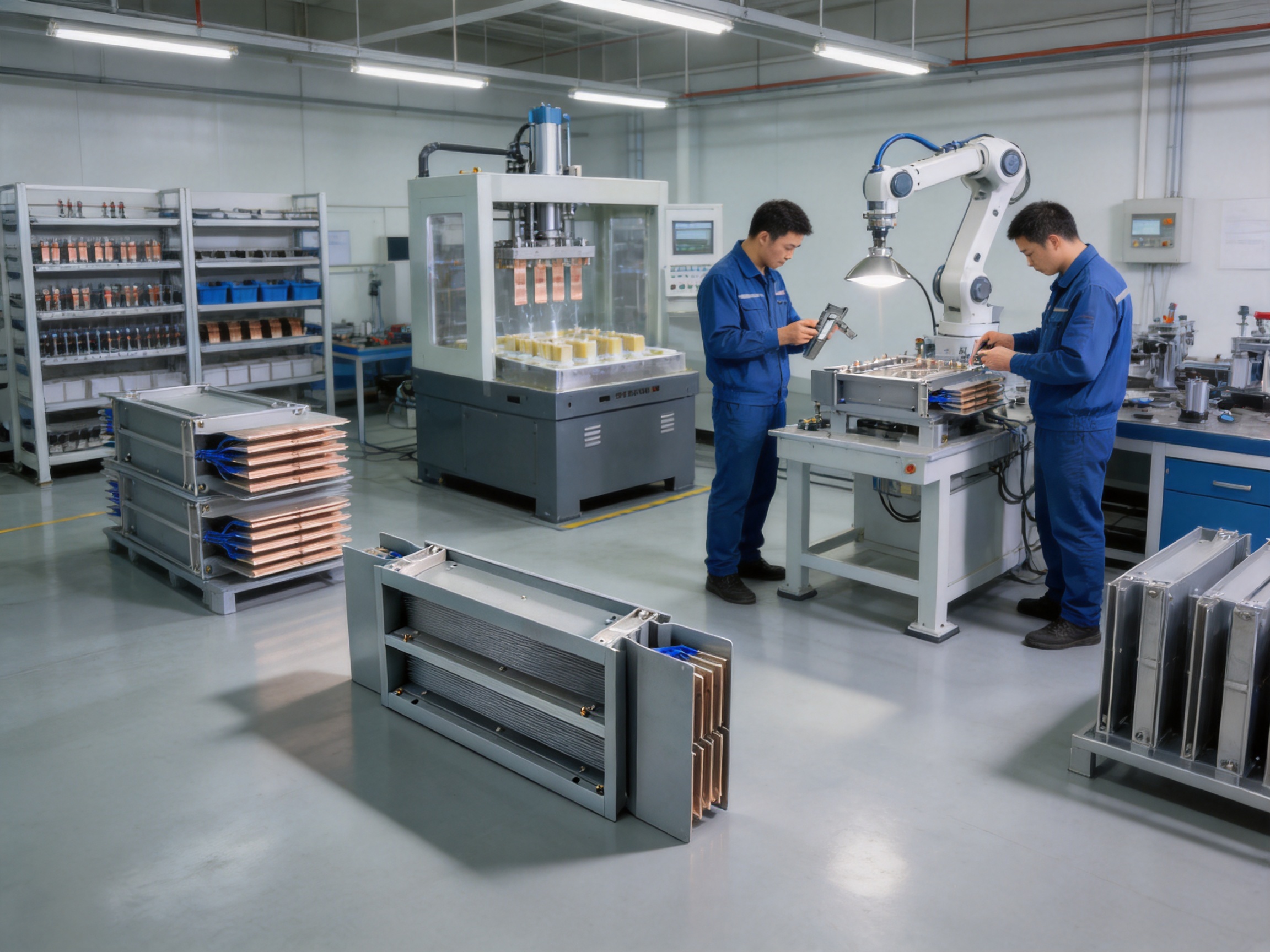
Epoxy resin casting requires controlled material preparation, mixing, degassing, mold design, curing, and inspection. Vacuum casting equipment helps improve insulation density and reduce bubbles. After casting, the product must be checked for dimensional accuracy, surface integrity, insulation performance, and mechanical fit. The enclosure and connection components are assembled according to standardized procedures to ensure consistent quality.
Modern production lines equipped with vacuum casting systems, CNC machining equipment, and automated assembly technologies allow the manufacturer to control quality at each stage. This reduces variation, increases production repeatability, and supports customized OEM solutions for different project needs. The company’s strict quality management system includes standardized inspections such as high-voltage tests, insulation tests, mechanical verification, and routine quality checks.
13. Quality Control and Testing
Quality control is one of the main differences between a dependable busway manufacturer and a low-cost supplier. Because busway products are installed in critical electrical networks, failure can lead to downtime, fire risk, equipment damage, or safety hazards. Therefore, each production stage should include inspection and verification.
Material inspection confirms that copper conductors, aluminum alloy profiles, insulation materials, fasteners, and accessories meet specified requirements. Dimensional inspection ensures that conductors and enclosures fit correctly. Surface inspection checks plating quality and prevents defects that could increase contact resistance. Casting inspection evaluates insulation surface condition and structural integrity.
Electrical testing is especially important. Insulation resistance testing, power-frequency withstand voltage testing, and continuity checks verify the basic electrical safety of finished products. Mechanical verification confirms that joints, enclosure parts, and connection systems can withstand installation and operating stress. For high-current products, temperature rise and short-circuit withstand performance are critical design validation items.
The company also collaborates with third-party testing institutions for independent validation of safety and performance. Independent testing strengthens customer confidence because it confirms that product performance is not based only on internal claims. For engineering contractors and project owners, complete test documentation supports acceptance procedures and long-term asset management.
14. Applications in Data Centers
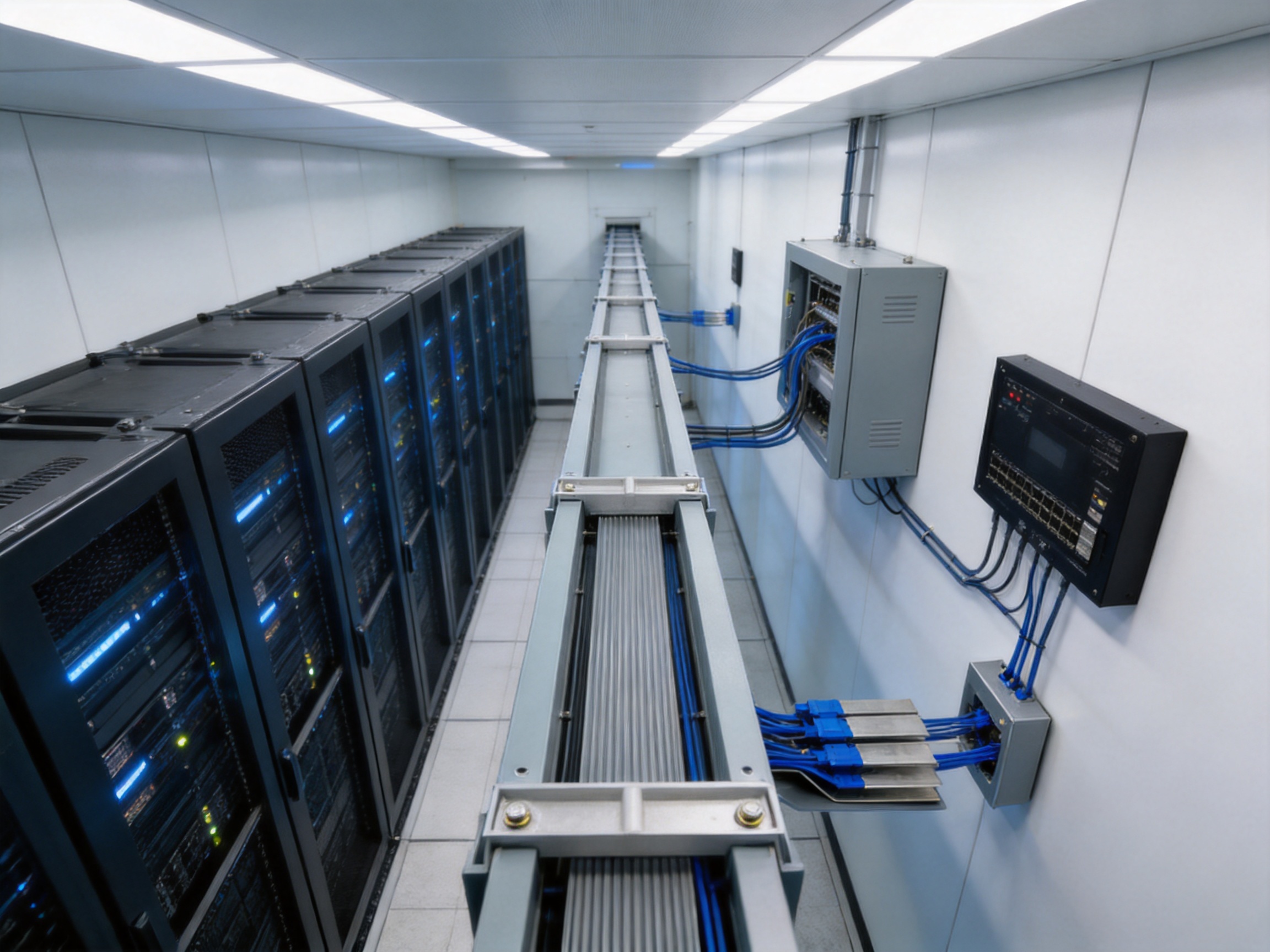
Data centers are among the most demanding applications for low-voltage power distribution. They require high current density, low downtime risk, flexible expansion, reliable monitoring, and efficient space utilization. Server halls and power rooms are often dense with equipment, and power distribution systems must support frequent changes in load layout.
A high-density compact busway is well suited to data centers because it provides large current capacity in a compact structure. It can distribute power along rows or through overhead routes while allowing tap-off units to supply server racks, UPS output panels, power distribution units, or other equipment. The modular design makes expansion easier as IT loads increase or rack arrangements change.
Low impedance and reduced voltage drop are valuable for sensitive IT equipment because stable voltage contributes to efficient operation. The clean appearance of busway distribution also improves airflow management and reduces cable congestion. Compared with large cable bundles under raised floors or overhead trays, a busway system can simplify routing and make maintenance more organized.
For data center operators, reliability is not optional. Downtime can create major financial losses and service disruption. The full insulation protection, strong short-circuit withstand capability, flame-retardant performance, and controlled manufacturing quality of compact busway all contribute to a safer power architecture.
15. Applications in Industrial Manufacturing
Industrial plants often require high-current power distribution for production lines, motors, welding equipment, processing machines, control cabinets, and auxiliary systems. Loads may be added, relocated, or upgraded as production processes change. Conventional cable systems can become difficult to modify after installation, especially in large workshops with long cable routes.
Compact busway provides a flexible backbone for industrial power supply. Tap-off units can be installed along the route to feed machines or distribution boards. If equipment is relocated, the power distribution layout can often be adjusted more easily than with fixed cables. This helps manufacturers reduce downtime during plant modification or expansion.
The IP65 protection rating is useful in many industrial environments where dust, moisture, or cleaning operations may affect electrical equipment. The aluminum alloy enclosure protects against mechanical damage, while the epoxy resin insulation provides strong resistance to environmental stress. For plants with vibration or heavy equipment movement, mechanical stability and secure joints are also important.
In high-load industrial environments, heat dissipation and joint reliability directly affect safety. The use of copper conductors, tin-plated contact surfaces, controlled joint assembly, and temperature rise design helps maintain stable operation under continuous load.
16. Applications in Commercial Buildings and Infrastructure
Large commercial buildings, hotels, hospitals, transportation hubs, and public facilities require reliable low-voltage distribution systems that can be installed within limited building service spaces. Electrical shafts in high-rise buildings are often crowded, and every square meter of usable space has economic value. Compact busway helps reduce shaft space and improve routing efficiency.
In commercial buildings, loads may vary between floors and tenants. A busway riser can supply distribution panels at multiple levels, while modular tap-off units support flexible power allocation. Compared with cables, the busway provides a cleaner and more standardized vertical distribution method.
Hospitals and public infrastructure place high importance on safety and continuity. Power distribution systems must be robust, fire-resistant, and easy to maintain. The fully insulated cast-resin structure, flame-retardant insulation, and strong protection rating help meet these expectations when combined with proper design and installation.
Rail transit facilities, airports, and large stations also benefit from compact systems because they require high current, long routing distances, and dependable operation. A busway can reduce cable congestion and simplify maintenance in technical spaces that are difficult to access.
17. Engineering Design Considerations
To achieve the full benefits of high-density compact busway, proper engineering design is essential. The rated current should be selected according to actual load, future expansion, ambient temperature, installation method, and permissible voltage drop. Designers should also consider short-circuit levels, protective device coordination, grounding arrangement, fire compartment penetrations, and accessibility for maintenance.
Route planning should minimize unnecessary bends and ensure adequate support spacing. Although compact busway is rigid and efficient, it still requires proper installation clearance and support brackets. Expansion joints or flexible connections may be required in long runs or areas subject to thermal movement, building settlement, or vibration.
Tap-off unit locations should be planned according to equipment layout and future expansion. In data centers, tap-off points may align with rack rows. In factories, they may align with production cells. In high-rise buildings, they may align with floor distribution boards. Good planning reduces rework and improves operational convenience.
Coordination with other building systems is also important. Busway routes should avoid conflicts with ventilation ducts, pipes, cable trays, structural members, and maintenance access paths. Early design collaboration between the manufacturer, electrical consultant, contractor, and project owner can prevent costly changes during construction.
18. Lifecycle Cost and Long-Term Value
The initial purchase cost of high-density compact busway may sometimes be higher than simple cable arrangements, especially for small or low-current circuits. However, lifecycle value should be evaluated based on installation time, space savings, energy losses, maintenance requirements, expansion flexibility, and service life.
Installation time can be reduced because modular busway sections are easier to assemble than large cable bundles. Labor savings can be substantial in high-current projects. Reduced space requirements can also create economic value by freeing building area or simplifying electrical shaft design. In large facilities, space savings may offset part of the product cost.
Energy efficiency is another long-term factor. Lower impedance and reduced losses can decrease operating costs over time. The product information indicates that energy consumption may be reduced by about 25% compared with conventional cabling in suitable conditions. Actual savings depend on load profile, conductor sizing, route length, installation environment, and operating hours.
Maintenance cost is reduced because the system is sealed, organized, and modular. Fewer exposed connections and easier inspection can reduce operational risk. The product’s service life can reach up to 30 years when properly designed, installed, and maintained, giving owners a long operating horizon.
19. Customization and OEM Solution Capability
Every project has unique electrical, mechanical, and spatial requirements. A strong busway manufacturer must be able to provide tailored solutions rather than only standard products. Jiangsu Wopeng Power Technology Co., Ltd. provides customized busbar and tubular busbar system solutions based on project specifications, drawings, site conditions, and performance requirements.
Customization may include rated current selection, enclosure dimensions, route configuration, joint type, tap-off arrangement, installation accessories, phase sequence, protection level, conductor material, and special interface design. For complex projects, engineering support is essential to ensure that the busway integrates with transformers, switchgear, distribution boards, UPS systems, or other equipment.
The company’s experience across insulated bus bar systems, tubular busbar systems, compact busbar systems, and low-voltage cast-resin busway gives it a broader engineering perspective. This is important for customers who need both high-voltage and low-voltage power transmission products from a supplier with consistent technical standards.
OEM capability also supports customers who require private-label production, project-specific packaging, documentation, or technical adaptation. Advanced manufacturing equipment and strict quality systems make customization more reliable because special products still require repeatable processes and verified testing.
20. Why Manufacturing Experience Matters
In power distribution, product reliability is created before the equipment reaches the site. Design calculation, conductor processing, insulation casting, enclosure production, assembly, and testing all determine future performance. A manufacturer with limited process control may produce products that look similar externally but perform differently under load, heat, humidity, or short-circuit stress.
Jiangsu Wopeng Power Technology Co., Ltd. has built a team of engineers, technical specialists, and production professionals with deep expertise in power equipment technology. Its products operate safely and reliably across more than 17 provinces and key industrial sectors. This practical operating record helps refine product design and manufacturing procedures according to real-world feedback.
The company’s manufacturing strengths include vacuum casting systems for insulation reliability, CNC machining for conductor precision, automated assembly technologies for consistency, standardized inspection procedures for quality control, and third-party testing collaboration for independent verification. These strengths allow the company to compete not only on product supply but also on engineering reliability.
For customers, choosing a busway is not only choosing a metal conductor and enclosure. It is choosing a safety-critical system that must perform for decades. A supplier with advanced production capability, project experience, and quality discipline provides stronger assurance than a supplier focused only on low price.
21. Q&A Section
Q1: What is the main purpose of a high-density compact busway?
A high-density compact busway is used to distribute low-voltage electrical power safely and efficiently in high-current applications. It replaces or supplements traditional cable systems by using compact copper conductors, insulation, and modular sections to create a reliable power distribution path.
Q2: What voltage system is this product suitable for?
The product is suitable for 0.4 kV low-voltage distribution systems and is designed for rated voltages of AC 400 V/690 V. It is commonly used in commercial buildings, industrial plants, data centers, and infrastructure facilities.
Q3: What current range does the product cover?
The product covers a rated current range from 400 A to 5000 A, making it suitable for medium and high-current low-voltage distribution applications.
Q4: Why is epoxy resin casting important?
Epoxy resin casting creates a strong, integrated insulation system around the conductors. When produced using vacuum casting technology, it helps reduce internal voids, improve dielectric strength, enhance moisture resistance, and support long-term reliability.
Q5: How does compact busway save space compared with cables?
The busway uses densely arranged conductors in a rigid structure, so it requires less installation space than multiple large cables on trays. This is especially useful in electrical shafts, ceiling spaces, data centers, and industrial facilities with limited routing space.
Q6: Is the system suitable for data centers?
Yes. The compact design, high current capacity, low impedance, modular tap-off capability, and clean installation layout make it highly suitable for data center power distribution, especially where expansion flexibility and reliable operation are required.
Q7: What are the advantages over ordinary air-insulated bus duct?
Compared with ordinary air-insulated bus duct, the cast-resin compact busway offers better space utilization, improved environmental resistance, full insulation protection, reduced sensitivity to dust and moisture, and stronger structural integration.
Q8: What manufacturing strengths support product reliability?
Reliability is supported by vacuum casting systems, CNC machining equipment, automated assembly, strict quality management, high-voltage testing, insulation testing, mechanical verification, and third-party testing cooperation.
Q9: Can the product be customized?
Yes. The system can be customized according to project requirements, including current rating, route layout, tap-off arrangement, enclosure configuration, connection interfaces, and installation accessories.
Q10: What is the expected service life?
When properly designed, installed, and operated within specified conditions, the product can provide a service life of up to 30 years, supported by durable insulation, reliable conductors, and a robust enclosure structure.
22. Conclusion
High-density compact busway represents a modern direction in low-voltage power distribution. It combines compact conductor arrangement, epoxy resin casting, copper busbars, aluminum alloy enclosure profiles, modular installation, and strong protection performance to deliver a system that is safer, more efficient, and easier to manage than many traditional alternatives.
Its advantages are especially clear in projects where space is limited, current demand is high, downtime must be minimized, and future expansion is expected. Compared with conventional cables, it can reduce installation space, improve construction efficiency, simplify maintenance, and support lower energy losses. Compared with ordinary bus duct competitors, it provides stronger insulation integration, better environmental resistance, and more advanced manufacturing consistency.
The value of the product is reinforced by the manufacturer’s technical foundation. Jiangsu Wopeng Power Technology Co., Ltd. brings experience in insulated bus bar systems, tubular busbar systems, low-voltage cast-resin busway, and compact busbar systems. Through vacuum casting, CNC machining, automated assembly, standardized testing, and third-party validation, the company provides not only a product but a complete engineering solution for reliable power transmission.
For project owners, electrical consultants, contractors, and system integrators, selecting a high-density compact busway means investing in safety, space efficiency, operational flexibility, and long-term reliability. As electrical infrastructure becomes more compact, intelligent, and demanding, this type of busway will continue to play an important role in modern low-voltage distribution networks.
References
1. International Electrotechnical Commission. IEC 61439, Low-Voltage Switchgear and Controlgear Assemblies.
2. International Electrotechnical Commission. IEC 60529, Degrees of Protection Provided by Enclosures.
3. Underwriters Laboratories. UL 94, Standard for Tests for Flammability of Plastic Materials for Parts in Devices and Appliances.
4. International Electrotechnical Commission. IEC 60060, High-Voltage Test Techniques.
5. IEEE Industry Applications Society. Recommended Practices for Industrial and Commercial Power Systems.
6. Manufacturer technical data for low-voltage cast-resin compact busway systems and insulated bus bar products.
Product: High-density Compact Busway



-
 +86-180 3625 3000
-
 admin@wpbusbar.com
-
 No. 8, Yanjin Road, Chengxi Industrial Park, Shanyang Town, Baoying County, Yangzhou City, Jiangsu Province, China
Copyright © Jiangsu Wopeng Power Technology Co., Ltd.
All Rights Reserved.
 Custom Insulated Bus Bar Manufacturer
Tubular Busbar System Factory
Custom Insulated Bus Bar Manufacturer
Tubular Busbar System Factory