

 EN

 English
 русский
 Français
 Español
 عربى

Reinforcing Steel Aluminum Strand: High-Strength Conductivity for Reliable Power Infrastructure
Content
- 1 1. Understanding Reinforcing Steel Aluminum Strand
- 2 2. Product Construction and Standardized Range
- 3 3. Material Composition and Performance Design
- 4 4. Electrical Advantages
- 5 5. Mechanical Strength and Long-Span Capability
- 6 6. Environmental Adaptability
- 7 7. Advantages Compared with Conventional Conductors
- 8 8. Applications in Power Transmission and Distribution
- 9 9. Manufacturing Process and Quality Control
- 10 10. Manufacturing Strengths of Jiangsu Wopeng Power Technology
- 11 11. Installation Considerations
- 12 12. Maintenance and Service Life
- 13 13. Selection Guide for Engineers and Buyers
- 14 14. Economic and Operational Benefits
- 15 15. Frequently Asked Questions
- 15.1 Q1: What is reinforcing steel aluminum strand?
- 15.2 Q2: What standard does the product follow?
- 15.3 Q3: What sizes are available?
- 15.4 Q4: Why is steel used in an aluminum conductor?
- 15.5 Q5: Is the steel core electrically conductive?
- 15.6 Q6: Can the product be used for long spans?
- 15.7 Q7: Can it be used in coastal environments?
- 15.8 Q8: What connectors should be used?
- 15.9 Q9: What is the typical delivery length?
- 15.10 Q10: How does the product compare with an all-aluminum conductor?
- 15.11 Q11: What quality information should buyers request?
- 15.12 Q12: Can the manufacturer provide customized solutions?
- 16 16. Conclusion
- 17 References
- 18 Product: Reinforcing Steel Aluminum Strand
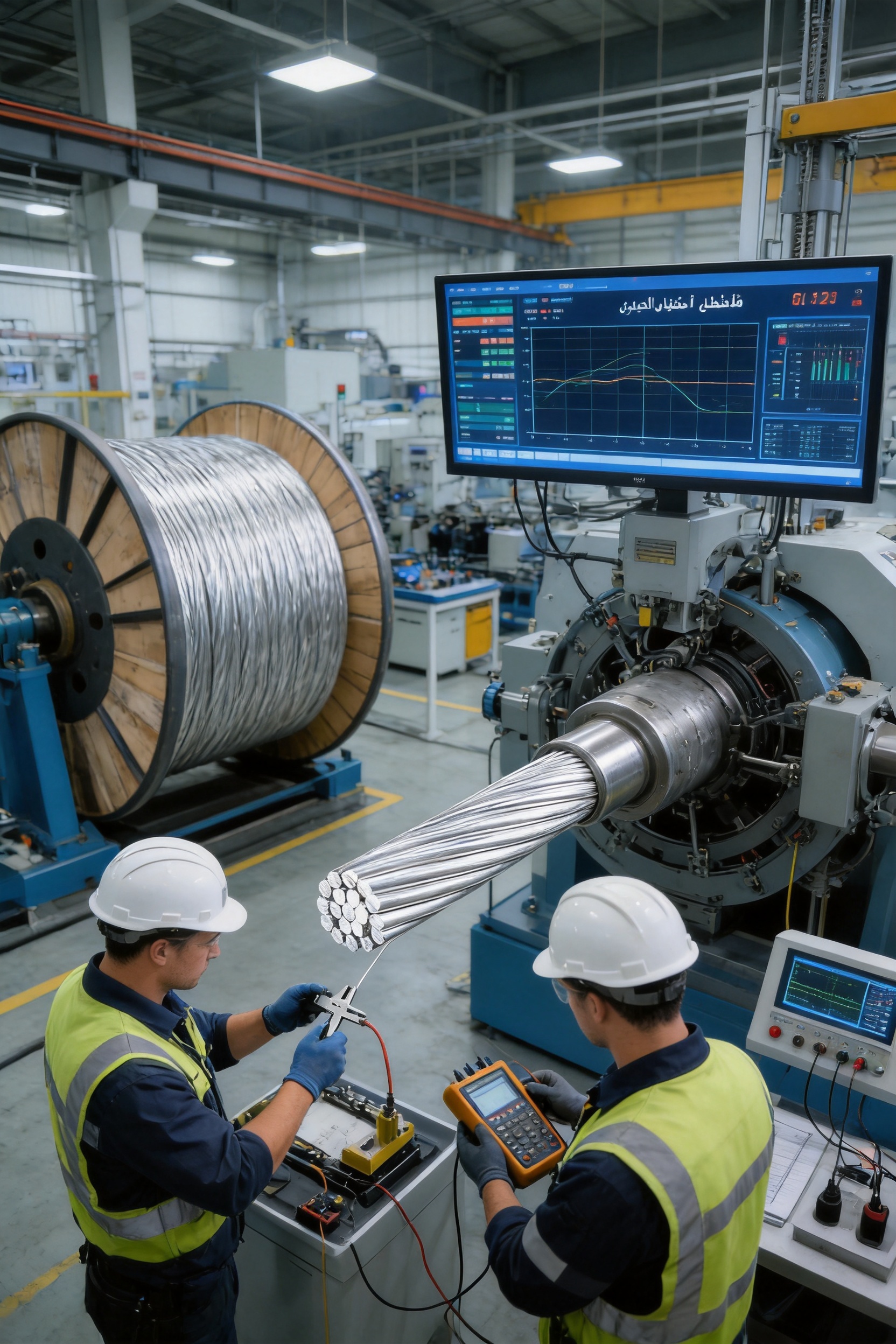
Modern power transmission and distribution systems must balance two demanding requirements: efficient electrical conduction and dependable mechanical performance. Conductors are exposed to their own weight, wind, ice, vibration, temperature changes, installation tension, and long-term environmental stress. A material that provides excellent conductivity but insufficient strength may experience excessive sag or mechanical damage. Conversely, a conductor with high tensile strength but poor conductivity can increase energy losses and reduce system efficiency.
Reinforcing steel aluminum strand is designed to address this balance. It combines aluminum strands, which provide the primary current-carrying function, with a steel core, which supplies mechanical reinforcement. This composite construction enables the strand to carry electrical current while resisting tensile loads and maintaining structural stability over extended service periods.
Manufactured in accordance with the GB1179-83 standard, the product is available in a broad range of nominal cross-sections from 10/2 mm² to 240/30 mm². Depending on the selected construction, it contains 6 to 30 aluminum strands surrounding 1 to 7 steel-core strands. This flexible configuration allows engineers to select a conductor according to current requirements, span length, mechanical loading, installation conditions, and equipment compatibility.
Jiangsu Wopeng Power Technology Co., Ltd. brings its experience in electrical power equipment, tubular busbars, high-voltage systems, and low-voltage busway manufacturing to the production and application of specialized conductive components. Its engineering capabilities, controlled production methods, and inspection procedures support the development of reliable solutions for demanding power infrastructure projects.
1. Understanding Reinforcing Steel Aluminum Strand
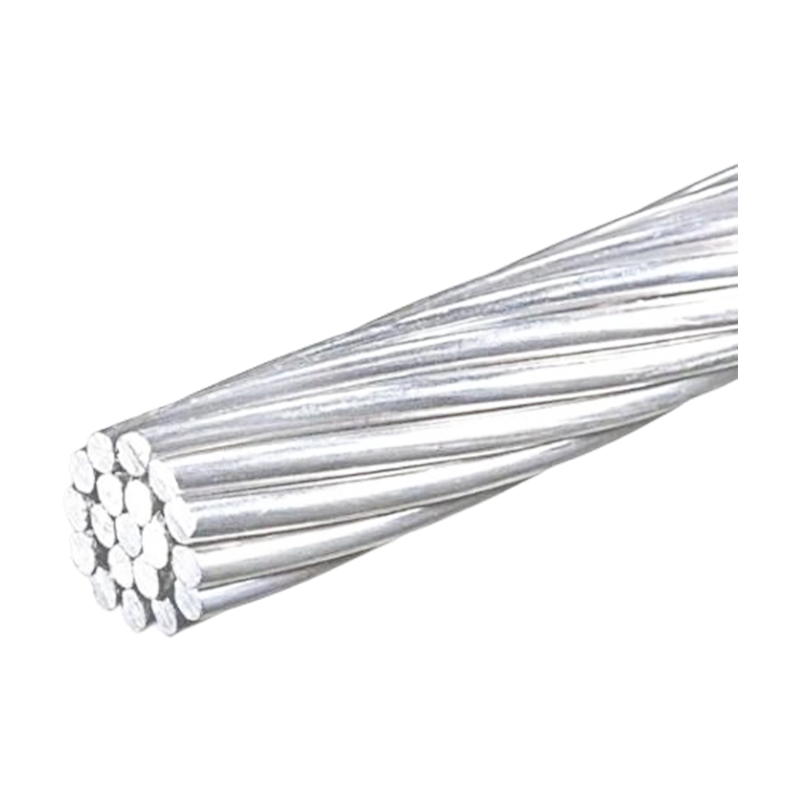
Reinforcing steel aluminum strand is a stranded composite conductor consisting of an inner steel core and outer aluminum layers. The aluminum portion is responsible for carrying most of the electrical current, while the steel portion increases tensile strength and supports the conductor mechanically.
The steel core is positioned at the center of the conductor to provide a continuous load-bearing structure. Aluminum wires are then stranded around the core in carefully controlled layers. This arrangement creates a conductor with a useful combination of electrical and mechanical characteristics without requiring a solid, oversized conductor made entirely from a heavy structural material.
In practical use, the strand can withstand higher mechanical loads than a comparable all-aluminum conductor. The steel core helps limit sag, improves resistance to tension during installation, and supports longer spans between structures. At the same time, the surrounding aluminum strands preserve a substantial conductive cross-section and provide a corrosion-resistant outer surface.
The product is suitable for applications where mechanical strength is a critical design factor. These applications include overhead power transmission, high-tension distribution, grounding and shielding systems, and specialized connection hardware. It may also be used as a damping wire in hardware assemblies such as damping-type end caps, where a combination of electrical continuity, structural stability, and controlled flexibility is required.
Although the basic concept is straightforward, performance depends heavily on the quality of the raw materials, strand geometry, wire diameter control, stranding tension, core preparation, surface condition, and final inspection. A properly manufactured steel-aluminum strand must maintain consistent dimensions and uniform load distribution throughout its delivery length.
2. Product Construction and Standardized Range
The product conforms to the GB1179-83 standard, providing a defined framework for construction, dimensions, electrical resistance, tensile strength, weight, and related technical parameters. Standardization simplifies engineering selection and helps users compare product options across different projects.
The nominal cross-sectional range extends from 10/2 mm² to 240/30 mm². The first value generally represents the aluminum component, while the second value represents the steel component. This notation allows the user to understand the approximate conductive and reinforcing portions of the conductor.
Depending on the model, the conductor can be formed by wrapping 6 to 30 aluminum strands around 1 to 7 steel-core strands. The aluminum single-wire diameter ranges from approximately 1.50 mm to 4.72 mm. Steel-core wire diameters range from approximately 1.50 mm to 3.60 mm.
This range enables the product to serve both relatively compact applications and larger high-load configurations. Smaller constructions may be selected for lower current requirements, equipment connections, or specialized hardware. Larger constructions are suitable for higher current transmission, longer spans, and conditions involving greater mechanical loading.
The calculated cross-sectional area ranges from 12.37 mm² to 275.96 mm². Outer diameters extend from approximately 4.50 mm to 21.60 mm. These dimensions are important for selecting clamps, connectors, support fittings, protective equipment, and installation tools.
The stated direct-current resistance range is no greater than approximately 2.706 ohms per kilometer to 0.1410 ohms per kilometer, depending on the selected construction. Calculated tensile strength ranges from approximately 4,012 newtons to 91,120 newtons, while calculated weight ranges from 42.9 kilograms per kilometer to 964.2 kilograms per kilometer.
Delivery lengths are generally less than 2,000 meters. This length range is practical for transportation, handling, storage, installation planning, and quality traceability. Specific delivery arrangements can be determined according to project requirements, manufacturing schedules, and packaging conditions.
| Technical Item | Product Range or Characteristic | Engineering Significance |
|---|---|---|
| Applicable standard | GB1179-83 | Provides standardized construction and performance requirements |
| Nominal cross-section | 10/2 mm² to 240/30 mm² | Supports different current and mechanical load requirements |
| Aluminum strand count | 6 to 30 wires | Determines conductive area and outer strand geometry |
| Steel-core strand count | 1 to 7 wires | Contributes to tensile strength and structural support |
| Aluminum wire diameter | Approximately 1.50 mm to 4.72 mm | Influences current capacity, flexibility, and overall diameter |
| Steel wire diameter | Approximately 1.50 mm to 3.60 mm | Influences tensile performance and core stability |
| Calculated area | Approximately 12.37 mm² to 275.96 mm² | Supports conductor selection and electrical calculations |
| Outer diameter | Approximately 4.50 mm to 21.60 mm | Required for fittings, clearances, and installation tooling |
| Calculated tensile strength | Approximately 4,012 N to 91,120 N | Supports long spans and high mechanical loading |
| Calculated weight | Approximately 42.9 kg/km to 964.2 kg/km | Used in structural loading and transportation calculations |
| Typical delivery length | Less than 2,000 m | Supports manageable handling and project logistics |
3. Material Composition and Performance Design
The performance of a composite conductor begins with material selection. The aluminum strands are manufactured using electrical-grade aluminum with a stated purity of at least 99.7 percent. High-purity aluminum provides a favorable balance between conductivity, weight, ductility, and corrosion resistance.
Through controlled annealing, the aluminum strands can achieve conductivity above 61 percent IACS under the stated product design. Annealing reduces internal stress created during drawing and helps establish a stable combination of electrical conductivity and forming behavior. Properly annealed aluminum is also less susceptible to premature cracking during stranding and installation.
The steel core supplies the mechanical strength that aluminum alone cannot provide at the same conductor weight and diameter. The steel material must possess consistent tensile properties, dimensional accuracy, and surface quality. A galvanized steel core with a zinc coating weight meeting or exceeding 300 grams per square meter is specified in the product information. The zinc layer helps protect the steel from atmospheric corrosion and contributes to the service life of the composite structure.
The aluminum-steel relationship must be carefully controlled. The aluminum layers should remain properly positioned around the core, while the steel core must maintain adequate support without causing local deformation of the aluminum wires. Excessive stranding tension, uneven wire diameters, or improper pitch can lead to nonuniform load sharing and reduced performance.
Layered stranding technology is used to create an organized conductor geometry. Each layer follows a controlled helical path around the previous layer. This allows the finished strand to maintain a stable circular profile and distributes mechanical stress across the conductor. The manufacturing process also controls the relationship between the pitch length and the conductor diameter, which affects flexibility, stability, and resistance to loosening.
4. Electrical Advantages
The primary electrical advantage of reinforcing steel aluminum strand is that its outer aluminum portion provides a large conductive pathway while the inner steel core performs a structural role. This allows the product to carry current efficiently without relying on steel for its main electrical function.
Direct-current resistance is one of the most important selection parameters. Lower resistance generally corresponds to lower conductor losses under a given current. The available cross-sectional range enables users to choose a construction that satisfies the required electrical load while also meeting mechanical and dimensional limitations.
The product information also indicates a measured skin-effect coefficient below 1.05 under high-frequency conditions. The increase in alternating-current resistance is stated to be controlled within 8 percent. These characteristics are useful when the conductor is exposed to changing current conditions or higher-frequency electrical effects.
For high-current systems, thermal behavior must also be considered. The stated short-circuit thermal capacity reaches 150 kA²·s. This indicates the conductor is designed to withstand a defined level of short-duration thermal stress, subject to the complete system design, installation method, connection configuration, and applicable technical requirements.
After 100 thermal cycles, the stated conductivity degradation does not exceed 2 percent. Repeated heating and cooling can cause expansion, contraction, contact pressure changes, and material aging. Controlled thermal performance helps maintain predictable electrical characteristics over the service life of the installation.
In an engineering application, the strand should not be evaluated only by its nominal aluminum area. Designers should also consider operating current, ambient temperature, solar radiation, wind speed, installation tension, allowable temperature, connection resistance, clearance, and the thermal characteristics of adjacent components.
5. Mechanical Strength and Long-Span Capability
The central mechanical advantage of a steel-reinforced aluminum conductor is the increased tensile capacity provided by the steel core. In a long overhead span, the conductor is subjected to its own weight and environmental loads. Without sufficient mechanical strength, it may sag excessively, approach unsafe clearances, or suffer permanent deformation.
The steel core enables the conductor to remain more stable under tension. It supports longer spans between towers and can reduce the need for intermediate support structures. Fewer structures may simplify route planning and reduce construction quantities, particularly in areas where terrain, roads, rivers, industrial facilities, or environmental restrictions make tower placement difficult.
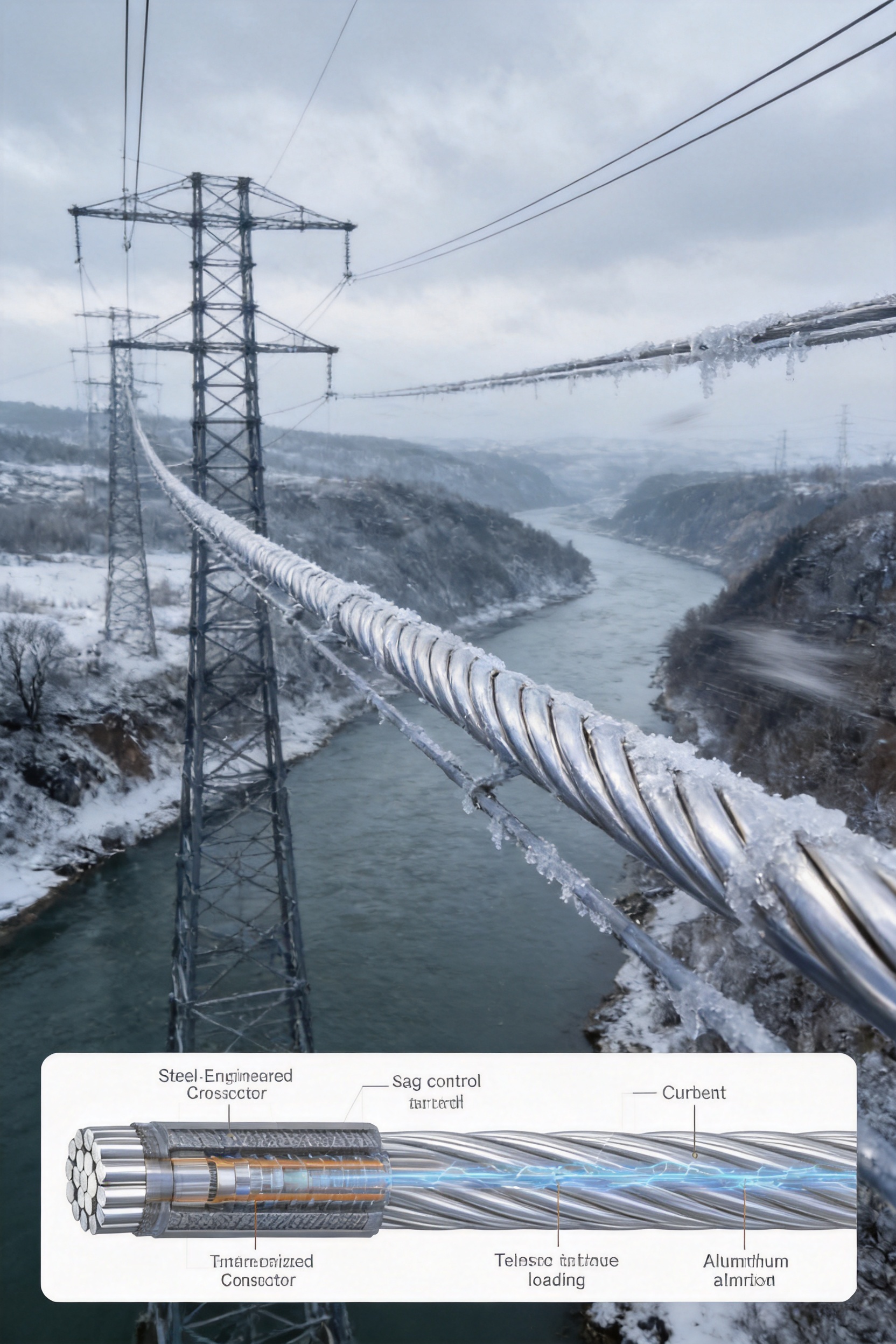
High tensile strength also improves resistance to wind and ice loading. Wind creates transverse forces and vibration, while ice increases the effective weight of the conductor. These combined effects can produce severe mechanical stress. The composite design gives the conductor a more favorable strength-to-weight relationship than a comparable all-aluminum construction.
The product uses controlled stranding pitch ratios to promote uniform stress distribution across the layers. A precisely controlled pre-twisting process helps prevent strand loosening during transportation, installation, and operation. Under the stated long-term operational conditions, creep deformation is limited to within 0.05 percent.
Resistance to aeolian vibration is another important consideration. The product information states that structural reliability has been validated through a two-million-cycle wind-induced vibration fatigue test. In actual projects, vibration behavior will also depend on span length, tension, support hardware, wind profile, terrain, damper selection, and installation quality.
Compared with a standard all-aluminum conductor, the reinforcing steel aluminum strand is generally better suited to applications where mechanical loads are high or where long spans are required. Its trade-offs may include greater weight than a same-area all-aluminum product and the need for compatible connectors and installation methods. Proper engineering selection ensures that the mechanical benefits justify the additional structural component.
6. Environmental Adaptability
Power conductors operate in changing environmental conditions. Temperature variation affects expansion, sag, and electrical resistance. Moisture and salt can accelerate corrosion. Ultraviolet radiation can degrade exposed materials, while wind and ice impose repeated mechanical loads.
The product is designed for operation across a stated temperature range from -40°C to +80°C. Within this range, the coefficient of thermal expansion is described as stable. Stable thermal behavior supports more predictable sag calculations and helps engineers establish appropriate clearances under both low-temperature and high-temperature conditions.
The conductor is also described as capable of withstanding an ice coating load of 30 mm. Ice accumulation can substantially increase conductor weight and aerodynamic loading. The steel core provides additional mechanical support in these conditions, while the aluminum exterior maintains the conductive function.
After 5,000 hours of salt-spray testing, the product is stated to retain more than 95 percent of its tensile strength. This is relevant to coastal regions, industrial environments, and locations where airborne pollutants or moisture may affect exposed metallic components.
After 5,000 hours of ultraviolet aging, no significant surface degradation is stated to occur. Since the primary metallic materials are inherently more resistant to ultraviolet exposure than polymeric materials, the key concern is generally the condition of protective coatings, connectors, separators, and adjacent insulating components. The complete system should therefore be evaluated rather than the conductor alone.
Environmental resistance does not eliminate the need for inspection. Coastal or polluted environments may require periodic checks for surface pitting, mechanical wear, damaged strands, loose fittings, abnormal discoloration, or corrosion at connection points. Proper storage before installation is also important. Reels should be protected from standing water, impact, contamination, and unnecessary exposure to corrosive substances.
Reinforcing Steel Aluminum Strand
7. Advantages Compared with Conventional Conductors
Reinforcing steel aluminum strand offers several advantages over conventional conductors, especially where mechanical performance and span capability are important.
7.1 Higher Tensile Strength
The steel core gives the conductor substantially greater tensile strength than an all-aluminum conductor of comparable general dimensions. This improves resistance to sagging, installation tension, wind loading, and ice loading.
7.2 Longer Span Capability
Long spans can be achieved without relying exclusively on larger support structures. This is valuable in transmission corridors, river crossings, mountainous areas, industrial sites, and locations where additional towers would be expensive or difficult to install.
7.3 Balanced Conductivity and Strength
The conductor is not simply a steel cable with an aluminum coating. Its design uses aluminum strands as the primary conductive component and steel strands as reinforcement. The result is a practical balance between electrical efficiency and mechanical durability.
7.4 Improved Stability under Weather Loads
Wind, ice, and temperature changes can cause conductor movement and sag variation. The reinforced construction provides additional structural stability and helps the conductor retain its designed geometry under demanding conditions.
7.5 Broad Specification Coverage
The range from 10/2 mm² to 240/30 mm² allows users to select a suitable construction instead of accepting a single standard size. This helps optimize current capacity, tensile performance, outer diameter, installation requirements, and overall project cost.
7.6 Predictable Engineering Parameters
Standardized values for resistance, area, diameter, strength, and weight simplify system calculations. Engineers can use the published parameters when designing supports, selecting fittings, calculating voltage drop, assessing thermal performance, and determining transportation requirements.
7.7 Corrosion-Resistant Exterior
The aluminum exterior provides good resistance to atmospheric corrosion, while the galvanized steel core is protected by a zinc coating. This layered material design is more suitable for outdoor service than an unprotected steel core.
8. Applications in Power Transmission and Distribution
8.1 Overhead Transmission Lines
Overhead transmission lines are the most familiar application for steel-reinforced aluminum conductors. The product carries current between support structures while resisting the mechanical forces associated with long spans.
For transmission planning, the selected conductor must satisfy both electrical and structural requirements. The current rating depends on conductor size, ambient conditions, permissible operating temperature, wind, solar heating, and installation arrangement. The mechanical design must account for span length, sag, tension, tower loading, wind pressure, and ice conditions.
The steel core is particularly useful when the route crosses rivers, highways, railways, valleys, or other areas where support spacing is large. By improving tensile performance, the conductor can help reduce the number of intermediate supports and simplify the line route.
8.2 High-Tension Distribution Networks
Distribution networks also benefit from improved strength-to-weight performance. A stable conductor can reduce the risk of excessive sag and maintain safer clearances from buildings, vegetation, roads, and other infrastructure.
In areas exposed to severe weather, mechanical reinforcement supports better resistance to wind and ice. This does not make the system immune to damage, but it provides an additional margin of structural performance when the conductor is correctly selected and installed.
8.3 Ground Wires and Shield Wires
Steel-reinforced aluminum strands may be used as ground wires or shield wires installed above phase conductors. These wires help intercept lightning activity and provide a path for surge current toward the grounding system.
Mechanical strength is especially important in this application because the wire is installed along the tops of towers and may be exposed to considerable wind, ice, and vibration. Electrical continuity and reliable bonding at support points are also essential.
8.4 Substation and Hardware Connections
The product is mainly employed as a damping wire in hardware connection applications such as damping-type end caps. In these assemblies, it can contribute to mechanical stabilization, electrical continuity, and vibration control.
Connection hardware must be compatible with the aluminum and steel portions of the conductor. Compression fittings, clamps, end caps, and transition connectors should be selected according to the conductor construction and the manufacturer’s installation recommendations.
8.5 Industrial Power Infrastructure
Industrial plants, power generation facilities, substations, and large infrastructure projects often require conductors that can withstand mechanical handling and demanding environmental conditions. A standardized composite conductor can support reliable connections and overhead distribution arrangements within these facilities.
9. Manufacturing Process and Quality Control
Advanced manufacturing is essential because conductor performance depends on consistency across the entire length. Variations in wire diameter, material condition, stranding pitch, surface quality, or core alignment can affect resistance, tensile strength, flexibility, and connector compatibility.
9.1 Raw Material Inspection
Production begins with the inspection of aluminum wire rod, steel wire, and galvanizing quality. Aluminum is assessed for chemical composition, purity, surface condition, and drawing suitability. Steel material is checked for diameter, tensile properties, surface integrity, and coating condition.
Incoming material inspection helps prevent defects from entering later production stages. Material certificates, sampling procedures, dimensional checks, and traceability records can be used to link finished products to their source batches.
9.2 Aluminum Wire Drawing
Aluminum wire drawing reduces the raw material to the required diameter while improving dimensional accuracy. Drawing dies, lubrication, line speed, and reduction schedules must be controlled to avoid surface damage and excessive residual stress.
After drawing, the aluminum wire may undergo controlled annealing. Annealing restores ductility and supports the required conductivity. The process must be carefully managed because insufficient treatment can leave excessive hardness, while excessive treatment can reduce mechanical performance or create dimensional instability.
9.3 Steel Core Preparation
The steel core is prepared through controlled wire processing and, where specified, galvanizing. The zinc coating protects the steel from corrosion and contributes to the durability of the internal reinforcement.
Core wires must be straight, dimensionally consistent, and free from defects that could interfere with stranding. The number of core strands is selected according to the required cross-section and tensile performance.
9.4 Stranding and Layer Formation
During stranding, aluminum wires are helically wrapped around the steel core. The machinery controls line speed, pitch, tension, wire alignment, and layer formation. Uniform tension is important because uneven tension can cause some wires to carry more load than others.
The stranding process must also prevent gaps, excessive compression, crossovers, and local deformation. A stable circular profile supports accurate outer diameter control and improves compatibility with connection hardware.
9.5 Pre-Twisting and Stabilization
Pre-twisting is used to stabilize the stranded construction and reduce the possibility of strand loosening. This stage is particularly important for products that will be subjected to installation tension, vibration, thermal cycling, or repeated handling.
Correct stabilization allows the conductor to retain its designed geometry after it leaves the production line. It also supports more predictable performance during tension stringing and connection assembly.
9.6 Dimensional and Electrical Inspection
Finished products are checked for outer diameter, wire count, strand arrangement, surface condition, calculated area, and weight. Electrical inspection includes resistance measurement or verification against the applicable standard.
Tensile performance is evaluated through representative testing. Additional tests may include coating inspection, flexibility evaluation, thermal cycling, vibration fatigue, salt-spray exposure, and ultraviolet aging, depending on the product configuration and project requirements.
9.7 Packaging and Delivery Control
After inspection, the conductor is wound onto suitable reels or prepared for shipment according to the delivery arrangement. Packaging must protect the strand against impact, crushing, contamination, and moisture during transportation and storage.
Product identification should include specification, production batch, length, inspection status, and handling information. Clear labeling improves traceability and reduces the risk of installing the wrong conductor in a multi-specification project.

10. Manufacturing Strengths of Jiangsu Wopeng Power Technology
Jiangsu Wopeng Power Technology Co., Ltd. was founded in 2018 as a high-technology enterprise specializing in high- and low-voltage busbar systems and related power transmission solutions. Its product portfolio includes epoxy resin vacuum-cast tube busbars for systems up to 35 kV, low-voltage cast-resin busways, copper and aluminum tubular busbars, wind power tube busbars, compact busbar systems, and sliding contact line systems.
This product background is relevant to the development and supply of specialized conductors because busbar systems require a similar focus on current carrying, insulation coordination, mechanical integrity, dimensional control, and installation reliability. Experience with electrical equipment helps the company understand how conductive components perform within complete power systems rather than as isolated materials.
The company operates production lines equipped with vacuum casting systems, CNC machining equipment, and automated assembly technologies. These capabilities support the manufacture of precision electrical equipment and enable consistent processing of components, enclosures, insulating structures, connection parts, and mechanical interfaces.
Its engineering team includes engineers, technical specialists, and production professionals with experience in power equipment technology. This technical structure supports product development, specification review, customized design, manufacturing coordination, and application assistance.
Quality assurance includes standardized inspection procedures such as high-voltage tests, insulation tests, mechanical verification, and routine production checks. Collaboration with third-party testing institutions provides an additional level of independent evaluation where required by a project or customer specification.
For customers purchasing reinforcing steel aluminum strand or related conductive products, manufacturing strength is important for more than the nominal product data. A reliable supplier should be able to review the application, confirm the appropriate specification, maintain batch traceability, support connector selection, and coordinate delivery requirements.
Wopeng’s experience across power generation, substations, wind energy, industrial manufacturing, rail transit, and large commercial facilities provides exposure to a wide range of operating environments. Its products are reported to operate across more than 17 provinces and key industrial sectors, reflecting practical experience with different project conditions.
The company’s ability to provide customized and OEM-oriented solutions is also valuable. Conductors and connection assemblies may need to match project-specific dimensions, current requirements, mechanical loads, environmental conditions, packaging arrangements, or integration requirements. Engineering communication before production can help prevent incompatibility during installation.
11. Installation Considerations
Correct installation is essential to obtain the expected performance of a reinforcing steel aluminum strand. The conductor should be handled in a way that prevents kinking, crushing, strand displacement, and surface damage.
11.1 Tension Stringing
Tension stringing can be used to control conductor clearance and reduce contact with the ground or nearby objects. The steel core allows the conductor to tolerate higher installation tension than an all-aluminum conductor, but the elastic limit must not be exceeded.
Stringing equipment should be selected according to conductor diameter, weight, tensile strength, reel dimensions, and route conditions. Sheaves and rollers must have suitable diameters and surfaces to prevent excessive bending or localized pressure.
11.2 Reel Handling
Reels should be lifted and stored carefully. They should not be dropped, dragged, or placed on unstable surfaces. During payout, the conductor should leave the reel in the correct direction to prevent reverse bending or strand disturbance.
Any damaged section should be identified and evaluated before installation. A conductor with broken wires, severe kinks, crushed areas, or significant corrosion should not be installed without technical assessment.
11.3 Connector Selection
Compression connectors must be compatible with the aluminum strands and steel core. Aluminum-to-steel transition connectors may require specific compression sequences, dies, surface preparation, and installation tools.
Connection points are often more vulnerable than the continuous conductor. Oxidation, inadequate compression, incorrect preparation, or incompatible materials can create localized resistance and heating. Following the connector manufacturer’s instructions is therefore essential.
11.4 Sag and Tension Control
Final sag and tension should be established using the project’s span length, installation temperature, conductor weight, elastic properties, wind loading, and ice loading. Tension should be equalized across the relevant spans, and support hardware should be installed according to the approved construction procedure.
11.5 Inspection after Installation
After installation, the line or connection assembly should be inspected for damaged strands, uneven sag, displaced fittings, loose clamps, abnormal clearances, and signs of surface damage. Thermal imaging or resistance checks may be useful at critical electrical connections after the system is energized.
12. Maintenance and Service Life
Routine maintenance helps preserve conductor performance and identifies defects before they become failures. Inspection intervals should be determined by voltage level, environmental conditions, importance of the line, weather exposure, and applicable maintenance standards.
Visual inspections should look for broken aluminum wires, exposed or corroded steel, unusual discoloration, vibration damage, damaged dampers, loose fittings, and contact with vegetation or foreign objects. In coastal and industrial areas, special attention should be given to salt deposits, surface pitting, and corrosion around connectors.
Thermal inspection can identify abnormal heating caused by high contact resistance or unbalanced current. A hot connection may indicate incorrect compression, oxidation, inadequate contact area, or mechanical loosening.
Where the conductor is used with damping hardware, the condition of the damping components should also be reviewed. Excessive vibration, worn fittings, or damaged end caps may reduce the effectiveness of the complete assembly.
The service life of the conductor depends on the material quality, installation practices, loading conditions, environmental exposure, and maintenance. The stated environmental and fatigue test results provide useful performance indicators, but project-specific conditions must always be considered.
13. Selection Guide for Engineers and Buyers
The first selection factor is the required current-carrying capacity. The aluminum cross-section should be sufficient for the normal operating current and expected overload conditions. Engineers should calculate thermal performance using the actual ambient temperature, wind, solar radiation, installation arrangement, and allowable conductor temperature.
The second factor is mechanical loading. Span length, tower spacing, wind pressure, ice thickness, installation tension, and required clearance determine the necessary tensile performance. A larger steel component may be appropriate for high-load or long-span applications.
The third factor is dimensional compatibility. Outer diameter affects clamps, end caps, compression connectors, protective devices, support fittings, and clearance. The selected product should match all associated hardware.
The fourth factor is environmental exposure. Coastal, industrial, cold, hot, high-altitude, and heavily polluted sites may require special consideration of corrosion protection, temperature behavior, ice loading, and inspection frequency.
The fifth factor is delivery planning. The specified length, reel arrangement, transportation route, site access, and installation schedule should be reviewed before ordering. Delivery lengths generally below 2,000 meters can be convenient, but the exact reel arrangement should be coordinated with the construction plan.
The final factor is supplier capability. Buyers should evaluate whether the manufacturer can provide technical documentation, inspection records, sample testing, customized specifications, compatible fittings, packaging protection, and application support.
14. Economic and Operational Benefits
A conductor should be evaluated according to total project value rather than purchase price alone. Reinforcing steel aluminum strand may offer economic benefits by reducing the number of support structures required for long spans. It can also reduce the risk of sag-related clearance problems and provide greater resilience under severe weather conditions.
Standardized specifications simplify procurement and replacement. When technical parameters are clearly defined, utilities and contractors can establish consistent material schedules, inspection procedures, and spare-parts policies.
The composite construction can also reduce the need for excessive conductor diameter solely to obtain mechanical strength. This may improve compatibility with existing fittings and reduce aerodynamic loading, although the final design must be based on complete electrical and mechanical calculations.
Reliable manufacturing reduces the risk of installation delays, rejected material, premature connection failure, and unplanned maintenance. Consistent dimensional control is especially valuable when the conductor is integrated with precision hardware or customized assemblies.
15. Frequently Asked Questions
Q1: What is reinforcing steel aluminum strand?
It is a composite stranded conductor made from aluminum wires surrounding one or more steel-core wires. The aluminum carries most of the electrical current, while the steel core provides tensile strength and mechanical support.
Q2: What standard does the product follow?
The product is manufactured in accordance with the GB1179-83 standard as specified in the supplied technical information. Project owners should confirm whether additional national, industry, utility, ASTM, IEC, or customer requirements apply to a specific project.
Q3: What sizes are available?
The nominal cross-sectional range extends from 10/2 mm² to 240/30 mm². The exact aluminum and steel strand counts, wire diameters, resistance, tensile strength, weight, and outer diameter depend on the selected construction.
Q4: Why is steel used in an aluminum conductor?
Steel is used because it provides much higher tensile strength than aluminum. It helps the conductor resist sag, installation tension, wind, ice, and other mechanical loads while the surrounding aluminum strands provide the main conductive pathway.
Q5: Is the steel core electrically conductive?
The steel core contributes much less to current conduction than the aluminum strands. Its primary function is mechanical reinforcement. Electrical calculations should therefore be based on the applicable aluminum conductive area and the manufacturer’s resistance data.
Q6: Can the product be used for long spans?
Yes. The reinforced construction is particularly suitable for long-span applications where mechanical strength and sag control are important. Span length, conductor selection, support structure design, wind, ice, and installation tension must be calculated for each project.
Q7: Can it be used in coastal environments?
It can be used in coastal environments when the product, connectors, and support hardware are selected and maintained appropriately. The aluminum exterior and galvanized steel core provide corrosion protection, but periodic inspection remains necessary in salt-laden atmospheres.
Q8: What connectors should be used?
Connectors must be specifically compatible with the aluminum strands and steel core. Aluminum-to-steel transition connectors or compression fittings may be required. The connector manufacturer’s installation procedure, tooling, die size, surface preparation, and compression sequence should be followed.
Q9: What is the typical delivery length?
The typical delivery length is generally less than 2,000 meters. The actual length, reel size, packaging, and delivery arrangement should be confirmed according to the project’s transportation and installation requirements.
Q10: How does the product compare with an all-aluminum conductor?
Reinforcing steel aluminum strand generally provides higher tensile strength, improved span capability, and better resistance to mechanical loading. An all-aluminum conductor may be lighter and may be suitable for applications with lower mechanical requirements. The correct choice depends on electrical load, span, environment, cost, and hardware compatibility.
Q11: What quality information should buyers request?
Buyers should request the applicable standard, specification sheet, material information, inspection records, resistance data, tensile data, dimensional information, delivery length, packaging details, and any project-specific test reports. Traceability records are also valuable for critical infrastructure projects.
Q12: Can the manufacturer provide customized solutions?
Jiangsu Wopeng Power Technology provides customized and OEM-oriented power transmission solutions. Customers should provide the required cross-section, current, tensile load, span, environmental conditions, fitting type, delivery length, and applicable standards so the technical team can confirm suitability.
16. Conclusion
Reinforcing steel aluminum strand is a practical solution for power systems that require both electrical conductivity and mechanical strength. Its aluminum outer layers provide the primary current-carrying function, while its steel core supports long spans, installation tension, wind loading, ice loading, and other structural demands.
The product’s standardized range from 10/2 mm² to 240/30 mm² offers flexibility for different transmission, distribution, grounding, shielding, and hardware connection requirements. Defined parameters for resistance, tensile strength, calculated area, outer diameter, and weight simplify engineering selection and project planning.
Its stated advantages include high tensile strength, long-span capability, stable thermal behavior, controlled stranding geometry, environmental resistance, and compatibility with demanding power infrastructure. These benefits are strengthened when the product is manufactured using carefully controlled material preparation, wire drawing, annealing, galvanizing, stranding, pre-twisting, inspection, and packaging procedures.
Jiangsu Wopeng Power Technology Co., Ltd. supports the broader power equipment market through engineering expertise, advanced manufacturing equipment, standardized inspection, customized solutions, and experience with high- and low-voltage systems. Its capabilities in busbar systems, tubular conductors, vacuum casting, CNC processing, automated assembly, and power equipment testing provide a strong technical foundation for serving customers with specialized conductive and power transmission requirements.
For final selection, users should evaluate current capacity, mechanical load, span length, environmental conditions, connector compatibility, installation method, inspection requirements, and applicable standards. When these factors are properly coordinated, reinforcing steel aluminum strand can provide a durable and efficient foundation for reliable electrical infrastructure.
References
1. GB1179-83, Standard Requirements for Stranded Aluminum and Aluminum Alloy Conductors and Related Steel-Reinforced Conductor Constructions.
2. International Annealed Copper Standard, Reference Requirements for Electrical Conductivity Comparison.
3. IEC 61089, Round Wire Concentric Lay Overhead Electrical Stranded Conductors.
4. ASTM B399, Standard Specification for Concentric-Lay-Stranded Aluminum-Alloy Conductors, Coated Steel Reinforced.
5. General engineering practices for overhead transmission line sag, tension, vibration, wind loading, and ice loading design.
6. Technical product information for reinforcing steel aluminum strand, including material composition, dimensional range, electrical characteristics, mechanical performance, environmental testing, and delivery requirements.
7. Technical information on Jiangsu Wopeng Power Technology Co., Ltd., including high- and low-voltage busbar systems, manufacturing equipment, inspection procedures, engineering capabilities, and application sectors.
Product: Reinforcing Steel Aluminum Strand




-
 +86-180 3625 3000
-
 admin@wpbusbar.com
-
 No. 8, Yanjin Road, Chengxi Industrial Park, Shanyang Town, Baoying County, Yangzhou City, Jiangsu Province, China
Copyright © Jiangsu Wopeng Power Technology Co., Ltd.
All Rights Reserved.
 Custom Insulated Bus Bar Manufacturer
Tubular Busbar System Factory