

 EN

 English
 русский
 Français
 Español
 عربى
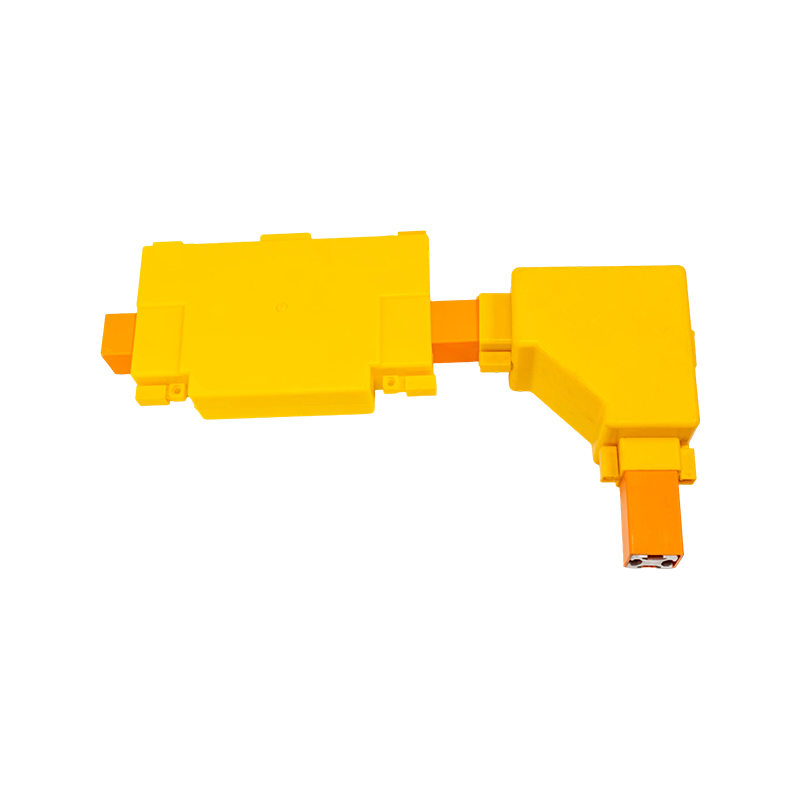

High-Density Compact Busway: High-Performance Power Distribution for Modern Infrastructure
Content
- 1 1. Introduction to High-Density Compact Busway
- 2 2. Product Positioning and Operating Principle
- 3 3. Main Technical Specifications
- 4 4. High-Density Construction and Space Efficiency
- 5 5. Epoxy Resin Casting and Full Insulation Protection
- 6 6. Copper Conductors and Electrical Performance
- 7 7. Thermal Management and Reliability
- 8 8. Safety Features and Environmental Protection
- 9 9. Comparison with Conventional Cable Distribution
- 10 10. Comparison with Traditional Air-Insulated Bus Duct
- 11 11. Modular Installation and Flexible Expansion
- 12 12. Data Center Applications
- 13 13. Industrial and Commercial Applications
- 14 14. Advanced Manufacturing Processes
- 15 15. Engineering Strength and Customized Solutions
- 16 16. Quality Management and Testing
- 17 17. Installation Recommendations
- 18 18. Maintenance and Service Life
- 19 19. Energy Efficiency and Total Cost of Ownership
- 20 20. Why Choose a Specialized Busbar Manufacturer
- 21 21. Selection Guide for Project Owners and Engineers
- 22 22. Frequently Asked Questions
- 22.1 Q1: What is a high-density compact busway?
- 22.2 Q2: What voltage and current range does the product support?
- 22.3 Q3: Why is epoxy resin used in the busway?
- 22.4 Q4: Is a compact busway better than traditional cables?
- 22.5 Q5: Can the system be used in data centers?
- 22.6 Q6: Can additional loads be connected after installation?
- 22.7 Q7: How often should the busway be maintained?
- 22.8 Q8: What does IP65 protection mean for the busway?
- 22.9 Q9: Can the busway withstand short-circuit conditions?
- 22.10 Q10: What makes the manufacturing process important?
- 22.11 Q11: Can the product be customized?
- 22.12 Q12: What information should be provided when requesting a quotation?
- 23 23. Conclusion
- 24 References
- 25 Product: High-density Compact Busway
1. Introduction to High-Density Compact Busway
Modern electrical infrastructure requires distribution equipment that can carry substantial current, maintain stable electrical performance, occupy limited installation space, and operate safely for many years. As commercial buildings, industrial facilities, data centers, renewable energy projects, transportation systems, and large public facilities become more power-intensive, conventional cable-based distribution systems are increasingly challenged by their size, installation complexity, heat accumulation, and maintenance requirements.
The high-density compact busway provides an efficient solution for these challenges. Designed for low-voltage power distribution systems, it combines tightly arranged copper conductors, high-performance insulation, a reinforced enclosure, modular plug-in connections, and advanced epoxy resin casting technology. The result is a compact and highly protected power distribution system capable of carrying high current while using significantly less space than many traditional cable and air-insulated bus duct arrangements.
This product belongs to the low-voltage cast-resin busway category and is designed primarily for 0.4 kV distribution systems. It supports a rated current range of approximately 400 A to 5000 A, with rated operating voltages of AC 400 V and 690 V. The use of epoxy resin casting creates a fully insulated structure that protects the conductors from moisture, dust, mechanical impact, and phase-to-phase faults.
Unlike conventional open or air-insulated systems, the high-density compact busway integrates its conductors and insulation into a dense, structurally stable assembly. High-purity copper conductors with tin-plated surfaces provide efficient current transmission and improved resistance to oxidation. A high-strength aluminum alloy enclosure provides mechanical protection and contributes to heat dissipation. Internal phase barriers and cast-resin insulation create a reliable electrical separation system throughout the busway.
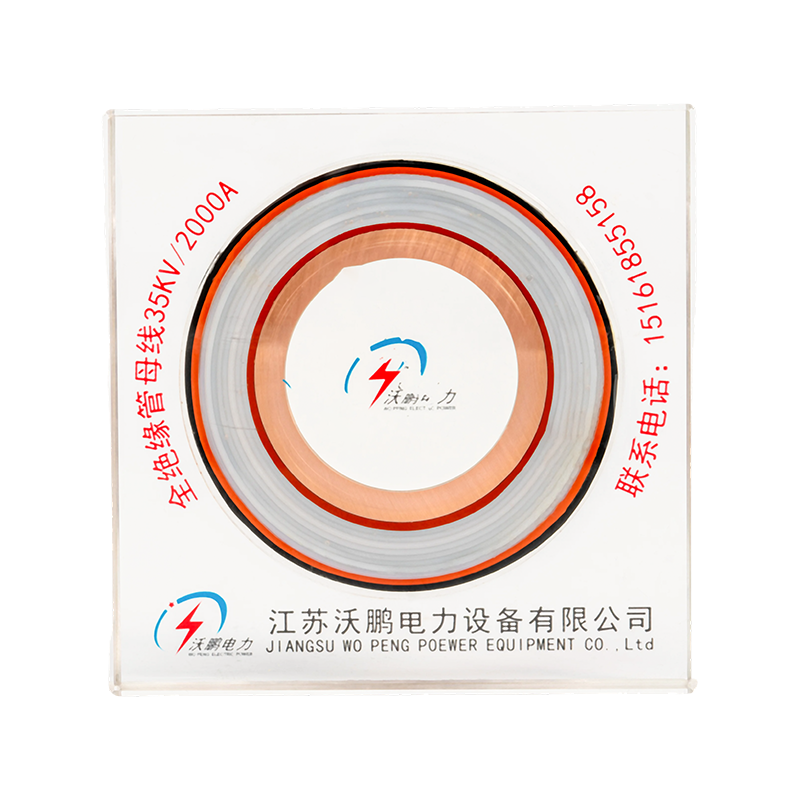
Jiangsu Wopeng Power Technology Co., Ltd. develops and manufactures high- and low-voltage busbar systems for demanding power transmission and distribution applications. Its product portfolio includes low-voltage cast-resin busways, compact busbar systems, copper and aluminum tubular busbars, 35 kV epoxy resin vacuum-cast tubular busbars, wind power tubular busbars, and sliding contact line systems. The company combines engineering experience, modern manufacturing equipment, standardized inspection procedures, and project-oriented technical support to deliver customized busbar solutions.
For customers requiring a compact, safe, reliable, and adaptable distribution system, the high-density compact busway offers a practical alternative to complex cable networks and bulky traditional bus ducts.
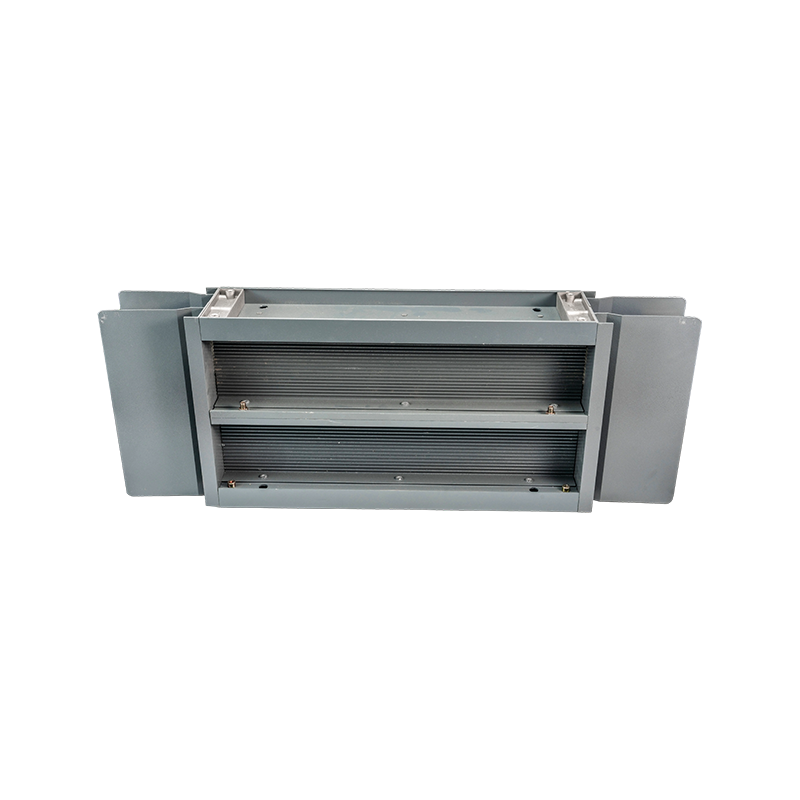
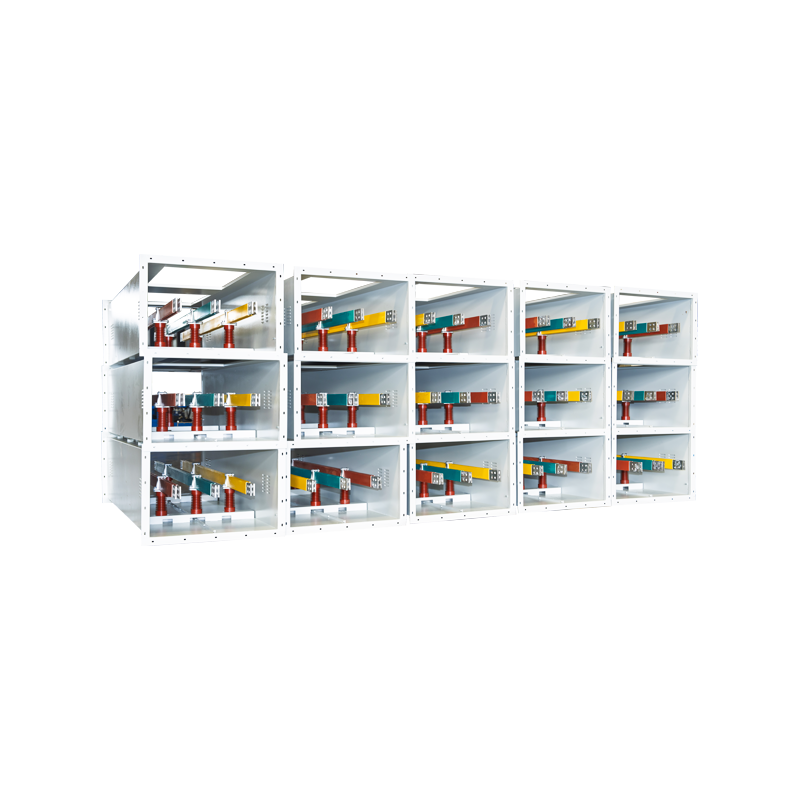
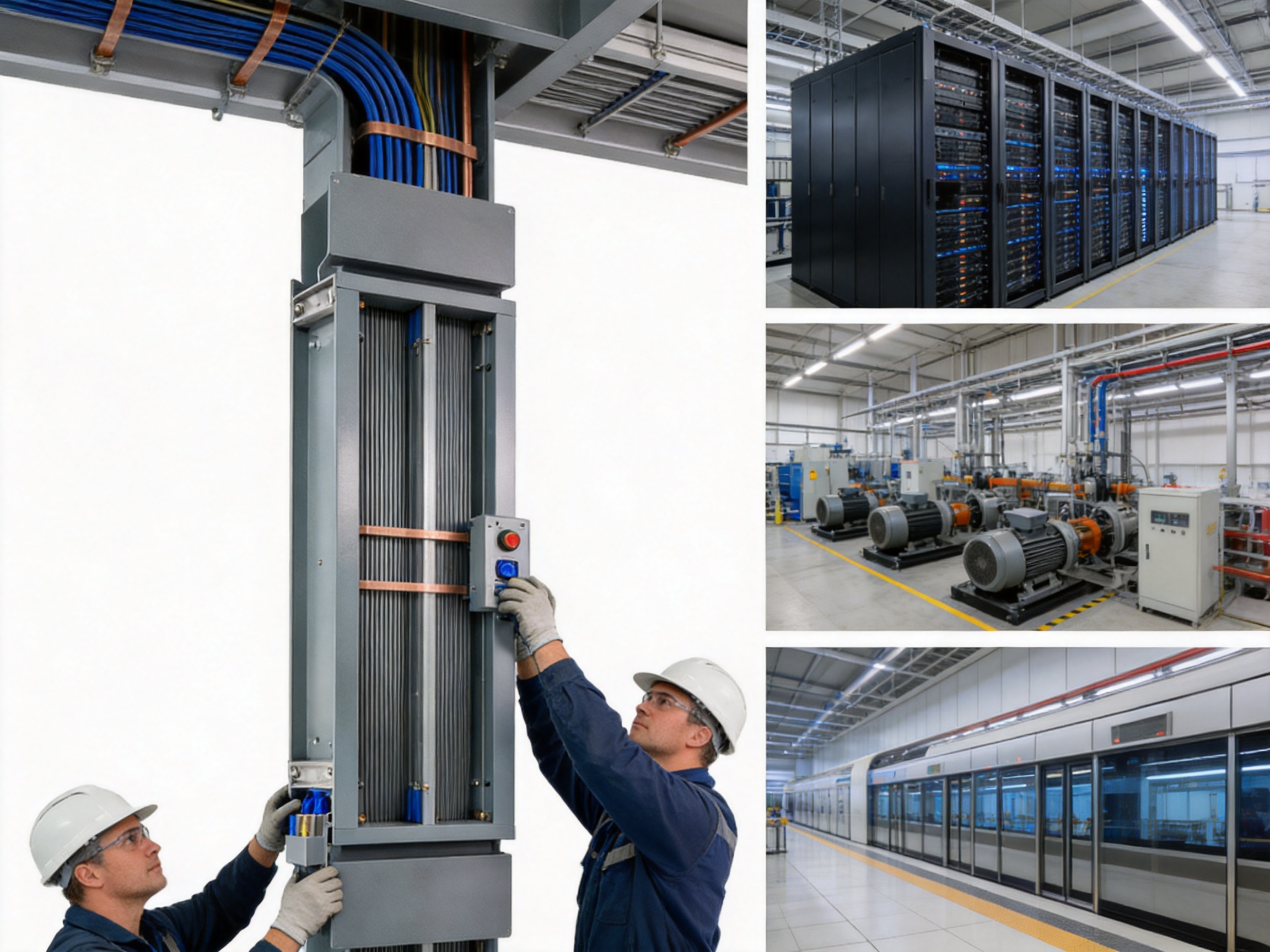
High-density Compact Busway
2. Product Positioning and Operating Principle
A busway, also known as a busbar trunking system, is an enclosed power distribution assembly that transfers electrical energy between a power source and multiple loads. It replaces groups of parallel cables with a standardized system consisting of conductors, insulation, housing, joints, and connection units.
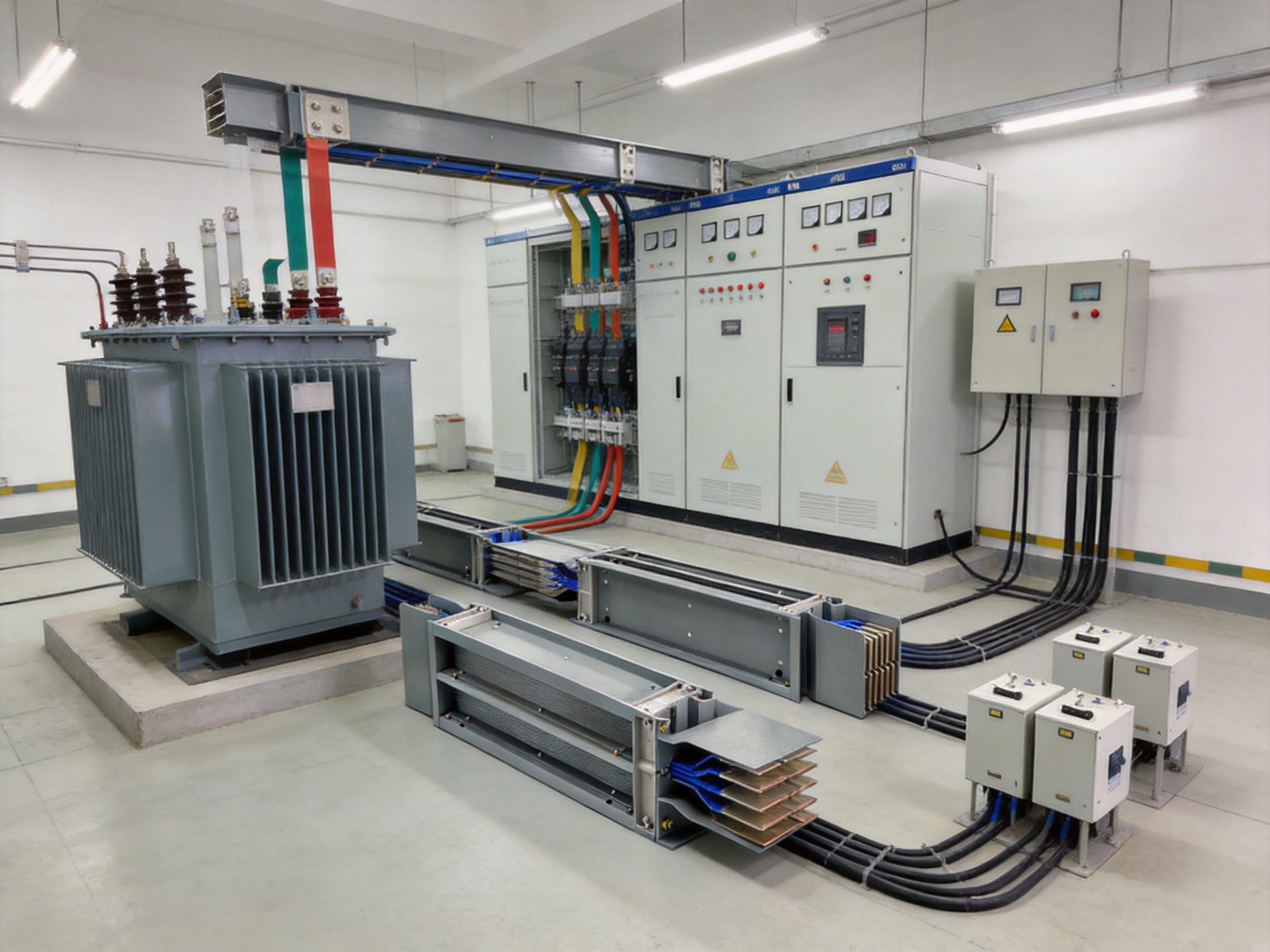
The high-density compact busway is specifically designed for low-voltage distribution. It can be installed between transformers, switchboards, distribution panels, motor control centers, production equipment, data center power systems, and other high-current electrical loads. Its compact structure allows the system to be routed through electrical rooms, utility corridors, vertical risers, production areas, and ceiling spaces where conventional cable systems may be difficult to install.
The central design principle is the dense arrangement of conductors. Copper busbars are positioned close together and separated by high-performance insulation and internal phase barriers. This arrangement minimizes the overall cross-sectional dimensions of the product while maintaining a high current-carrying capacity.
During manufacturing, the conductor assembly is embedded through an integral epoxy resin vacuum casting process. Vacuum casting helps reduce internal voids and improves the consistency of the insulating structure. Once cured, the epoxy resin forms a rigid insulation body around the conductors. This creates a sealed and mechanically stable system with improved resistance to moisture, contamination, vibration, and external impact.
The outer enclosure is manufactured from high-strength aluminum alloy profiles. Aluminum provides a favorable balance between mechanical strength, corrosion resistance, weight, and thermal performance. The metal enclosure protects the internal assembly while also assisting with heat transfer from the conductors to the surrounding environment.
Plug-in connector points can be incorporated along the busway route. These connection points allow tap-off boxes and other distribution accessories to be installed at planned intervals. Depending on the system design, plug-in positions may be arranged at intervals such as 500 millimeters to 1000 millimeters. This modular approach simplifies the connection of new loads and helps facility operators adapt the electrical distribution network as equipment layouts change.
Because the busway is assembled from standardized sections and accessories, the system can be configured for straight runs, elbows, tees, crosses, offsets, flanged connections, and transitions. This flexibility allows the product to be integrated into complex building and industrial layouts without requiring extensive field fabrication.
3. Main Technical Specifications
The technical configuration of a high-density compact busway should be selected according to the application, installation environment, current demand, short-circuit conditions, voltage level, ambient temperature, and required protection rating. The following specifications summarize the principal performance characteristics described for this product category.
| Item | Typical Specification |
|---|---|
| Product type | Low-voltage cast-resin compact busway |
| Application voltage | AC 400 V / 690 V |
| Rated current range | 400 A to 5000 A |
| Conductor material | High-purity copper busbar |
| Conductor surface | Tin-plated copper |
| Insulation material | Epoxy resin casting system |
| Insulation class | Class F |
| Protection rating | Up to IP65 |
| Short-time withstand current | 50 kA for 1 second |
| Power-frequency withstand voltage | 3500 V for 1 minute |
| Temperature rise limit | Below 70 K |
| Enclosure material | High-strength aluminum alloy |
| Fire-resistance performance | UL94 V-0 flame-retardant performance |
| Seismic capability | Up to seismic intensity level 8 under stated design conditions |
| Expected service life | Up to 30 years under suitable operating conditions |
Actual project specifications should be confirmed through technical design and engineering review. Current ratings, temperature-rise results, protection ratings, short-circuit withstand levels, and installation conditions may vary according to the selected configuration, ambient environment, joint design, cooling conditions, and applicable standards.
4. High-Density Construction and Space Efficiency
The most visible advantage of the product is its compact structure. Traditional cable distribution systems often require multiple cables for each phase and neutral or protective conductor. These cables must be arranged with suitable bending radii, supported by trays or brackets, separated from other services, and connected at both ends. As current capacity increases, the number and diameter of cables also increase.
A high-density compact busway consolidates the conductors into one engineered assembly. The conductors are arranged in a sandwich-style structure, with insulation placed between adjacent phases. This arrangement reduces the required installation width and improves the utilization of electrical shafts, ceilings, risers, and equipment rooms.
In space-constrained buildings, the reduction in distribution footprint can have a direct impact on construction planning. Smaller electrical shafts may release usable floor area. Narrower service corridors may simplify coordination with ventilation, fire protection, communication, and mechanical systems. In industrial facilities, a compact route can help preserve access around machinery and reduce interference with production lines.
The dense arrangement also provides mechanical benefits. Closely positioned conductors and a rigid cast-resin body form a stable assembly that is less vulnerable to movement caused by vibration, electromagnetic forces, or accidental impact. The enclosure further supports the system and protects the insulation body from external damage.
Space efficiency is particularly important in data centers, high-rise buildings, semiconductor facilities, hospitals, transportation hubs, and commercial complexes. These locations often require high electrical capacity but have limited space available for electrical risers and distribution rooms. A compact busway allows high-current power to be routed through a smaller and more organized path.
Compared with a large group of parallel cables, the busway also creates a cleaner installation appearance. A clearly defined trunking route makes it easier to identify the power distribution system and coordinate it with other building services. In facilities where maintenance access and visual order are important, this structured arrangement provides additional practical value.
5. Epoxy Resin Casting and Full Insulation Protection
Epoxy resin casting is one of the defining technologies of this busway. The casting process surrounds the conductors with a solid insulating material rather than relying mainly on air gaps or loosely positioned insulating components. This creates a fully insulated system with strong resistance to external environmental influences.
During vacuum casting, the resin is introduced under controlled conditions to reduce the possibility of air pockets and internal voids. A consistent casting process is important because voids, cracks, or uneven insulation can reduce dielectric strength and create localized electrical stress. Controlled vacuum casting helps produce a dense insulation body with improved electrical and mechanical stability.
The cast-resin insulation protects the conductor assembly from moisture and dust. This is especially valuable in industrial facilities, underground areas, utility rooms, workshops, ports, and other locations where environmental contamination may be present. When appropriately designed and installed, a protection rating of up to IP65 can significantly reduce the risk of ingress-related failures.
Full insulation also reduces the risk of accidental contact with energized conductors. The conductor assembly is not exposed in normal operation, and the rigid insulation body provides separation between phases. Internal flame-retardant phase barriers further support safe inter-phase spacing.
Compared with air-insulated systems, cast-resin busways are less dependent on maintaining large air clearances. Their insulation performance is provided by a solid engineered material, allowing the product to maintain a compact profile while meeting demanding electrical requirements.
Epoxy resin also contributes to mechanical strength. Once cured, the resin forms a solid body around the conductors and helps resist movement caused by short-circuit electromagnetic forces. This is an important consideration for high-current systems, where fault currents can generate substantial mechanical stress on conductor supports and joints.
The resin system must be selected and processed according to the intended voltage, temperature, insulation class, environmental conditions, and mechanical requirements. Production control, material quality, curing conditions, and routine testing all influence the long-term performance of the final busway.
6. Copper Conductors and Electrical Performance
The conductors of the high-density compact busway are made from high-purity copper. Copper is widely used in high-current electrical equipment because it offers high electrical conductivity, reliable mechanical performance, and good thermal characteristics.
High-purity copper helps reduce conductor resistance and associated power losses. Lower impedance supports stable voltage delivery, especially in high-current distribution routes. It can also reduce the amount of heat generated during operation, provided the system is correctly sized and adequately installed.
The copper conductors are tin-plated. Tin plating improves surface protection and helps resist oxidation and corrosion. It also supports reliable electrical contact at joints and connection interfaces. In practical installations, joint quality is critical because a poorly prepared or inadequately tightened joint can create localized resistance, heating, and long-term reliability problems.
The busway design combines the conductor material with a carefully engineered joint system. Joints must provide sufficient mechanical pressure, electrical continuity, insulation integrity, and resistance to thermal cycling. Factory-controlled assembly and inspection can improve consistency compared with systems that rely heavily on field-made cable terminations.
The product is designed for rated currents from 400 A to 5000 A. This range allows the same general product concept to serve different applications, from medium-sized commercial distribution systems to high-capacity industrial feeders and data center power routes.
The specified short-time withstand current of 50 kA for 1 second indicates the system is designed to tolerate substantial short-circuit stress under the stated test and configuration conditions. Short-circuit performance is influenced by conductor geometry, insulation support, joint construction, enclosure strength, and the coordination of upstream protective devices.
The power-frequency withstand voltage of 3500 V for 1 minute demonstrates the dielectric testing capability associated with the product configuration. Such testing helps verify that the insulation system can withstand elevated voltage stress without breakdown during the specified test period.
A temperature rise limit below 70 K supports safe thermal operation when the busway is operated within its rated conditions. Thermal performance depends on current, ambient temperature, installation orientation, ventilation, joint quality, enclosure design, and the presence of nearby heat sources. Appropriate engineering selection remains essential for every project.
7. Thermal Management and Reliability
Heat is a major consideration in high-current distribution equipment. Excessive temperature can accelerate insulation aging, reduce connection reliability, increase energy losses, and shorten service life. The high-density compact busway addresses thermal management through conductor selection, dense but controlled conductor geometry, an aluminum alloy enclosure, and an integrated structural design.
Although the conductors are arranged closely together, the system is designed to manage heat through predictable thermal paths. Copper conducts electrical current efficiently, while the aluminum enclosure assists in transferring heat away from the internal assembly. The external surface can then release heat to the surrounding environment according to the installation conditions.
Compared with a poorly organized group of cables, the busway provides a more consistent and engineered thermal arrangement. Cables installed too closely together may experience derating due to mutual heating. They may also be difficult to ventilate or inspect. A busway provides a defined assembly with known dimensions and tested thermal characteristics.
Heat dissipation performance must still be considered during system design. Engineers should evaluate ambient temperature, altitude, enclosure conditions, vertical or horizontal installation, adjacent equipment, ventilation, and load diversity. If the busway is installed in a confined area with limited airflow, the design should account for the resulting thermal environment.
The product's stated temperature rise limit below 70 K provides a reference for evaluating its thermal operation. A lower temperature rise can contribute to improved energy efficiency, reduced stress on insulation, and greater comfort in surrounding equipment spaces.
Reliable thermal operation also depends on correct installation. Joint surfaces must be clean, connection hardware must be properly installed, and torque requirements must be followed. Tap-off units should be correctly positioned and secured. Any accessories, end caps, expansion components, or flexible connections should be installed according to the project design.
8. Safety Features and Environmental Protection
Safety is a central advantage of the cast-resin compact busway. The fully insulated structure reduces the probability of accidental contact, phase-to-phase faults, and contamination-related flashover. The enclosure provides an additional layer of physical protection.
The product can achieve a protection rating of up to IP65 under suitable configuration and installation conditions. This level of protection helps guard the internal electrical components against dust and water jets from different directions. The exact rating must be confirmed for the complete installed system, including joints, tap-off units, end covers, and transitions.
Fire performance is another important factor. The insulation system is described as meeting UL94 V-0 flame-retardant performance. Materials with this classification are designed to resist combustion and limit flame propagation under the specified test method. Fire performance is particularly important in high-rise buildings, transportation facilities, hospitals, data centers, and industrial plants.
The rigid cast-resin body also prevents the accumulation of loose combustible materials around exposed conductors. The aluminum alloy enclosure provides mechanical protection and contributes to a clean, enclosed installation.
The busway is designed to withstand seismic intensity up to level 8 under the stated design conditions. Seismic performance depends on the complete system, including supports, anchors, joints, building movement, route geometry, and installation methods. For projects in earthquake-prone areas, the support system should be engineered as part of the overall seismic design.
Environmental protection is not limited to water and dust resistance. The sealed structure can also reduce the impact of industrial contaminants, humidity, vibration, and accidental contact. This improves operational stability in facilities where a conventional open cable arrangement may be more exposed.
9. Comparison with Conventional Cable Distribution
Conventional cable distribution remains suitable for many applications, but it can become difficult to manage when current levels are high or routes are long. Multiple cables require trays, supports, separation, bending space, glands, lugs, termination kits, and field labor. As the system expands, cable identification and maintenance may also become more complicated.
The compact busway replaces many individual cable paths with a standardized trunking route. This can reduce installation time and simplify coordination between design, procurement, construction, and commissioning teams.
| Comparison Factor | Conventional Cable System | High-Density Compact Busway |
|---|---|---|
| Installation arrangement | Multiple cables arranged on trays or supports | Factory-engineered enclosed busway sections |
| Space requirement | Often high because of cable quantity and bending radius | Compact profile with dense conductor arrangement |
| Field termination | Many cable lugs, glands, and terminations | Standardized joints and plug-in connection options |
| Expansion | May require new cables and additional tray space | Tap-off units can be added at planned positions |
| Environmental protection | Depends on cable type, tray design, and surrounding conditions | Cast-resin insulation and enclosed construction |
| Visual organization | Large cable bundles may be difficult to identify | Defined and structured distribution route |
| Maintenance access | Individual cables and terminations may require inspection | Modular sections and connection units support organized maintenance |
| Installation labor | High for large numbers of cables and terminations | Reduced through modular assembly and plug-in design |
| Future modification | May require shutdowns, rewiring, or new cable routes | Designed to support flexible tap-off expansion |
Compared with conventional cables, the compact busway can reduce installation time by approximately 30% to 50% in suitable projects. The exact result depends on route complexity, building conditions, labor productivity, access restrictions, and the number of required accessories.
The busway may have a higher initial material cost than a basic cable installation. However, total project cost should include supports, cable trays, fire stopping, termination materials, labor, testing, future modifications, maintenance, and the value of occupied floor space. When these factors are considered, the busway can provide strong life-cycle cost performance.
10. Comparison with Traditional Air-Insulated Bus Duct
Traditional air-insulated bus ducts use air clearances and insulating supports to separate the conductors. These systems can provide reliable service when correctly designed, but they may require larger dimensions to maintain adequate clearance and thermal performance.
The cast-resin compact busway uses solid insulation between the conductors. This allows a more compact conductor arrangement and reduces dependence on large air gaps. The sealed resin body can also provide better protection against dust, moisture, and environmental contamination.
Another difference is mechanical stability. Air-insulated systems may rely on multiple support points and internal insulating components. A cast-resin system forms a rigid, integrated body around the conductor assembly. This can improve resistance to vibration and short-circuit forces, subject to the specific product design and test results.
Compact cast-resin construction can also simplify cleaning requirements in dusty or contaminated environments. Because the conductors and insulation are enclosed, there are fewer exposed surfaces on which contaminants can accumulate. Routine inspection is still necessary, but the system is less dependent on maintaining clean air clearances.
For projects with severe environmental conditions, high humidity, limited space, or strict fire-safety requirements, cast-resin construction may provide advantages over conventional air-insulated arrangements.
11. Modular Installation and Flexible Expansion
The high-density compact busway is manufactured as a modular system. Straight sections, elbows, tees, crosses, flanged sections, end closures, flexible connectors, and tap-off units can be combined to create a complete distribution route.
Modular construction improves installation planning. Sections can be manufactured according to approved drawings and delivered for staged assembly. On the construction site, installers can position the sections, connect the joints, install supports, and complete the required testing without handling large quantities of individual cables.
Plug-in tap-off points are especially useful in facilities where loads may change. A data center may add server cabinets. A factory may install new production lines. A commercial building may reconfigure tenant spaces. A transportation facility may expand auxiliary equipment. In these situations, the busway can provide a planned method for adding distribution connections.
Tap-off units can be arranged at intervals such as 500 millimeters to 1000 millimeters, depending on the design. This creates a regular connection grid along the busway route. The final spacing should be selected according to load distribution, equipment locations, accessibility, protection requirements, and project standards.
Modularity can also reduce the need for major shutdowns during expansion. In a properly designed system, new tap-off units may be installed at available positions while minimizing disruption to other parts of the facility. Safety procedures, isolation requirements, and the manufacturer's installation instructions must always be followed.
The modular structure supports phased construction. A main route can be installed during the initial project, while additional tap-off units are added as tenant spaces or production equipment become available. This can help owners avoid overbuilding every branch circuit at the beginning of the project.
12. Data Center Applications
Data centers require stable, high-capacity electrical distribution with strong redundancy, low voltage drop, predictable thermal performance, and the ability to accommodate frequent equipment changes. The high-density compact busway is well suited to these requirements when integrated into a complete data center power architecture.
High-current busway routes can distribute power from transformers, switchgear, or power distribution units to server rooms and equipment rows. A single route can support substantial current, while tap-off units can connect to rack-level or row-level distribution equipment.
Low impedance is important in data center applications because voltage stability supports the reliable operation of sensitive information technology equipment. The copper conductor system and compact geometry help provide efficient power transmission over the designed route.
Data centers also benefit from the busway's modularity. Server capacity can expand over time, and equipment layouts may change as computing requirements evolve. A cable installation may require new tray capacity and extensive rewiring, whereas a busway provides predefined connection points for future loads.
Fire safety and environmental protection are equally important. Cast-resin insulation, flame-retardant materials, and enclosed construction can contribute to a safer power distribution environment. The system can also help create a cleaner installation by reducing exposed cable bundles below raised floors or above equipment rows.
Critical facilities often require redundant power paths. The compact profile allows multiple busway routes to be installed in separate paths while conserving valuable space. Engineers can design independent A and B distribution systems, emergency power routes, and maintenance bypass arrangements according to the facility's availability strategy.
The busway should be coordinated with uninterruptible power supplies, generators, automatic transfer equipment, switchboards, cooling systems, fire protection systems, and monitoring equipment. Electrical selectivity and protection coordination must be reviewed as part of the complete data center design.
13. Industrial and Commercial Applications
Industrial manufacturing plants use large quantities of electrical power for motors, process equipment, welding systems, conveyors, compressors, pumps, heating systems, and automation equipment. A compact busway can provide an organized method for distributing power throughout a production area.
Manufacturing layouts often change as new equipment is installed or production processes are improved. The busway's regular plug-in positions allow branch connections to be added near new machinery. This can reduce the time required to extend power distribution and avoid the installation of large additional cable trays.
In commercial buildings, busways can be used in electrical risers, plant rooms, retail facilities, office towers, mixed-use developments, and large public buildings. The compact structure is valuable where service space is limited and construction coordination is complex.
Hospitals and transportation facilities can also benefit from organized, protected distribution systems. These projects often require dependable power, strong fire performance, and careful separation between normal, emergency, and critical systems.
Renewable energy facilities and wind power projects may use related tubular busbar and busway technologies for high-current power transmission. The exact product selection depends on voltage level, environmental exposure, mechanical loading, route length, and the requirements of the generating equipment.
14. Advanced Manufacturing Processes
Product reliability begins with manufacturing control. A compact busway is not simply an enclosure containing conductors; it is a coordinated electrical, mechanical, thermal, and insulation system. Each production stage affects the performance of the finished assembly.
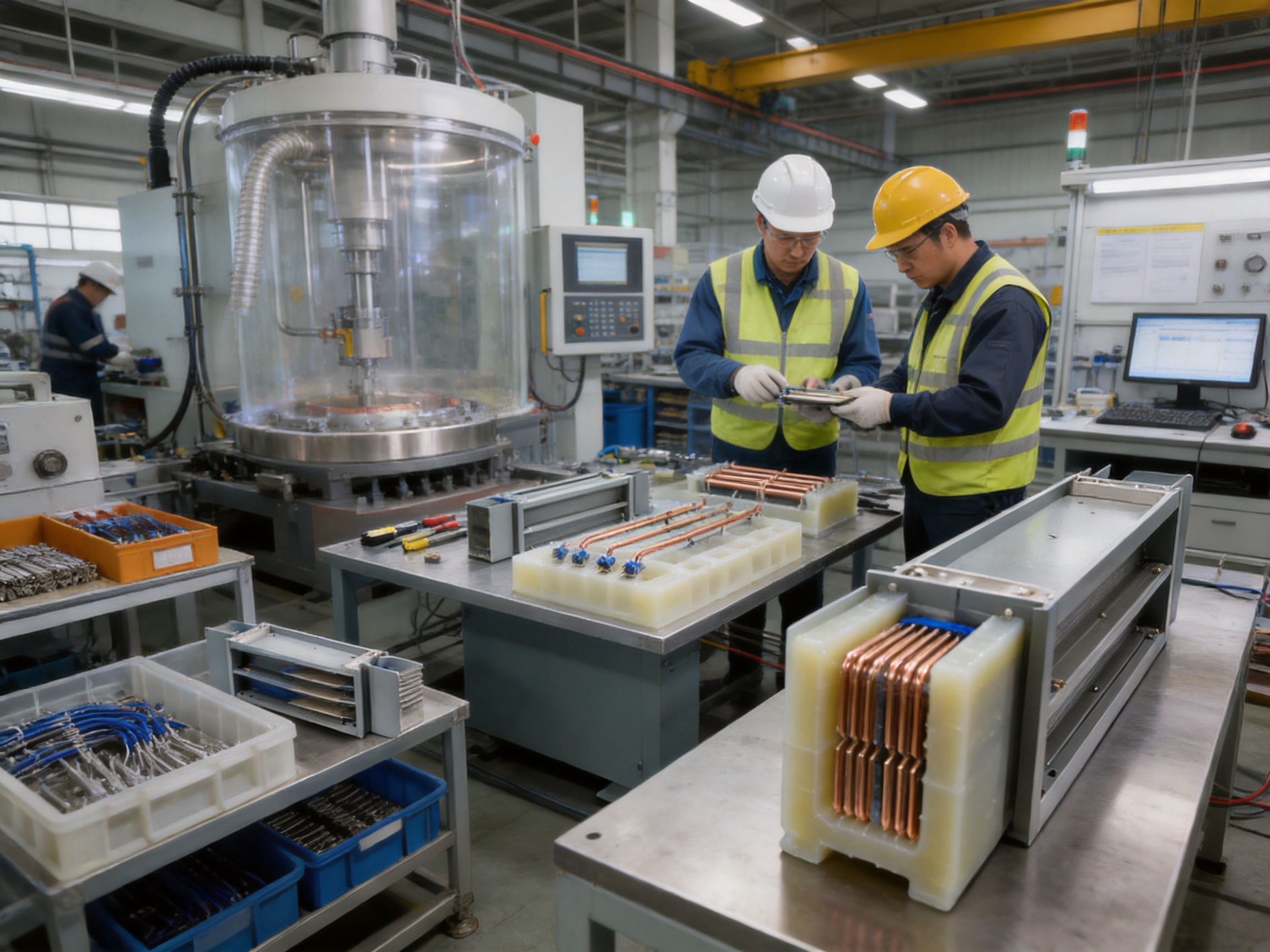
Jiangsu Wopeng Power Technology Co., Ltd. operates production lines equipped with vacuum casting systems, CNC machining equipment, and automated assembly technologies. These capabilities support the manufacture of high- and low-voltage busbar systems with controlled dimensions and repeatable processes.
CNC machining helps produce accurately dimensioned aluminum alloy enclosures, connection components, mounting parts, and other mechanical elements. Dimensional accuracy is important because joint alignment, enclosure fit, insulation clearance, and accessory installation all depend on consistent component geometry.
Vacuum casting equipment is used to produce epoxy resin insulation bodies. The process must control resin preparation, conductor positioning, vacuum conditions, filling, curing, temperature, and demolding. Process control helps limit voids, improve insulation consistency, and produce mechanically stable cast sections.
Automated assembly technologies can improve repeatability during the installation of conductors, insulation components, enclosures, and accessories. Automation also reduces variation caused by manual handling and helps maintain production efficiency for customized orders.
Manufacturing begins with engineering review. Project requirements may include rated current, voltage, route dimensions, environmental conditions, connection locations, protection rating, short-circuit performance, installation orientation, and accessory configuration. These inputs are translated into production drawings and technical documents before fabrication begins.
Material control is another important part of the process. Copper conductors, aluminum profiles, epoxy resin, phase barriers, joint components, fasteners, and insulating accessories must meet defined quality requirements. Incoming inspection helps verify material condition, dimensions, surface quality, and identification.
During conductor preparation, copper bars are cut, formed, drilled, and surface treated according to the approved design. Tin plating must be uniform and properly bonded to the copper surface. The conductor should be inspected for dimensional accuracy, burrs, deformation, and surface defects before casting or assembly.
The enclosure is processed through cutting, machining, drilling, forming, and surface treatment. The completed enclosure should have suitable dimensional accuracy, smooth edges, proper joint interfaces, and adequate corrosion resistance for the intended application.
After casting and assembly, the product undergoes routine inspection and testing. These procedures may include high-voltage testing, insulation resistance testing, conductor continuity checks, mechanical verification, dimensional inspection, joint inspection, enclosure inspection, and visual quality checks.
Testing collaboration with third-party institutions can provide independent validation of safety and performance. This is particularly useful for projects requiring documented evidence of electrical, mechanical, thermal, fire, or environmental performance.
15. Engineering Strength and Customized Solutions
Busway systems are rarely identical from one project to another. Each application may require different current ratings, route dimensions, connection positions, installation orientations, enclosure arrangements, joint types, tap-off units, and environmental protections.
A capable manufacturer must therefore provide more than standard products. It must be able to review drawings, understand load requirements, coordinate interfaces, provide technical calculations, prepare shop drawings, and support installation and commissioning.
Jiangsu Wopeng Power Technology Co., Ltd. provides customized OEM solutions for insulated busbars and tubular busbar systems. Its engineering and technical teams support products ranging from low-voltage compact busways to 35 kV epoxy resin vacuum-cast tubular busbars.
Customization may include conductor material, conductor arrangement, enclosure dimensions, connection direction, tap-off layout, protection rating, route configuration, expansion components, flexible connections, and installation accessories. The solution can be adapted to commercial buildings, substations, industrial plants, wind power facilities, rail transit systems, and other specialized applications.
Engineering support can also help customers select a suitable current rating. Oversizing may increase initial cost and physical dimensions, while undersizing can result in excessive temperature rise and reduced service life. Correct selection requires consideration of continuous load, demand factor, load growth, ambient temperature, installation method, harmonics, and emergency operating conditions.
For high-current applications, short-circuit calculations and protection coordination are essential. The busway must be matched with upstream protective devices so that the system can withstand expected fault conditions and clear faults within the required time.
Good engineering practice also considers installation access. Long or heavy sections may require lifting plans, temporary supports, joint access, and route sequencing. The manufacturer can help define section lengths and accessory arrangements that simplify transportation and field installation.
16. Quality Management and Testing
Quality management should cover the entire product life cycle, from design and material purchasing to manufacturing, testing, packaging, delivery, installation, and after-sales support. A busway is a critical power distribution component, so quality cannot be verified only through a final visual inspection.
Design review helps identify potential problems before production. Engineers can check conductor capacity, insulation clearances, enclosure dimensions, joint arrangements, thermal performance, support requirements, and accessory compatibility.
Process inspection helps ensure that each manufacturing step follows approved procedures. This may include checks on conductor dimensions, plating quality, resin mixing, vacuum casting conditions, curing, enclosure machining, joint assembly, and fastening torque.
Routine electrical tests provide evidence that the finished product meets its specified insulation and continuity requirements. High-voltage withstand testing can identify insulation weaknesses, while insulation resistance testing helps evaluate the condition of the dielectric system.
Mechanical inspection confirms that components fit correctly and that the completed sections meet the required dimensions. This is important for field installation because inaccurate sections may create alignment problems at joints and transitions.
Documentation is also part of quality. Customers may require product drawings, test reports, inspection records, installation instructions, maintenance recommendations, packing lists, and certificates. Complete documentation supports commissioning and future maintenance.
Wopeng's production and testing approach is supported by modern equipment, experienced engineers, technical specialists, and production professionals. The company's products operate across more than 17 provinces and multiple industrial sectors, providing practical experience in different installation environments.
17. Installation Recommendations
Before installation, the route should be checked against approved drawings. Confirm the position of supports, openings, electrical rooms, switchboards, transformers, expansion joints, and tap-off locations. Any conflict with mechanical, fire protection, communication, or structural systems should be resolved before the busway is lifted into position.
Busway sections should be inspected upon delivery. Check for transport damage, moisture exposure, deformation, missing accessories, damaged insulation, and incorrect identification. Products should be stored in a clean and dry location and protected from impact and contamination.
Supports must be capable of carrying the weight of the busway and withstand mechanical forces during operation and fault conditions. The support spacing should follow the approved design and manufacturer requirements. Vertical risers may require additional bracing and load transfer arrangements.
Joints should be assembled carefully. Contact surfaces must be clean and free from contamination. Fasteners should be installed in the correct sequence and tightened to the specified torque. Joint covers, insulation components, barriers, and protective enclosures must be correctly fitted.
Tap-off units should be installed only at approved positions. Their ratings must match the connected loads and the protection coordination requirements. Unused plug-in positions should be closed with suitable protective covers.
After installation, the system should undergo inspection and electrical testing before energization. Testing may include insulation resistance, phase identification, continuity, protective conductor verification, joint inspection, and high-voltage testing where required by the project specifications.
Installation personnel should follow applicable electrical safety regulations and the manufacturer's instructions. Work on energized equipment should be avoided unless specifically permitted under controlled procedures by qualified personnel.
18. Maintenance and Service Life
The compact busway is designed for low-maintenance operation because the conductors and insulation are enclosed and protected. However, maintenance-free does not mean inspection-free. Periodic inspection helps confirm that the system remains safe and reliable.
Maintenance activities may include checking enclosure condition, inspecting joints, verifying support integrity, examining tap-off units, monitoring signs of overheating, checking protection covers, and reviewing any alarms or abnormal operating conditions.
Thermal imaging can be used to identify unusual temperature patterns at joints and connection points while the system is operating. Any abnormal temperature should be investigated promptly because it may indicate loose hardware, overload, contamination, contact deterioration, or an installation problem.
Areas exposed to vibration or mechanical movement should receive particular attention. Supports, flexible connections, and expansion arrangements should be checked at suitable intervals.
The expected service life can reach up to 30 years under suitable operating conditions. Actual service life depends on load profile, ambient temperature, humidity, contamination, mechanical stress, installation quality, maintenance, and protection against abnormal operating conditions.
Because the system is modular, individual accessories or sections may be easier to inspect and replace than extensive cable bundles. This can reduce the time required for corrective work and help facility operators maintain power distribution continuity.
19. Energy Efficiency and Total Cost of Ownership
Energy efficiency is influenced by conductor resistance, load factor, voltage drop, operating temperature, and the quality of electrical connections. The high-purity copper conductors and compact engineered structure help reduce impedance and transmission losses under suitable operating conditions.
The product is described as reducing overall energy consumption by approximately 25 percent compared with conventional cabling in relevant applications. Actual savings depend on route length, load level, conductor sizing, cable arrangement, ambient conditions, and system operating hours. Project-specific calculations should be performed before making a final energy-saving claim.
Initial purchase price is only one part of the economic evaluation. A complete comparison should include design labor, supports, cable trays, fire stopping, terminations, installation time, commissioning, maintenance, future modifications, energy losses, and the value of occupied building space.
The compact busway can reduce installation labor because sections are factory prepared and assembled in a modular sequence. Fewer field terminations can also reduce the risk of inconsistent workmanship. Faster installation may be particularly valuable on projects with strict completion schedules.
Future expansion can further improve life-cycle economics. A busway with available plug-in positions can accommodate additional loads without installing an entirely new cable route. This can reduce future construction disruption and preserve flexibility for the facility owner.
For large commercial and industrial projects, the total cost of ownership may therefore favor the compact busway even if the initial material cost is higher than a basic cable solution.
20. Why Choose a Specialized Busbar Manufacturer
Busbar systems combine electrical engineering, insulation technology, mechanical design, thermal analysis, manufacturing control, and field installation. A supplier focused specifically on busbar technology is more likely to understand the interaction between these disciplines.
Jiangsu Wopeng Power Technology Co., Ltd. was founded in 2018 as a specialized high-tech enterprise dedicated to high- and low-voltage busbar systems. Its product range demonstrates experience across different voltage levels, materials, structures, and application environments.
The company's portfolio includes 35 kV epoxy resin vacuum-cast tube busbars, low-voltage epoxy-cast busbar trunking, copper and aluminum tubular busbars, wind power tubular busbars, compact busbar systems, and sliding contact line power supply systems.
This product breadth supports cross-application engineering. Experience with high-voltage insulation can contribute to better understanding of dielectric design, while experience with low-voltage distribution supports practical knowledge of high-current conductors, modular connections, and installation requirements.
The company's manufacturing infrastructure includes vacuum casting systems, CNC machining equipment, and automated assembly technologies. Its quality procedures include high-voltage tests, insulation tests, mechanical verification, routine inspections, and cooperation with third-party testing institutions.
Customers also benefit from a supplier that can support the full project process. This may include early technical consultation, product selection, customized design, manufacturing, inspection, packaging, delivery, installation guidance, and after-sales service.
For OEM customers and international project contractors, customized production capability is important. A manufacturer that can work from project drawings and technical specifications can provide a more suitable solution than a supplier limited to fixed standard dimensions.
21. Selection Guide for Project Owners and Engineers
When selecting a high-density compact busway, the first step is to define the electrical requirements. Determine the system voltage, continuous current, expected load growth, short-circuit current, frequency, number of phases, neutral requirements, protective conductor requirements, and power quality conditions.
The installation environment should also be reviewed. Consider indoor or outdoor installation, ambient temperature, humidity, dust, corrosive substances, altitude, vibration, seismic conditions, fire compartments, and the required ingress protection level.
Route design should identify straight sections, bends, vertical transitions, branch connections, switchboard interfaces, transformer connections, expansion points, and access requirements. Accurate route drawings reduce the risk of field modifications and delays.
Connection arrangements should be selected according to the load layout. Fixed joints may be appropriate for major equipment connections, while plug-in tap-off units may be preferable for flexible distribution to production equipment, server rows, lighting systems, or commercial tenants.
Thermal calculations should consider the maximum expected load rather than only the initial connected load. Future expansion, harmonic currents, ambient conditions, and installation grouping may affect the required rating.
Maintenance and operational requirements should be considered from the beginning. Operators should have access to joint locations, tap-off units, inspection points, and protective devices. The final design should allow safe isolation and testing.
Documentation requirements should be agreed before production. These may include drawings, test reports, material certificates, inspection records, installation instructions, spare parts lists, and maintenance recommendations.
22. Frequently Asked Questions
Q1: What is a high-density compact busway?
A high-density compact busway is an enclosed low-voltage power distribution system that uses closely arranged copper conductors, solid epoxy resin insulation, internal phase barriers, and a protective aluminum alloy enclosure. It is designed to transmit and distribute high electrical current in a compact and reliable structure.
Q2: What voltage and current range does the product support?
The described product is intended for AC 400 V and 690 V low-voltage systems, with rated currents from approximately 400 A to 5000 A. The final rating should be confirmed according to the project design, ambient conditions, installation method, and applicable standards.
Q3: Why is epoxy resin used in the busway?
Epoxy resin provides solid electrical insulation around the conductors. Vacuum casting helps create a dense and stable insulation body with reduced internal voids. The resin also improves protection against moisture, dust, mechanical impact, vibration, and phase-to-phase faults.
Q4: Is a compact busway better than traditional cables?
It can provide significant advantages for high-current and space-constrained applications. These advantages include reduced installation space, faster installation, fewer field terminations, better organization, easier expansion, and improved environmental protection. A project-specific comparison should consider initial cost, route length, load profile, installation conditions, and future expansion requirements.
Q5: Can the system be used in data centers?
Yes. The product is suitable for data center power distribution when correctly engineered. Its high-current capability, compact design, low impedance, modular tap-off options, fire-resistant insulation, and organized installation make it suitable for server rooms and other critical power environments.
Q6: Can additional loads be connected after installation?
Yes, the modular design can support the addition of tap-off units at designated positions. The availability of expansion depends on the original system design, spare capacity, protection coordination, and the physical accessibility of the busway.
Q7: How often should the busway be maintained?
Maintenance frequency depends on the environment, load, operating conditions, and project requirements. Periodic visual inspection, joint checks, support inspection, and thermal monitoring are recommended. Facilities in dusty, humid, vibrating, or critical environments may require more frequent inspection.
Q8: What does IP65 protection mean for the busway?
IP65 indicates a high level of protection against dust ingress and water jets under the specified test conditions. The rating applies only when the complete system, including joints, covers, tap-off units, and accessories, is correctly configured and installed.
Q9: Can the busway withstand short-circuit conditions?
The described product has a short-time withstand current of 50 kA for 1 second under the stated test conditions. The actual project short-circuit rating must be coordinated with the upstream protection system and verified for the selected configuration.
Q10: What makes the manufacturing process important?
Busway reliability depends on conductor quality, insulation consistency, joint accuracy, enclosure dimensions, curing conditions, and assembly control. Vacuum casting, CNC machining, automated assembly, routine electrical tests, and mechanical inspection help improve product consistency and long-term performance.
Q11: Can the product be customized?
Yes. Customization may include current rating, enclosure dimensions, conductor arrangement, route configuration, tap-off positions, connection direction, protection rating, accessories, and interface requirements. A technical review is required to confirm the feasibility of each custom design.
Q12: What information should be provided when requesting a quotation?
Customers should provide the system voltage, required current, route drawings, installation environment, short-circuit level, connection points, tap-off requirements, protection rating, project standards, delivery schedule, and any special requirements related to fire resistance, seismic performance, or environmental protection.
23. Conclusion
The high-density compact busway is a modern low-voltage distribution solution designed for projects that require high current capacity, compact dimensions, reliable insulation, efficient installation, and long-term flexibility. Its combination of high-purity copper conductors, tin-plated contact surfaces, vacuum-cast epoxy resin insulation, flame-retardant phase barriers, and aluminum alloy enclosure provides a comprehensive approach to electrical performance and safety.
The product offers clear advantages over many conventional cable and air-insulated bus duct systems. Its dense structure saves space, its modular construction simplifies installation and expansion, and its fully insulated enclosure improves protection against environmental and mechanical hazards. Thermal design, low impedance, high short-circuit withstand capability, and protection ratings up to IP65 support reliable operation in demanding facilities.
Applications include data centers, industrial plants, commercial buildings, transportation infrastructure, substations, renewable energy facilities, and other high-current power distribution projects. Its ability to support plug-in tap-off units makes it particularly valuable where load layouts may change over time.
Manufacturing quality is essential to achieving these benefits. Vacuum casting, CNC machining, automated assembly, controlled material selection, electrical testing, mechanical verification, and third-party testing cooperation all contribute to product reliability. A specialized manufacturer with engineering capability can further improve project results by providing customized designs, technical documentation, installation guidance, and life-cycle support.
Jiangsu Wopeng Power Technology Co., Ltd. combines busbar engineering experience with modern production resources to provide insulated busbar, tubular busbar, compact busbar, and related power distribution systems. Its product portfolio covers applications from low-voltage distribution to 35 kV power transmission, supporting customers that require safe, efficient, and customized electrical infrastructure.
For facility owners, electrical designers, contractors, and equipment integrators, the high-density compact busway offers a balanced solution that addresses current capacity, installation space, operational safety, future expansion, and total cost of ownership. With correct engineering selection and professional installation, it can form a dependable foundation for modern power distribution systems.
References
1. IEC 61439, Low-Voltage Switchgear and Controlgear Assemblies, applicable design and verification principles.
2. IEC 60529, Degrees of Protection Provided by Enclosures, guidance for IP protection classifications.
3. IEC 60331 and related fire-performance standards for electrical cables and power distribution equipment.
4. UL 94, Standard for Tests for Flammability of Plastic Materials for Parts in Devices and Appliances.
5. General engineering principles for low-voltage busbar trunking systems and enclosed power distribution equipment.
6. Technical product information for low-voltage epoxy-cast busways, compact busbar systems, and tubular busbar assemblies.
7. Electrical installation and protection coordination practices for commercial, industrial, data center, and infrastructure projects.
8. Manufacturer-provided technical specifications, manufacturing information, testing procedures, and application data for insulated busbar systems.
Product: High-density Compact Busway




-
 +86-180 3625 3000
-
 admin@wpbusbar.com
-
 No. 8, Yanjin Road, Chengxi Industrial Park, Shanyang Town, Baoying County, Yangzhou City, Jiangsu Province, China
Copyright © Jiangsu Wopeng Power Technology Co., Ltd.
All Rights Reserved.
 Custom Insulated Bus Bar Manufacturer
Tubular Busbar System Factory