

 EN

 English
 русский
 Français
 Español
 عربى

Reinforcing Steel Aluminum Strand: High-Strength Conductors for Reliable Power Transmission
Content
- 1 1. Understanding the Construction of Reinforcing Steel Aluminum Strand
- 2 2. Standardized Product Range and Technical Parameters
- 3 3. Electrical Performance and Current-Carrying Function
- 4 4. Mechanical Strength and Long-Span Performance
- 5 5. Environmental Adaptability
- 6 6. Comparison with Alternative Conductor Designs
- 7 7. Manufacturing Process and Quality Control
- 8 8. Manufacturing Strengths of the Supplier
- 9 9. Applications in Power Transmission and Distribution
- 10 10. Installation, Handling, and Maintenance
- 11 11. Engineering Selection Guidelines
- 12 12. Sustainability and Life-Cycle Considerations
- 13 13. Why Choose a Specialized Power Equipment Manufacturer
- 14 14. Frequently Asked Questions
- 14.1 Q1: What is reinforcing steel aluminum strand?
- 14.2 Q2: What standard applies to the product?
- 14.3 Q3: What specification range is available?
- 14.4 Q4: Why is a steel core used instead of making the conductor entirely from aluminum?
- 14.5 Q5: Does the steel core carry electrical current?
- 14.6 Q6: Is the product suitable for long-span transmission lines?
- 14.7 Q7: Can it be used in coastal environments?
- 14.8 Q8: What is the approximate conductivity of the aluminum material?
- 14.9 Q9: What applications are common for this strand?
- 14.10 Q10: What should be considered when selecting connectors?
- 14.11 Q11: How should the conductor be installed?
- 14.12 Q12: How is quality controlled during production?
- 14.13 Q13: Can the supplier provide customized solutions?
- 14.14 Q14: How does the product compare with a standard all-aluminum conductor?
- 14.15 Q15: What information should be included in an inquiry?
- 15 15. Conclusion
- 16 References
- 17 Product: Reinforcing Steel Aluminum Strand
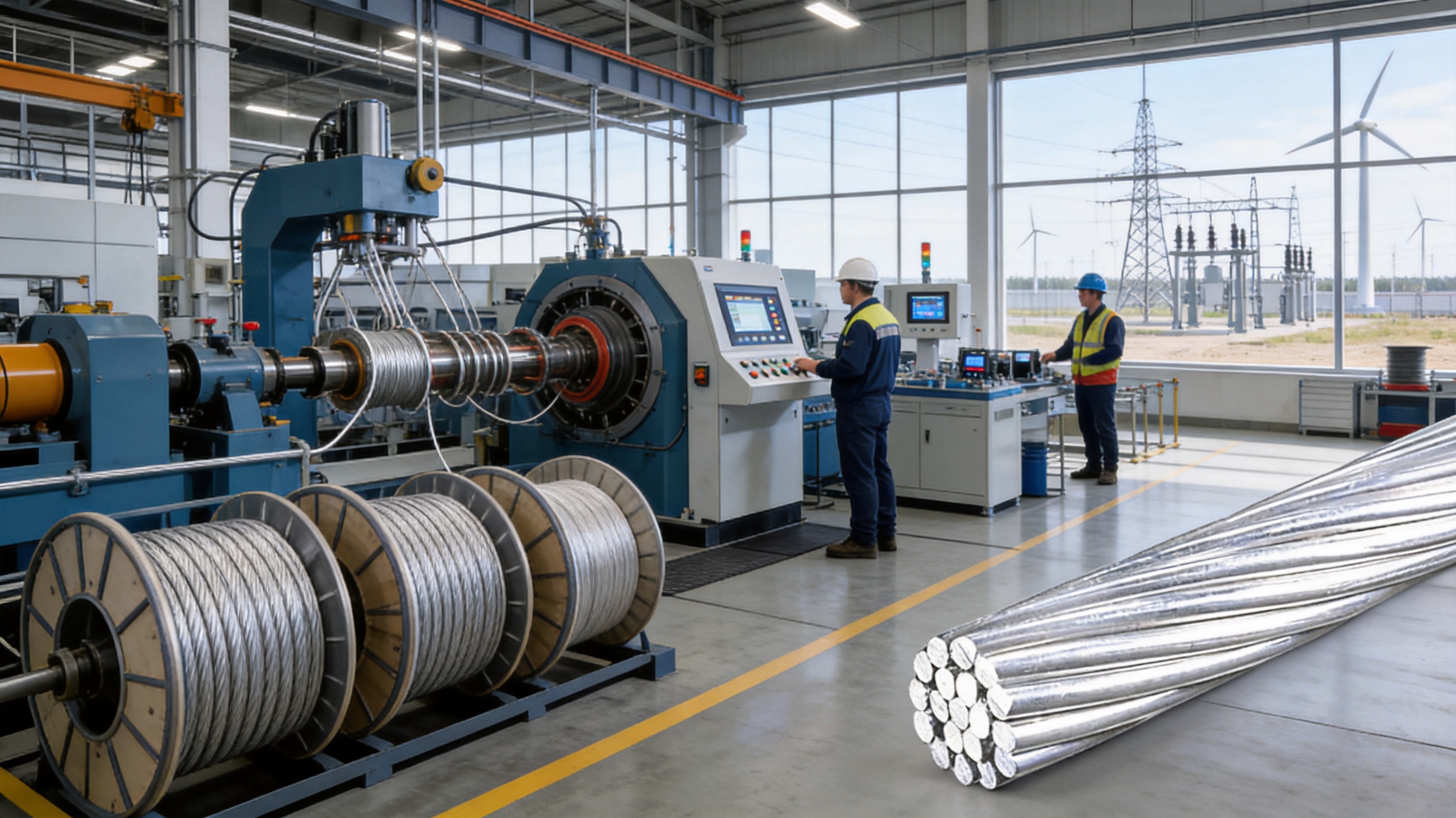
Reinforcing steel aluminum strand is a composite conductor designed to combine the electrical conductivity of aluminum with the mechanical strength of steel. This structure makes it suitable for overhead transmission lines, high-tension distribution systems, grounding wires, shield wires, and specialized hardware connection applications. By placing conductive aluminum strands around a galvanized steel core, the product provides a practical balance between current-carrying capability, tensile strength, installation performance, and environmental durability.
Modern power networks increasingly require conductors that can operate safely across long spans, withstand wind and ice loading, maintain acceptable sag, and deliver reliable electrical performance over many years. A conventional all-aluminum conductor can offer low weight and good conductivity, but it may not provide sufficient mechanical strength for demanding spans or severe weather conditions. Reinforcing steel aluminum strand addresses this limitation through a carefully engineered aluminum-steel structure.
The product described in this article is manufactured according to the GB1179-83 standard. Its nominal cross-section range extends from 10/2 mm² to 240/30 mm². Depending on the required specification, the strand may contain 6 to 30 aluminum wires surrounding 1 to 7 steel-core wires. This broad range allows engineers to select a conductor according to current capacity, span length, mechanical loading, installation conditions, and system voltage.
In addition to its use in power transmission and distribution, the strand can be applied as a damping wire in hardware assemblies such as damping-type end caps. Its standardized construction, defined technical parameters, controlled manufacturing process, and wide specification range make it a dependable option for power infrastructure projects that require both electrical efficiency and structural reliability.
1. Understanding the Construction of Reinforcing Steel Aluminum Strand
Reinforcing steel aluminum strand consists of two functional materials arranged in a concentric stranded structure. The outer aluminum wires provide the primary electrical path, while the inner steel wires act as a mechanical reinforcement system. This division of functions is the central engineering principle behind the product.
Aluminum is selected for the outer layers because it has good electrical conductivity, relatively low density, and strong resistance to atmospheric corrosion. It is also easier to process into stranded conductor wires than many alternative conductive materials. The aluminum layers carry most of the operating current and form the external protective surface of the conductor.
The steel core is located at the center of the strand. Steel has substantially higher tensile strength than aluminum, allowing the conductor to withstand higher installation tension and greater mechanical loads. The core supports the weight of the conductor over long spans and helps limit excessive sag under normal operating conditions.
The combination is more effective than using either material alone for certain applications. An all-aluminum conductor may be electrically efficient and lightweight, but its tensile strength can be insufficient for long spans, heavy ice, strong wind, or challenging installation routes. A steel conductor can provide mechanical strength, but its electrical conductivity is much lower than that of aluminum. The composite design uses aluminum where electrical performance is most important and steel where mechanical reinforcement is required.
The aluminum and steel wires are stranded in controlled layers. The arrangement is not simply a collection of randomly twisted wires. Each layer follows a defined pitch and direction so that the wires remain uniformly distributed around the central core. Correct stranding helps maintain a circular profile, supports stable load transfer, improves handling, and reduces the possibility of local wire displacement.
The steel core is generally galvanized to improve protection against corrosion. The supplied technical information specifies a zinc coating weight of at least 300 g/m² for the galvanized steel core. This coating helps protect the steel from moisture and atmospheric pollutants, especially in outdoor applications where the conductor may be exposed to rain, condensation, industrial contamination, or salt-laden air.
Electrical-grade aluminum with a purity of at least 99.7% is used for the aluminum strands. Through controlled annealing, the aluminum achieves conductivity exceeding 61% IACS under the stated manufacturing conditions. The annealing process is important because it adjusts the balance between conductivity, flexibility, and mechanical properties. Excessive hardness may make stranding and installation difficult, while inadequate control can reduce strength or dimensional stability.
The result is a conductor with a layered structure in which material selection, wire diameter, stranding pitch, pre-twisting, surface condition, and dimensional accuracy all contribute to final performance.
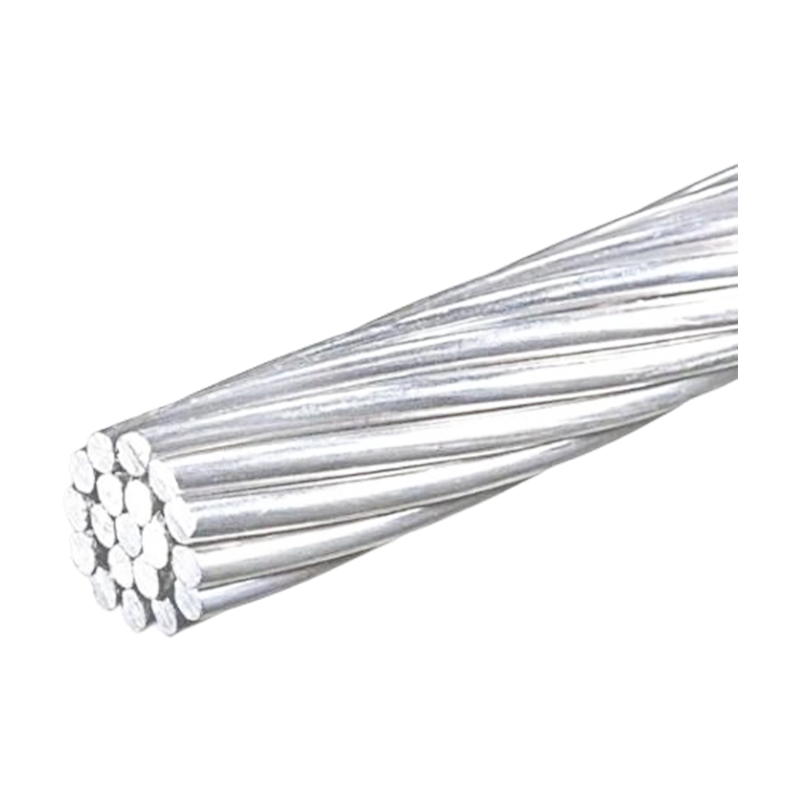
Reinforcing Steel Aluminum Strand
2. Standardized Product Range and Technical Parameters
One of the principal strengths of reinforcing steel aluminum strand is its standardized specification range. The nominal cross-sections extend from 10/2 mm² to 240/30 mm². In this designation, the first value generally represents the nominal aluminum area and the second value represents the nominal steel-core area. This format allows engineers and procurement teams to understand the basic conductor composition quickly.
The product can be manufactured with different numbers of aluminum and steel wires. Aluminum strand construction may include 6 to 30 wires, while the steel core may contain 1 to 7 wires. The number of wires affects flexibility, outer diameter, current distribution, mechanical performance, and compatibility with fittings. Smaller conductors may use fewer wires, while larger conductors use additional layers to achieve the required cross-sectional area.
Aluminum wire diameters range from approximately 1.50 mm to 4.72 mm. Steel-core wire diameters range from approximately 1.50 mm to 3.60 mm. The selection of wire diameter is controlled according to the required conductor size and the intended structural arrangement. Consistent wire diameter is essential for maintaining stable stranding geometry and uniform tensile loading.
Across the available range, calculated cross-sectional areas extend from approximately 12.37 mm² to 275.96 mm². Outer diameters range from approximately 4.50 mm to 21.60 mm. These dimensional parameters help determine compatibility with clamps, connectors, suspension fittings, vibration-control devices, and other line hardware.
The stated DC resistance values range from no more than approximately 2.706 Ω/km for smaller specifications to approximately 0.1410 Ω/km for larger specifications. Actual resistance depends on the conductor size, aluminum area, temperature, manufacturing tolerances, and test conditions. The lower resistance of larger conductors makes them suitable for higher current requirements and longer transmission distances where electrical losses must be controlled.
Calculated tensile strength ranges from approximately 4,012 N to 91,120 N. This wide strength range allows the product to be selected for different span lengths and mechanical loading conditions. Calculated weight ranges from approximately 42.9 kg/km to 964.2 kg/km. These values are important during route design, pole or tower loading calculations, stringing operations, and logistics planning.
Delivery length is generally less than 2,000 meters. Controlled delivery lengths support transportation, storage, installation planning, and quality management. Depending on project needs, the conductor may be supplied in appropriate reels or packages that protect the strand from impact, bending damage, moisture, and contamination.
| Parameter | Typical Range or Requirement | Engineering Significance |
| Applicable standard | GB1179-83 | Provides a consistent basis for dimensions, materials, and performance |
| Nominal cross-section | 10/2 mm² to 240/30 mm² | Supports different current and strength requirements |
| Aluminum wire count | 6 to 30 wires | Influences conductivity, flexibility, and conductor diameter |
| Steel-core wire count | 1 to 7 wires | Provides different reinforcement levels and structural configurations |
| Aluminum wire diameter | Approximately 1.50 mm to 4.72 mm | Supports standardized dimensional control |
| Steel-core wire diameter | Approximately 1.50 mm to 3.60 mm | Contributes to tensile strength and core geometry |
| Calculated cross-sectional area | Approximately 12.37 mm² to 275.96 mm² | Supports electrical and mechanical design calculations |
| Outer diameter | Approximately 4.50 mm to 21.60 mm | Determines fitting and hardware compatibility |
| Calculated tensile strength | Approximately 4,012 N to 91,120 N | Supports span and loading calculations |
| Calculated weight | Approximately 42.9 kg/km to 964.2 kg/km | Used for tower loading, transportation, and stringing planning |
| Typical delivery length | Less than 2,000 m | Improves packaging, handling, and installation control |
3. Electrical Performance and Current-Carrying Function
The main electrical function of the reinforcing steel aluminum strand is performed by the aluminum layers. Because aluminum surrounds the steel core, most of the available conductive cross-sectional area is positioned in the outer portion of the conductor. The steel core contributes relatively little to current conduction, but its mechanical contribution enables the conductor to maintain its form under tension.
Electrical-grade aluminum with high purity supports low resistance and stable current transmission. The stated conductivity of more than 61% IACS for the aluminum material reflects the importance of material quality and annealing control. Conductivity is affected by chemical composition, heat treatment, wire drawing, surface condition, and temperature. A consistent manufacturing process is therefore essential for maintaining predictable electrical properties from one production batch to another.
DC resistance is a fundamental selection parameter. Lower resistance reduces I²R losses during operation, especially in circuits carrying high current or extending over long distances. Engineers typically evaluate resistance together with operating temperature, allowable current, ambient conditions, wind, solar radiation, and installation geometry.
The supplied product information also identifies a measured skin-effect coefficient below 1.05 under high-frequency conditions. The skin effect causes current to become less uniformly distributed through a conductor as frequency increases. Although power-frequency systems do not experience the same conditions as high-frequency transmission systems, the stated value indicates that the conductor maintains controlled AC performance relative to its DC characteristics.
The increase in AC resistance is identified as being controlled within 8%. This helps support reliable thermal calculations when the conductor is operated under alternating current. System designers can use the relevant resistance data to estimate voltage drop, energy losses, temperature rise, and operating efficiency.
The conductor is also described as having a short-circuit thermal capacity of 150 kA²·s. Short-circuit performance depends on the duration and magnitude of fault current, the initial conductor temperature, the final allowable temperature, and heat dissipation conditions. A conductor with predictable thermal behavior can be incorporated more confidently into protection coordination and fault-current calculations.
After 100 thermal cycles, the stated conductivity degradation does not exceed 2%. Thermal cycling can occur when loads rise and fall repeatedly or when weather conditions change. Repeated expansion and contraction may affect contacts, strand geometry, and material interfaces if the product is not properly designed. Controlled degradation helps support long-term electrical stability.
Compared with a conventional all-aluminum conductor, the reinforcing steel aluminum strand may offer higher mechanical strength with an acceptable increase in weight. Compared with a bare steel conductor, it provides much better electrical conductivity and improved surface corrosion resistance. Its value therefore lies in the balance between electrical and mechanical characteristics rather than in maximizing only one property.
4. Mechanical Strength and Long-Span Performance
Mechanical strength is the primary reason for incorporating a steel core into an aluminum conductor. Overhead lines are exposed to constant tensile loading from their own weight and to changing loads caused by wind, ice, temperature variation, and installation tension. A conductor that lacks adequate strength may experience excessive sag, permanent elongation, wire damage, or premature failure.
The steel core transfers a substantial part of the mechanical load. It enables the strand to withstand higher tension while maintaining a controlled shape. This is particularly valuable in long-span applications, where the distance between support structures is large and conductor weight creates significant sag.
Reduced sag can provide several practical advantages. It may help maintain electrical clearances from the ground, roads, buildings, vegetation, and other conductors. It can also reduce the need for additional support structures in certain routes. Fewer towers or poles may reduce construction complexity, land requirements, foundation work, and long-term maintenance obligations.
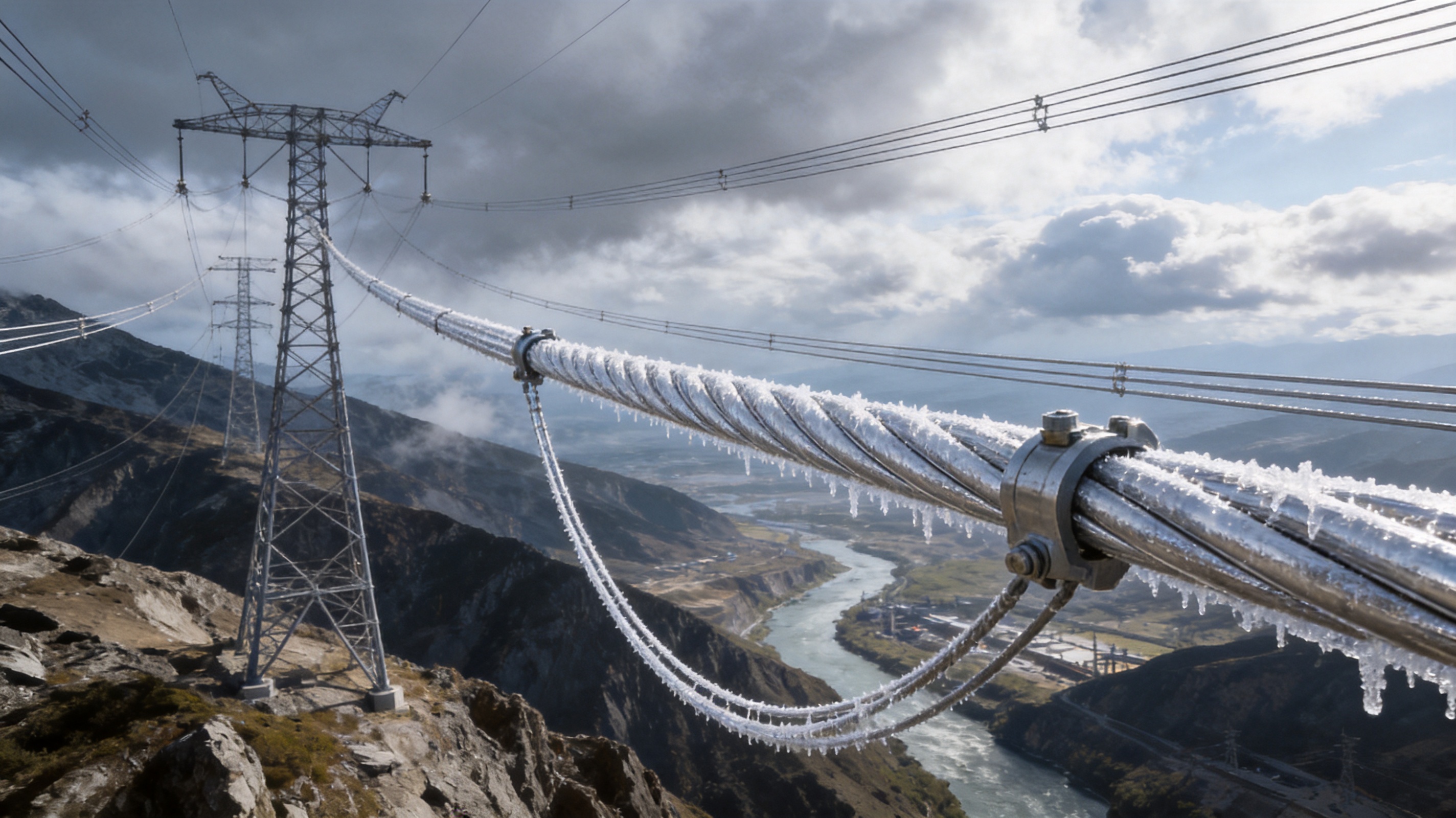
High tensile performance is also useful in areas where wind and ice create significant mechanical loading. The product information states that the conductor can withstand an ice coating load of 30 mm. Actual project suitability must be verified through a complete structural calculation using local weather data and applicable design codes, but the stated capability demonstrates the product’s intended use in demanding outdoor environments.
Stranding pitch is carefully designed to distribute stress across the individual wires. If the pitch is inconsistent or the wires are not properly positioned, one or more wires may carry an excessive portion of the load. Controlled pitch and pre-twisting help the aluminum and steel components work as a unified conductor.
The manufacturing information identifies a strictly controlled pre-twisting process intended to prevent strand loosening. Loose wires can create local protrusions, uneven current distribution, vibration damage, and fitting problems. Maintaining the geometry of every layer supports safer installation and more stable service operation.
Long-term creep is another important consideration. Under continuous tension, metallic conductors may gradually elongate. Excessive creep increases sag and can alter clearances. The supplied information indicates that creep deformation is limited to within 0.05% under long-term operational loads. This performance should be evaluated together with the specific temperature, tension, span, and loading conditions of each project.
The product has also been described as having its structural reliability validated through a 2-million-cycle wind-induced vibration fatigue test. Aeolian vibration can occur when steady wind passes over a cylindrical conductor, causing repeated small-amplitude oscillations near support points. Over time, this may lead to fretting and fatigue if appropriate fittings are not used. Vibration testing and suitable dampers are therefore important elements of a reliable conductor system.
5. Environmental Adaptability
Outdoor conductors must remain reliable under fluctuating temperature, humidity, solar exposure, wind, precipitation, pollution, and salt spray. The aluminum outer layer offers useful protection in ordinary atmospheric conditions, while the galvanized steel core provides additional resistance against corrosion of the reinforcement.
The product has been validated over a temperature range of -40°C to +80°C, with the coefficient of thermal expansion remaining stable within the stated conditions. Temperature affects both conductor resistance and sag. As the conductor heats, it expands and may sag more deeply. Stable thermal behavior helps engineers model these changes and maintain the required clearances.
In cold climates, low temperatures can increase material stiffness and change tension conditions. Ice accumulation can add both weight and aerodynamic loading. The stated ability to withstand a 30 mm ice coating load indicates that the conductor is designed with severe weather considerations in mind, although local structural standards must always be applied.
Salt-spray resistance is especially important for coastal regions, offshore-adjacent infrastructure, port facilities, and industrial areas. The product information states that the conductor retains more than 95% of its tensile strength after 5,000 hours of salt-spray testing. The aluminum surface and galvanized steel core work together to slow the corrosion process and preserve mechanical performance.
Ultraviolet radiation can degrade polymeric materials and surface treatments, while repeated wetting and drying may accelerate corrosion. The supplied information reports no significant surface degradation after 5,000 hours of UV aging. This supports the use of the conductor in exposed outdoor environments, but periodic visual inspection remains advisable.
Environmental resistance does not eliminate the need for correct design and maintenance. Damaged strands, inappropriate fittings, contamination, electrical arcing, and mechanical abrasion can reduce service life regardless of the base material. Proper storage, transportation, installation, and inspection are essential for realizing the product’s environmental advantages.
6. Comparison with Alternative Conductor Designs
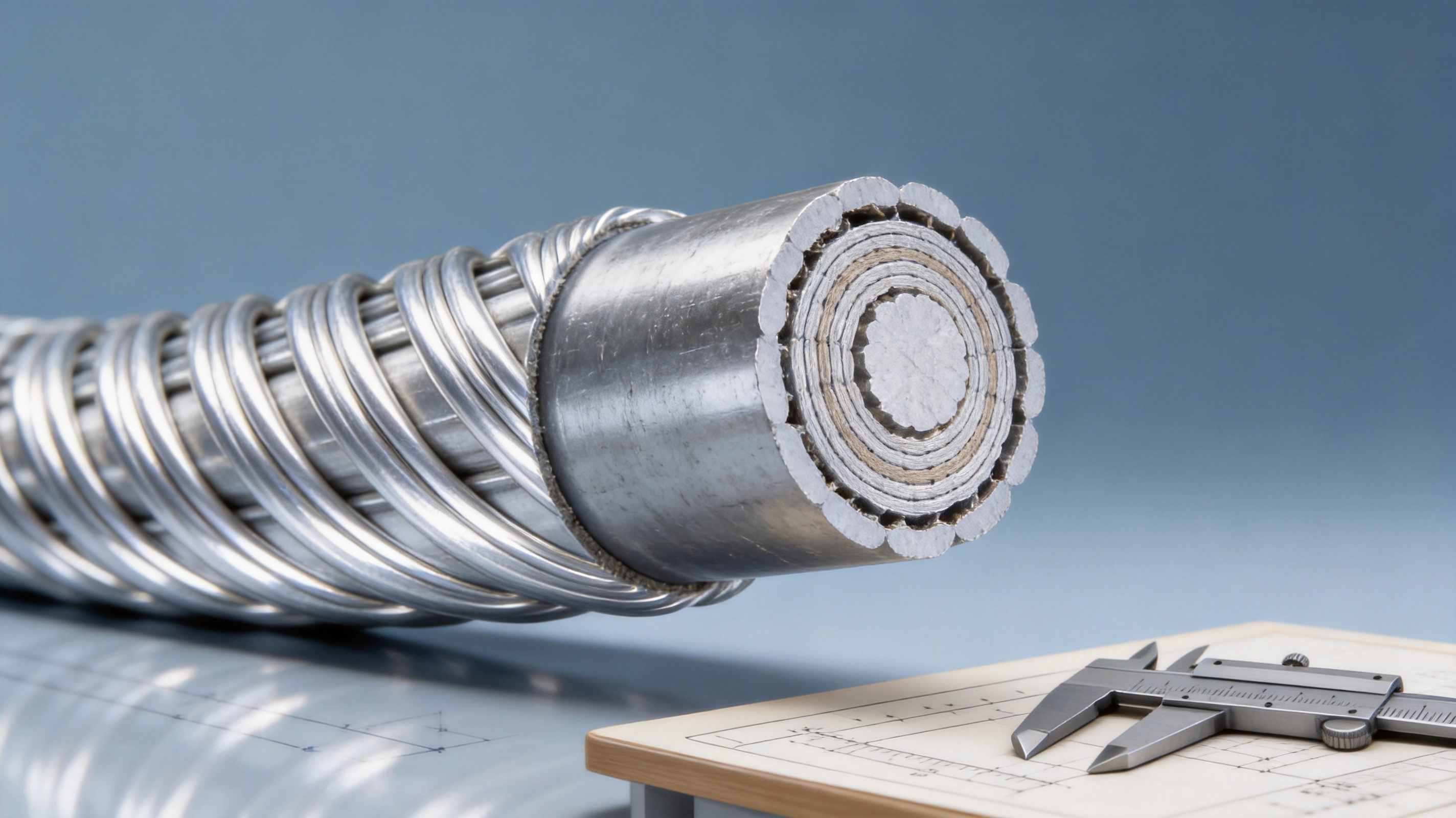
When selecting an overhead conductor, engineers must balance conductivity, strength, weight, cost, corrosion resistance, span capability, and installation requirements. No single conductor design is optimal for every project. Reinforcing steel aluminum strand is attractive because it provides a practical middle ground between lightweight conductive designs and high-strength metallic designs.
Compared with standard all-aluminum conductors, the steel-reinforced design offers higher tensile strength and better resistance to sag under long-span loading. This can be important where support structures are widely spaced or where environmental loads are severe. The trade-off is that the steel core adds weight and occupies part of the total cross-section without contributing the same level of conductivity as aluminum.
Compared with a bare steel conductor, the aluminum outer layer provides substantially better electrical conductivity and a more suitable current-carrying surface. The aluminum also provides a degree of corrosion protection to the inner steel core. A bare steel conductor may be selected for certain grounding or mechanical applications, but it is generally not an equivalent choice when efficient power transmission is the primary objective.
Compared with copper conductors, reinforcing steel aluminum strand may provide a lower material cost and lower density while delivering sufficient conductivity for many overhead applications. Copper has excellent conductivity and strong market recognition, but it is heavier and may have a higher material cost. Aluminum-based conductors can therefore reduce transport and support-structure requirements in suitable applications.
Compared with advanced high-temperature or low-sag conductors, the product may not provide the same operating temperature capability or specialized low-sag performance. However, it offers a standardized and widely understood construction that may be easier to specify, install, and maintain. Project designers should compare all relevant properties rather than selecting solely on a single performance indicator.
| Evaluation factor | Reinforcing steel aluminum strand | All-aluminum conductor | Bare steel conductor |
| Electrical conductivity | High, provided by aluminum layers | High | Low relative to aluminum-based conductors |
| Tensile strength | High because of the steel core | Low to moderate | Very high |
| Long-span suitability | Good to very good | More limited under heavy loading | Good mechanically but limited electrically |
| Weight | Moderate | Low to moderate | High for equivalent conductive performance |
| Corrosion resistance | Good with aluminum and galvanized protection | Good in many atmospheric conditions | Requires effective protection against corrosion |
| Application range | Transmission, distribution, ground wires, shield wires, and hardware applications | Distribution and moderate-span applications | Grounding and mechanical applications |
| Design balance | Combines electrical and mechanical performance | Prioritizes conductivity and low weight | Prioritizes mechanical strength |
The most important competitive advantage is therefore balance. Reinforcing steel aluminum strand does not rely on one material to perform every function. Its aluminum layers are optimized for conduction, while its steel core is optimized for load-bearing. This division of roles creates a conductor suitable for a broad range of real-world power infrastructure conditions.
7. Manufacturing Process and Quality Control
The reliability of a composite stranded conductor depends heavily on manufacturing discipline. High-quality raw materials alone are not sufficient. The production process must control wire chemistry, drawing accuracy, annealing, galvanizing, stranding tension, pitch, pre-twist, surface condition, dimensional tolerances, and final inspection.
The manufacturing process begins with the preparation and inspection of aluminum and steel feedstock. Aluminum intended for electrical applications must meet the required purity and conductivity targets. Steel wire must provide appropriate tensile strength and be suitable for galvanizing. Incoming materials should be checked for diameter, surface condition, mechanical characteristics, chemical composition, and coating requirements.
Aluminum wire drawing reduces the feedstock to the specified diameter while improving dimensional consistency. Drawing dies and process parameters must be controlled to prevent excessive surface damage, uneven diameter, or residual stress. A stable drawing operation helps ensure that each aluminum wire fits correctly into the final strand.
Annealing is used to restore suitable ductility and improve electrical conductivity after drawing. The treatment must be carefully controlled because excessive heat can reduce strength, while insufficient heat may leave the wire too hard and difficult to strand. Temperature, time, cooling rate, and batch uniformity all influence final performance.
The steel core is galvanized to create a protective zinc layer. The stated zinc coating requirement is at least 300 g/m². Galvanizing quality depends on surface preparation, bath composition, temperature, immersion time, withdrawal speed, and coating uniformity. A properly bonded and continuous coating reduces the risk of early corrosion at the steel surface.
After individual wires are prepared, they are assembled through a controlled stranding process. The steel core is formed first, followed by the aluminum layers. The stranding machine must maintain appropriate tension in each wire so that the final load is distributed evenly. Excessive tension may deform or damage wires, while insufficient tension may result in loose layers or poor dimensional stability.
Layer direction and pitch are controlled according to the product specification. Proper pitch helps maintain a compact circular cross-section and supports stable mechanical behavior. The process also reduces the possibility of gaps, overlapping wires, surface irregularities, and local stress concentration.
Pre-twisting is applied to limit strand loosening after production and during installation. This is especially important when the conductor is cut, handled, pulled through sheaves, or connected to fittings. A stable strand is easier to install and less likely to develop protruding wires or local deformation.
Modern production management may include computerized parameter monitoring, calibrated measuring systems, batch traceability, and inspection records. These practices allow manufacturers to identify the production line, material batch, process conditions, and inspection results associated with each reel of product.
Final inspection typically includes checks of outer diameter, wire count, wire diameter, surface condition, lay length, tensile strength, resistance, calculated mass, and coating quality. Depending on the purchase specification, additional tests may include elongation, winding, thermal cycling, fatigue, salt-spray exposure, UV aging, and short-circuit thermal verification.
A strict quality management system reduces variation and supports reliable field performance. It also simplifies engineering approval because customers can review consistent technical documentation rather than relying only on general product descriptions.
8. Manufacturing Strengths of the Supplier
Jiangsu Wopeng Power Technology Co., Ltd. is a specialized high-tech enterprise founded in 2018 and focused on high- and low-voltage busbar systems and related power transmission products. Its broader product portfolio includes epoxy resin vacuum-cast tube busbars, low-voltage cast resin busways, copper and aluminum tube busbars, wind power tube busbars, compact busbar systems, and sliding contact line systems.
This product background is relevant to reinforcing steel aluminum strand because both conductor manufacturing and busbar manufacturing require disciplined control of electrical performance, mechanical structure, insulation or surface condition, dimensional accuracy, and final inspection. Experience with power transmission equipment helps support a practical understanding of how conductive components perform in substations, industrial facilities, wind power systems, rail transit projects, and commercial infrastructure.
The company operates production lines equipped with vacuum casting systems, CNC machining equipment, and automated assembly technologies. Although reinforcing steel aluminum strand is a stranded metallic conductor rather than a cast-resin busbar, the same manufacturing culture of process control, engineering verification, and standardized inspection is valuable across the product range.
Vacuum casting technology supports the production of resin-insulated busbar components by reducing voids and improving insulation quality. CNC machining contributes to dimensional accuracy in conductive and mechanical components. Automated assembly improves repeatability and reduces inconsistencies caused by manual processing. Together, these capabilities indicate an organization with experience managing complex power equipment production rather than relying only on basic fabrication.
The company has established a team of engineers, technical specialists, and production professionals with experience in power equipment technology. This engineering capability can assist customers with product selection, conductor configuration, busbar integration, installation conditions, current requirements, mechanical loading, and project-specific documentation.
Quality assurance includes high-voltage tests, insulation tests, mechanical verification, and routine production checks for applicable products. Collaboration with third-party testing institutions provides an additional layer of independent validation. For customers purchasing power transmission components, this combination of internal control and external verification can improve confidence in safety, compliance, and long-term reliability.
The company’s products operate across more than 17 provinces and key industrial sectors. Such field deployment provides practical experience with varied climatic conditions, different project types, and diverse customer requirements. It also supports continuous improvement because feedback from power generation, substations, wind energy, industrial manufacturing, rail transit, and commercial facilities can be incorporated into engineering and production procedures.
Another strength is the ability to provide customized and OEM-oriented solutions. Conductor and busbar projects often require more than a standard catalog item. Customers may need specific dimensions, connection arrangements, packaging methods, documentation, delivery schedules, or compatibility with existing hardware. A supplier with engineering and production coordination capabilities can respond more effectively to these requirements.
For reinforcing steel aluminum strand, supplier evaluation should include material traceability, compliance with the requested standard, test documentation, production capacity, inspection procedures, packaging quality, technical support, and ability to provide consistent batches. These factors are as important as the nominal electrical and mechanical specifications.
9. Applications in Power Transmission and Distribution
9.1 Overhead Transmission Lines
The most common application is overhead transmission. Transmission conductors must carry current over long distances while remaining mechanically stable between towers. The steel core enables higher tensile loading and reduces sag compared with many all-aluminum alternatives.
Long-span capability is valuable in areas where towers must cross rivers, valleys, highways, railways, industrial sites, or environmentally sensitive land. By supporting longer distances between structures, the conductor may help reduce the number of towers and the associated construction work. Engineering calculations must still consider span length, wind pressure, ice loading, conductor temperature, tower strength, and required clearances.
9.2 High-Tension Distribution Networks
Distribution lines often pass through populated, industrial, agricultural, or difficult terrain. Stable conductor geometry and controlled sag are important for maintaining safe distances from buildings, trees, roads, and other infrastructure. The combination of aluminum conductivity and steel reinforcement makes the strand suitable for distribution routes exposed to mechanical or environmental stress.
High tensile strength also improves handling during stringing. The conductor can be pulled under controlled tension to reduce ground contact and protect the wire from abrasion. Installation teams must nevertheless use appropriate pulling equipment, sheaves, swivels, tensioners, and compression fittings to avoid damaging the aluminum layers.
9.3 Ground Wires and Shield Wires
Reinforcing steel aluminum strand can also be used as a ground wire or shield wire at the top of transmission structures. In this role, the conductor helps intercept lightning and provide a low-impedance path toward grounding systems. Mechanical strength is important because the wire remains exposed to weather and must maintain its position above the phase conductors.
Selection for shield-wire use depends on lightning performance, fault-current requirements, tower geometry, grounding resistance, span length, and local standards. The conductor’s tensile strength and environmental resistance are useful characteristics, but system-level design remains essential.
9.4 Damping Wires and Hardware Connection Applications
The product is also identified as a damping wire for hardware connection applications, including damping-type end caps. In such assemblies, the strand may support vibration control, mechanical connection, or load transfer. Its flexible stranded construction allows it to conform to specialized hardware while maintaining a reliable electrical and mechanical connection.
Hardware compatibility is critical. Connectors should be selected for aluminum-to-steel composite conductors and installed according to the manufacturer’s procedures. Correct compression sequence, surface preparation, tooling, and inspection help ensure low contact resistance and stable mechanical performance.
9.5 Wind Power and Industrial Infrastructure
Power systems associated with wind farms, industrial plants, substations, and large commercial facilities may include outdoor lines, grounding networks, and specialized conductor assemblies. These projects often involve variable environmental exposure, high equipment availability requirements, and difficult maintenance access. A standardized conductor with documented mechanical and electrical performance can support reliable system integration.
10. Installation, Handling, and Maintenance
Correct installation is necessary to preserve the advantages of the reinforcing steel aluminum strand. Even a high-quality conductor can be damaged by improper pulling tension, uncontrolled bending, incorrect fittings, or contact with abrasive surfaces.
During transport and storage, reels should remain upright and protected from impact. The conductor should not be dragged across the ground, sharp edges, or contaminated surfaces. Water, mud, chemicals, and construction debris can damage the aluminum surface or complicate connector preparation.
Before stringing, the reel, conductor surface, and installation equipment should be inspected. Damaged flanges, loose reel components, or crushed conductor layers may create risks during deployment. The pulling route should be checked for obstacles, sharp bends, unsuitable sheaves, and areas where the conductor could contact structures or the ground.
Tension stringing is recommended for applications where the conductor must be kept clear of the ground and obstacles. The steel core allows the conductor to tolerate higher mechanical tension, but the elastic limit must not be exceeded. Excessive tension can cause permanent elongation, core damage, wire deformation, or unexpected changes in sag.
Sheaves must have an appropriate diameter and surface condition. A sheave that is too small can impose excessive bending stress on the stranded conductor. Misalignment may cause rubbing, flattening, or localized movement between layers. Installation equipment should be selected according to the conductor diameter, weight, tensile strength, and route geometry.
Connector compatibility is particularly important. Aluminum-to-steel composite conductors require fittings designed for their specific construction. Compression connectors should provide reliable electrical contact with the aluminum layers while mechanically engaging the appropriate conductor structure. Improper connectors may lead to increased resistance, overheating, slippage, galvanic effects, or premature failure.
Where required, oxide-inhibiting compounds and approved surface preparation procedures should be used. Aluminum surfaces naturally form an oxide layer that can increase contact resistance if not properly addressed. The connector manufacturer’s instructions should govern cleaning, brushing, compound application, compression sequence, and inspection.
After installation, inspections should examine support points, clamps, connectors, vibration dampers, spacer devices, and areas exposed to unusual movement. Inspectors should look for broken wires, corrosion, discoloration, loose fittings, unusual sag, abrasion, and evidence of overheating. Thermal imaging can help identify abnormal resistance at connections.
In coastal or industrial environments, inspections may need to be more frequent. Salt deposits, chemical pollutants, and moisture can accelerate surface deterioration. The aluminum outer layer provides good atmospheric resistance, but regular monitoring helps identify localized damage before it affects the steel core or mechanical performance.
Vibration control should be considered for long spans and locations with steady wind exposure. Appropriate dampers and fittings reduce the risk of fatigue near supports. The conductor’s reported wind-induced vibration testing supports its suitability for demanding applications, but the complete line design must still address local wind conditions and support geometry.
11. Engineering Selection Guidelines
Selecting the correct specification begins with defining the electrical requirement. Engineers should determine normal operating current, emergency current, allowable voltage drop, permissible losses, system frequency, operating temperature, and short-circuit conditions. The aluminum cross-sectional area is a primary factor in this evaluation.
The mechanical design should then consider span length, conductor weight, support spacing, installation tension, wind pressure, ice thickness, temperature range, tower strength, and required clearances. The steel-core area and calculated tensile strength must be sufficient for the most demanding load case, including construction and maintenance conditions.
Outer diameter affects both electrical and mechanical design. A larger diameter may increase wind loading but can reduce surface electric stress and improve current capacity. It also determines the correct size of clamps, connectors, sheaves, dampers, and other accessories.
Environmental conditions should be reviewed carefully. Coastal projects may require enhanced corrosion monitoring. Cold regions require evaluation of ice and low-temperature behavior. Hot climates require careful thermal and sag calculations. Industrial areas may expose conductors to chemicals or conductive dust.
Project specifications should identify the applicable standard and required documentation. For the product described here, GB1179-83 provides the stated manufacturing reference. Some projects may additionally request documentation aligned with international requirements such as ASTM or IEC standards. The purchaser should confirm equivalence rather than assuming that different standards have identical test methods or designation systems.
Supplier documentation should include product drawings, nominal area, wire count, wire diameters, outer diameter, DC resistance, tensile strength, mass, delivery length, material information, galvanizing data, test certificates, and packaging details. Clear documentation reduces errors during design review and construction procurement.
12. Sustainability and Life-Cycle Considerations
Power infrastructure is expected to operate for long periods with limited maintenance. A conductor that maintains its mechanical and electrical properties can reduce replacement frequency, outage risk, and the environmental impact associated with repair work.
Aluminum is widely recyclable, and the steel core can also be recovered at the end of service life. Responsible recycling requires suitable separation and processing, but the composite construction still contains valuable metallic materials. Long service life and recoverable material content can contribute to better life-cycle performance.
Long-span capability may also support more efficient infrastructure layouts. If a project can safely use longer spans, it may reduce the number of support structures, foundations, access roads, and construction activities. The actual environmental benefit depends on route design and structural calculations, but mechanical strength provides additional planning flexibility.
Reduced electrical losses are another life-cycle consideration. Selecting an appropriate conductor cross-section and maintaining low resistance can improve energy efficiency over many years. Small differences in resistance may become significant when a line operates continuously at high current.
Durability in salt spray, ultraviolet exposure, wind, and temperature cycling can reduce maintenance demands. Nevertheless, sustainability should not be assessed only through material selection. Manufacturing energy, packaging, transportation, installation practices, inspection schedules, and end-of-life recycling all contribute to the overall environmental profile.
13. Why Choose a Specialized Power Equipment Manufacturer
Purchasing a conductor from a specialized power equipment manufacturer offers advantages beyond the basic supply of metallic wire. Electrical infrastructure projects often involve coordination among conductors, busbars, fittings, insulation systems, supports, grounding arrangements, and protection equipment. A supplier that understands the wider power system can provide more relevant technical support.
Jiangsu Wopeng Power Technology Co., Ltd. combines product development, manufacturing, engineering support, and quality management within the power transmission field. Its experience with high- and low-voltage busbar systems provides a foundation for understanding current distribution, insulation coordination, mechanical assembly, thermal performance, and field installation.
The company’s range of copper and aluminum tubular busbars, cast-resin systems, wind power busbars, compact busbar systems, and sliding contact line systems demonstrates capability across different electrical environments. This breadth may be useful for projects requiring more than one type of power transmission product.
Its modern production facilities, CNC machining equipment, vacuum casting systems, automated assembly technologies, and standardized inspection processes support repeatable production. Engineering teams can work with customers to review specifications, select suitable configurations, and prepare project documentation.
Third-party testing cooperation provides additional confidence where customers require independent verification. Quality systems that include high-voltage tests, insulation tests, mechanical checks, and routine inspections help identify defects before products leave the factory.
For international and domestic customers, a supplier’s responsiveness is also important. Clear communication about technical requirements, drawings, tolerances, packaging, delivery length, testing, and installation support can prevent costly misunderstandings. A manufacturer with OEM capability can adapt production to project-specific needs while maintaining traceability and controlled quality.
The company’s stated service industries include power generation, substations, wind energy, industrial manufacturing, rail transit, and large commercial facilities. These applications require reliable power transmission under different current levels, environmental conditions, and installation arrangements. Experience across these sectors strengthens the supplier’s ability to understand practical project constraints.
14. Frequently Asked Questions
Q1: What is reinforcing steel aluminum strand?
Reinforcing steel aluminum strand is a composite conductor consisting of aluminum wires stranded around one or more steel-core wires. The aluminum provides the primary electrical conductivity, while the steel core provides tensile strength and mechanical support.
Q2: What standard applies to the product?
The product described in the supplied information conforms to GB1179-83. Customers should confirm the required standard for each project and request the relevant technical documentation and test certificates.
Q3: What specification range is available?
The nominal cross-section range is approximately 10/2 mm² to 240/30 mm². The product may contain 6 to 30 aluminum wires and 1 to 7 steel-core wires, depending on the selected specification.
Q4: Why is a steel core used instead of making the conductor entirely from aluminum?
The steel core significantly increases tensile strength and helps control sag over long spans. It allows the conductor to withstand greater mechanical loads from its own weight, wind, ice, and installation tension than many all-aluminum designs.
Q5: Does the steel core carry electrical current?
The steel core can contribute some conductivity, but the aluminum layers carry most of the operating current. The core’s primary purpose is mechanical reinforcement rather than electrical conduction.
Q6: Is the product suitable for long-span transmission lines?
Yes. Its high tensile strength and controlled stranding make it suitable for many long-span transmission and distribution applications. The exact suitability must be verified through calculations involving span length, temperature, wind, ice, sag, tower loading, and required clearances.
Q7: Can it be used in coastal environments?
It can be used in coastal environments when correctly specified, installed, and maintained. The aluminum outer layer and galvanized steel core provide corrosion protection, and the supplied information reports strong salt-spray test performance. Coastal projects should still include appropriate inspection and connector protection procedures.
Q8: What is the approximate conductivity of the aluminum material?
The stated manufacturing information identifies conductivity above 61% IACS for the electrical-grade aluminum after controlled annealing. Actual conductor performance depends on the specification, temperature, stranding arrangement, and test method.
Q9: What applications are common for this strand?
Common applications include overhead transmission lines, high-tension distribution lines, ground wires, shield wires, damping wires, and specialized hardware connection assemblies such as damping-type end caps.
Q10: What should be considered when selecting connectors?
Connectors must be designed for aluminum-to-steel composite conductors and must match the conductor’s diameter, construction, and mechanical requirements. Installation should follow the connector manufacturer’s instructions for cleaning, compound use, compression, tooling, and inspection.
Q11: How should the conductor be installed?
It should be handled using suitable reels, sheaves, tensioners, pulling equipment, and fittings. The conductor should not be dragged over the ground or sharp surfaces. Installation tension must remain within the approved limits, and excessive bending or crushing should be avoided.
Q12: How is quality controlled during production?
Quality control may include incoming material inspection, aluminum drawing and annealing control, steel galvanizing verification, wire diameter checks, stranding-pitch monitoring, pre-twist control, dimensional inspection, resistance testing, tensile testing, surface inspection, and documentation traceability.
Q13: Can the supplier provide customized solutions?
The supplier offers OEM-oriented engineering and manufacturing support. Customers can discuss specific conductor requirements, project conditions, packaging, technical documentation, testing, delivery arrangements, and compatibility with related power transmission equipment.
Q14: How does the product compare with a standard all-aluminum conductor?
Reinforcing steel aluminum strand generally provides higher tensile strength and better long-span capability, while an all-aluminum conductor may offer lower weight and a higher proportion of conductive material. The preferred choice depends on the project’s electrical, structural, environmental, and economic requirements.
Q15: What information should be included in an inquiry?
An inquiry should identify the required standard, nominal aluminum and steel areas, operating current, voltage level, span length, environmental conditions, expected wind and ice loads, delivery length, packaging requirements, connector type, test requirements, and desired delivery schedule.
15. Conclusion
Reinforcing steel aluminum strand is a proven composite conductor concept that addresses two fundamental requirements of overhead power systems: efficient electrical transmission and dependable mechanical support. Its aluminum outer layers provide conductivity and atmospheric resistance, while the galvanized steel core improves tensile strength, span capability, and resistance to mechanical loading.
The product’s standardized range from 10/2 mm² to 240/30 mm², defined wire configurations, controlled resistance, calculated tensile strength, and documented environmental performance support systematic engineering selection. Its applications extend from transmission and distribution lines to ground wires, shield wires, damping wires, and specialized hardware connection assemblies.
Its advantages over competing conductor designs are based on balance. It can offer greater mechanical performance than an all-aluminum conductor, better electrical performance than a steel-only conductor, and lower density than many copper-based alternatives. This balance is especially useful where long spans, severe weather, reliable clearances, and manageable installation are important.
Manufacturing quality remains essential. High-purity electrical aluminum, controlled annealing, galvanized steel reinforcement, accurate wire drawing, precise stranding, stable pre-twisting, and complete inspection all contribute to dependable service. A supplier with broader power equipment experience, advanced production equipment, engineering capability, and third-party testing cooperation can provide additional value beyond the conductor itself.
Jiangsu Wopeng Power Technology Co., Ltd. combines specialized power transmission manufacturing with experience in busbar systems, tubular conductors, cast-resin products, wind power applications, industrial power equipment, and customized OEM solutions. Its production resources and quality-management practices support customers seeking reliable components for modern electrical infrastructure.
When properly specified, installed, inspected, and maintained, reinforcing steel aluminum strand can provide a durable and efficient solution for demanding power transmission and distribution projects.
References
GB1179-83, relevant national standard for stranded aluminum and steel-reinforced aluminum conductors.
International Annealed Copper Standard, reference method for expressing electrical conductivity.
IEC 61089, round wire concentric lay overhead electrical stranded conductors.
ASTM B399, specification for concentric-lay-stranded aluminum alloy conductors, steel reinforced.
Overhead transmission line design practices covering conductor sag, tension, wind loading, ice loading, vibration, and electrical clearance.
Standard engineering references for galvanized steel wire, aluminum conductor manufacturing, compression connectors, and overhead line maintenance.
Manufacturer technical information for reinforcing steel aluminum strand, tubular busbars, cast-resin busbar systems, and related power transmission products.
Jiangsu Wopeng Power Technology Co., Ltd., product and company technical information supplied for this article.
Product: Reinforcing Steel Aluminum Strand




-
 +86-180 3625 3000
-
 admin@wpbusbar.com
-
 No. 8, Yanjin Road, Chengxi Industrial Park, Shanyang Town, Baoying County, Yangzhou City, Jiangsu Province, China
Copyright © Jiangsu Wopeng Power Technology Co., Ltd.
All Rights Reserved.
 Custom Insulated Bus Bar Manufacturer
Tubular Busbar System Factory